
More than a Miracle - Acts 3:11-26
Gilbert Tennent is a famous presbyterian because he was a major figure along with Jonathan Edwards, and George Whitefield during the First Great Awakening. But at one point in his ministry, he became very ill. So sick in fact, that he wasn’t sure if he was going to live. He ultimately survived, and when he returned to his ministry, it was said that his ministry changed. There was a sense of urgency. He longed for more people to come to know Christ.

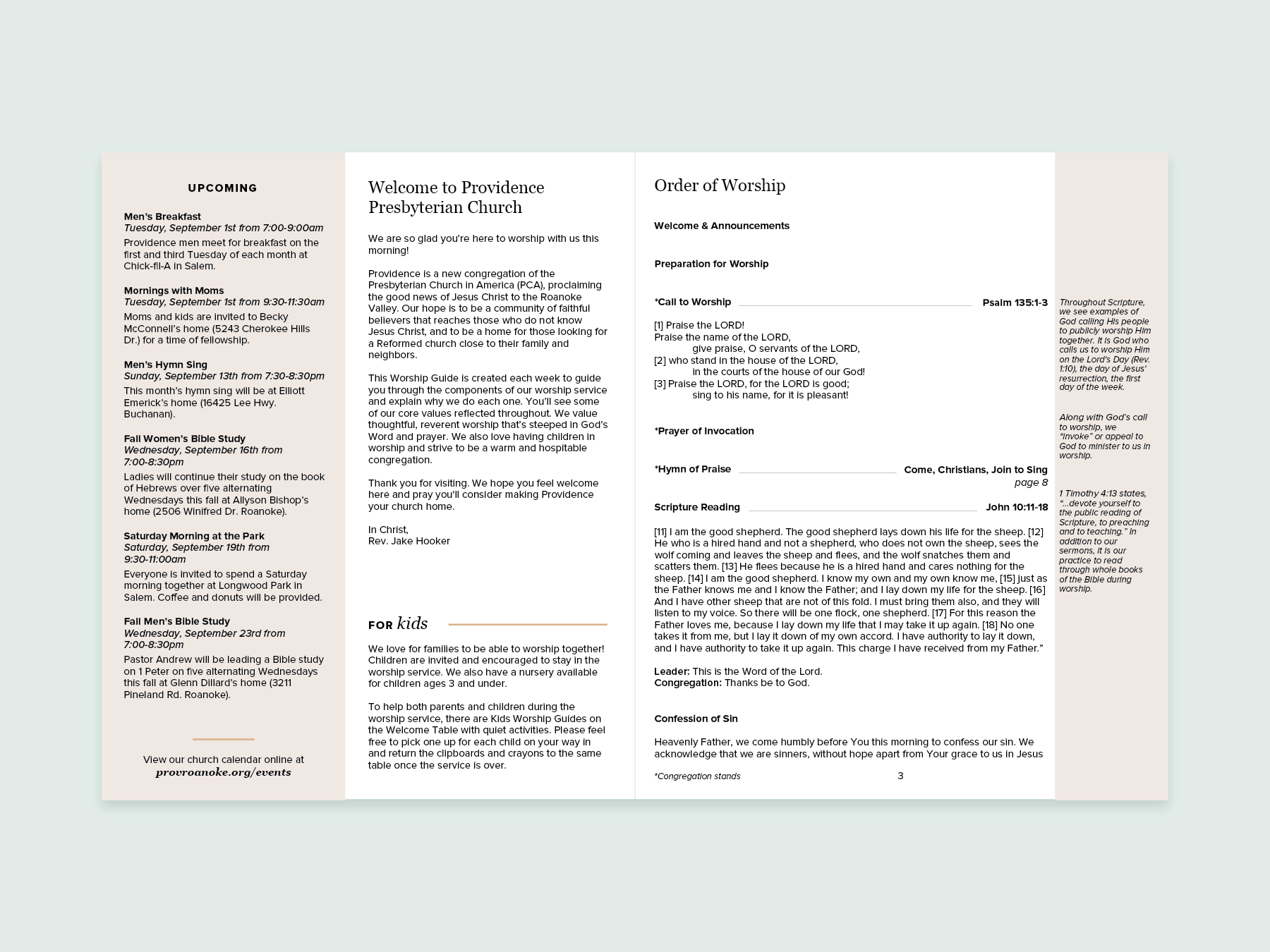
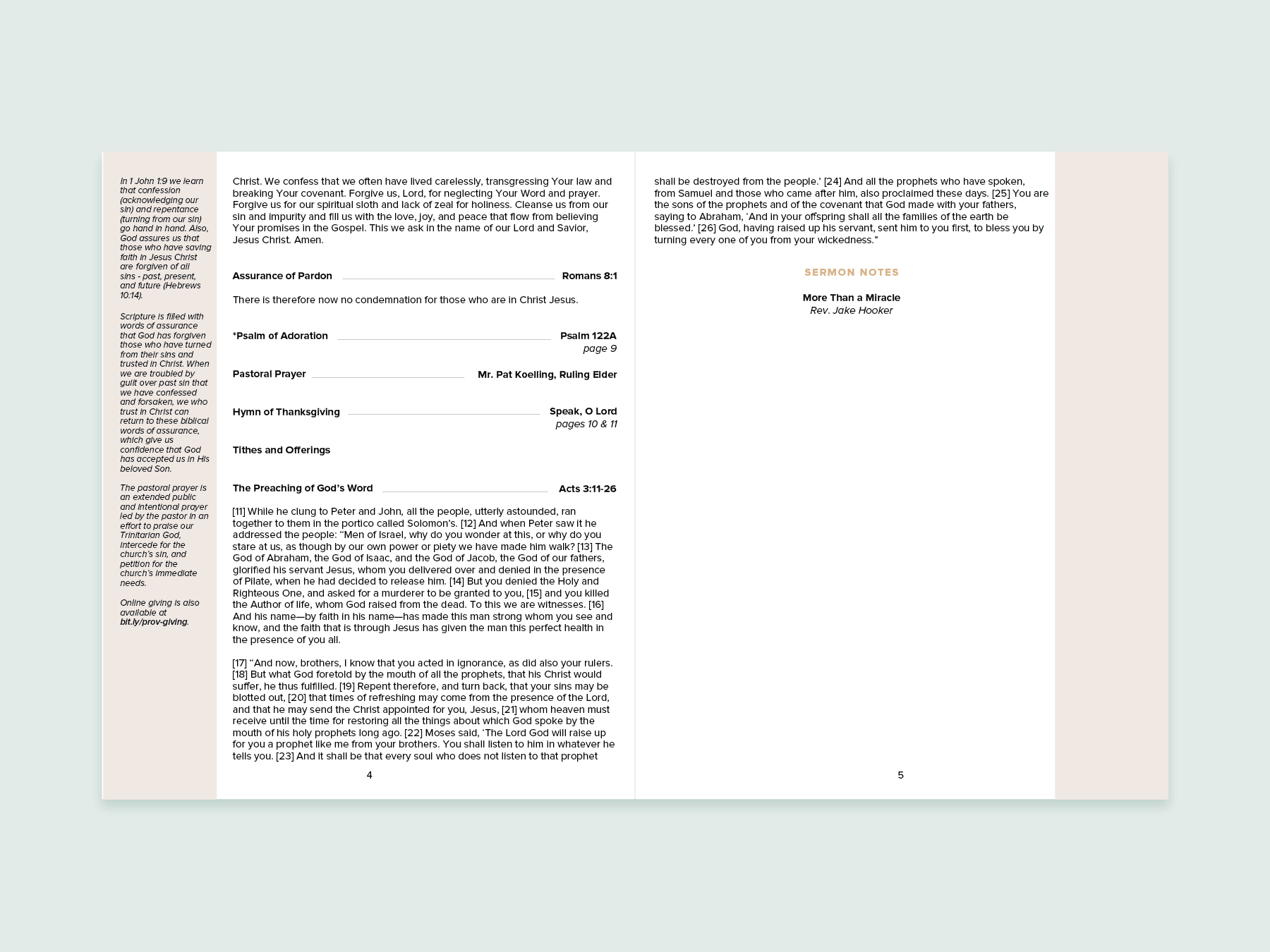





God used that sickness in Tennent’s life to get his attention and change the course of his ministry. And I think it’s fair to say that we’ve all experienced some sort of circumstance that when we look it’s clear to us that God was using it to get our attention. And those events often give clarity on what really matters. Suddenly the things that seemed so important lose their appeal.
And that's one of the things I love about this passage in Acts 3. A man who had been unable to walk his entire life has been miraculously healed. And naturally, the crowd's attention is captured.
But Peter doesn't allow them to stop at the miracle.
The miracle got their attention, but Peter wants them to understand the significance of the miracle. It was supposed to turn their attention to Jesus.
There’s a consistent pattern where God gets our attention, exposes our need, and then points us to Jesus. And that’s exactly what happens in this passage. We see the healing get everyone’s attention (vv. 11-16), then Peter exposes the problem (vv. 17-18), and then the gospel provides the remedy (19-26).
This passage is honestly quite straightforward. The miracle gives Peter the opportunity to preach the gospel.
God Gets Their Attention (vv. 11-16)
But when you read the passage, notice no one came to them to hear the gospel. The thing that caught everyone’s attention was that a man who had been crippled from birth and sat every single day outside of the temple had been miraculously healed. That’s what caught everyone’s attention!
Luke tells us in verse 11 that people were, “utterly astounded” and ran to them because the man who had been crippled his entire life was “hanging” on to Peter and John.
There was this natural curiosity that had fallen upon everyone. This crowd wanted to know, “what just happened?” “How did you do this?” And it provides Peter with the perfect opportunity to talk about Jesus. The miracle created an audience for the gospel.
The miraculous healing of this man wasn’t just a supernatural random act of kindness. This miracle pointed beyond itself and it most certainly wasn’t supposed to draw attention to Peter and John, which is why Peter asks, ““Men of Israel, why do you wonder at this, or why do you stare at us, as though by our own power or piety we have made him walk?”
Peter doesn’t want the attention for himself. Peter wants to turn everyone’s attention to Jesus, which is exactly what he does in verses 13-16.
“The God of Abraham, the God of Isaac, and the God of Jacob, the God of our fathers, glorified his servant Jesus, whom you delivered over and denied in the presence of Pilate, when he had decided to release him. 14 But you denied the Holy and Righteous One, and asked for a murderer to be granted to you, 15 and you killed the Author of life, whom God raised from the dead. To this we are witnesses. 16 And his name—by faith in his name—has made this man strong whom you see and know, and the faith that is through Jesus has given the man this perfect health in the presence of you all.”
They had Jesus delivered over to Pilate. They denied the Holy and Righteous One in exchange for a murderer. Ironically, they killed the Author of life, but God raised him from the dead. But it was the man’s faith in Christ that had made him well. Of course, that’s not some sort of endorsement of the prosperity gospel. He’s not teaching that if you just have a little bit of faith you will have health and wealth. Rather, Peter is saying that miraculous physical healing was a reflection of the man’s miraculous inner healing. What was happening on the outside was a picture of what had taken place on the inside.
In other words, Jesus had done it. Jesus had not only healed this man’s body, but he had healed this man’s soul.
But the thing that I want us all to notice is how Peter redirects the crowd’s attention away from the man and away from himself and John and onto Jesus. He had no interest in explaining the mechanics of the miracle. He wanted to use this opportunity to talk about Jesus.
It is rather providential that this just so happened to be the sermon text the day of Andrew’s installation service. Because as I read reflected upon this I couldn’t help but think: shouldn’t this be the mentality of every minister of the gospel?
Not to draw attention to ourselves but to point all the attention to Jesus? A minister isn't called to build a following around himself. He's not called to make people impressed with his personality, his preaching ability, his intelligence, his leadership, or his ministry accomplishments. He's called to point people to Jesus Christ.
I think most ministers understand this and yet, I can’t tell you the number of times I genuinely wondered, is that man in the ministry for Jesus or himself? I don’t think that confusion happens suddenly. It’s a line that gets more and more blurry over time.
Peter’s words are helpful here. “Don’t stare at us. Look at Jesus.”
Andrew is being installed here to simply point people to Jesus Christ. A pastor friend of mine once told me that his son asked him, “Dad, do you preach the same thing every Sunday?” And he was like, “No, but in another sense, yes.” As ministers of the gospel we’re called to preach Jesus Christ and him crucified.
We’re supposed to open the Scriptures and say, “Don't look at me. Look at Jesus.” And that's not just the calling of pastors.
To a certain extent, that's the calling of every Christian.
Parents, your children ultimately don't need you to be their savior. They need you to point them to their Savior. Husbands and wives, your spouse ultimately doesn't need you to be their source of happiness. Point one another to Christ. Friends, your friends don't ultimately need your wisdom. They need Jesus.
At the end of the day, ministers are instruments and really so is every Christian. We are the tool; and Christ is the One who does the work.
The Preaching Exposes the Problem (vv. 17-18)
Notice that Peter moves the conversation from “look at what happened” to “look at what you’ve done.” In verses 13-15, Peter identified their sin. They delivered Jesus over. They denied him. They asked for a murderer in his place. And they killed “the Author of life.”
Peter is remarkably direct here. He doesn't soften the accusation by saying, “Some of you are guilty of this,” or, “There were just a few bad apples who killed Jesus.” No. He puts the responsibility squarely in front of everyone standing there:
“You killed the Author of life.”
That's a hard thing to hear. But the first step in dealing with a problem is acknowledging that there is a problem. You have to be willing to take responsibility for what you've done. And that's exactly what Peter is doing here. He's forcing this crowd to come to terms with the reality of their sin—that their sin resulted in the crucifixion of Jesus Christ.
And notice, Peter isn't saying that sin is merely a general problem out there in the world. He's not talking about somebody else's sin.
He's talking about your sin. Your sin is what put Jesus on the cross.
And even ignorance doesn't excuse it. That was actually a familiar principle at Virginia Military Institute: “Ignorance is no excuse.” It doesn't matter if you claim you didn't know the rules. If you lie, cheat, or steal, you're still responsible for what you've done.
That's essentially Peter's point in verse 17: “And now, brothers, I know that you acted in ignorance, as did also your rulers.”
Peter acknowledges their ignorance, but he doesn't use their ignorance to excuse them. They may not have fully understood what they were doing, but they were still guilty.
And the same is true for every one of us.
Whether you recognize it or not, your sin makes you guilty before a holy God. You don't have to understand the full seriousness of your sin for it to be serious. You don't have to intend to offend God for your sin to make you guilty before Him.
And this is why we have to understand the seriousness of sin if we're ever going to understand the glory of the cross.
Because if you're not guilty, you don't need a Savior. If sin is merely a mistake, then Jesus' death is an overreaction. If sin is merely a weakness, then perhaps we just need a little self-improvement.
But if sin is rebellion against the Holy and Righteous One—if our sin is so serious that it required the death of the Author of life—then we don't need a little help.
We need a Savior.
And that's exactly where Peter is taking them. He doesn't expose their guilt simply to leave them in despair. He exposes their guilt so that he can show them the One who died for guilty people.
The gospel begins by telling us the truth about our sin, so that we can finally hear the good news about our Savior.
And yet, here's the beauty of the gospel: no one in that crowd was beyond the reach of God's grace. The same is true for all of us here today. No one is beyond the reach of God’s grace.
Your sin may be great, but God's grace is greater. The cross is not evidence that your sin is insignificant; it is evidence that your sin is so serious that it required the death of the Son of God—and that God's mercy is so great that He was willing to give His Son to save sinners like us.
But Peter makes it clear in verse 18 that this was God’s plan all along. “But what God foretold by the mouth of all the prophets, that his Christ would suffer, he thus fulfilled.”
It was always supposed to be this way. The cross wasn’t Plan B. The rejection and death of Jesus were always a part of God’s promised plan of redemption. They intended evil, but God was accomplishing redemption.
What Peter does here is really interesting especially when you consider the fact that the crowd ran to him and John, because they were all wondering: “how has this crippled man been healed?”
But Peter points them to a much bigger, more important question: “What have you done with Jesus?”
We all know that it’s possible to be more fascinated with what Jesus can do for you than actually being surrendered to him. We want Him to provide for our family, heal our bodies, give us direction, or make our lives easier. But Peter would have us lift our eyes above the gifts and look at the Giver.
The Gospel Provides the Remedy (vv. 19-26)
Notice Peter transitions from bad news to good news. He gives the crowd the remedy and it begins with repentance.
Look at what Peter says there in verse 19: “Repent therefore, and turn back…”
In many ways, Peter's sermon here is very similar to his sermon at Pentecost. After telling the crowd that they were responsible for Jesus' death and crucifixion in Acts chapter 2, they were “cut to the heart.” And they asked, “Brothers, what shall we do?” And what's the first thing Peter says there in Acts 2? “Repent and be baptized…”
And notice what Peter says here in Acts 3. After exposing their sin and telling them about Jesus, he says in verse 19: “Repent therefore, and turn back, that your sins may be blotted out.”
Peter doesn't simply tell them to believe some facts about Jesus. He calls them to repent.
And I think that's important because I've met plenty of people who will tell me, “I believe in Jesus. I trust in Jesus. I'm a Christian.” And yet their lives are completely at odds with the teachings of Scripture. There is no fruit of repentance. There is no desire to obey Christ. There is no real interest in surrendering their lives to Him.
They've reduced Christianity to saying the right words, checking the right box, or having some experience in the past. But Peter makes it clear that’s not an option. The gospel calls us to repent.
Now, repentance doesn't mean that you become sinless. It doesn't mean that you clean up your life and make yourself worthy of Jesus. If that were the case, none of us could ever be saved.
Repentance means that when you come to Christ, you turn around. You turn away from your sin and you turn toward your Savior. You hate your sin and you stop defending it and start confessing it. You don’t make excuses for your rebellion and start asking Jesus to forgive you and change you.
And this is something I think broader evangelicalism is often reluctant to preach.
We want to talk about God's love—and we should talk about God's love. We want to talk about grace—and we should talk about grace. We want to talk about forgiveness, acceptance, and the goodness of God—and we absolutely should.
If we aren't willing to acknowledge our sin, why would we think we need grace? What do we need to be forgiven of?
Peter doesn't tell these people, “Don't worry about what you've done. God loves you exactly as you are.” He tells them the truth about what they've done, and then he gives them an invitation:
“Repent therefore, and turn back, that your sins may be blotted out.”
That's actually a profoundly gracious invitation. Because Peter isn't telling them that they've gone too far. He's telling them that even after what they have done to Jesus, forgiveness is available.
Think about the people he's speaking to - a Jewish audience. They’re outside the temple. These are people who had rejected the Messiah and cried “crucify him.” And now Peter says to them, “Repent.”
In other words, Turn around. Come home. The Jesus you rejected is the Jesus who is offering you forgiveness and “A time of refreshing [that comes] from the presence of the Lord that he may send the Christ appointed for you, Jesus, 21 whom heaven must receive until the time for restoring all the things about which God spoke by the mouth of his holy prophets long ago.”
God is moving history towards restoration. The healing of a lame man was a small preview of what Christ intends to do–restore what sin has broken. Christ is coming again to restore all things. That’s been God’s plan all along.
This is why Peter goes back through Old Testament figures. Moses, Samuel, the prophets, and Abraham. Jesus isn’t a new idea. He’s the fulfillment of everything God has promised. The gospel isn’t God abandoning the Old Testament. Rather, the gospel is the fulfillment of the Old Testament.
I find Peter’s conclusion in verse 26 so fascinating. He says, “God, having raised up his servant, sent him to you first, to bless you by turning every one of you from your wickedness.”
Peter says that God sent Jesus to earth to be a blessing. But notice how Peter says Jesus is a blessing: He’s a blessing to us because he has us turn from our wickedness. Do you think of turning from sin as a blessing?
That’s an interesting way of thinking about blessing isn’t it? Because normally we think of being blessed when we get a pay raise, resolution to a painful circumstance, or just making our life easier. That’s normally what we’re referring to when we say that we’re “blessed.”
But Peter says that God blesses you by turning you from your wickedness. The greatest blessing isn’t getting everything you want out of life, the greatest blessing is being delivered from the sin that separates you from God.
And that’s precisely what Peter is driving home in his sermon.
When you pull back and look at this passage as a whole you quickly realize the miracle isn’t really about a man who couldn’t walk. It’s about a Savior who can restore sinners.
The miracle gets our attention. Peter’s sermon exposes our problem. And the gospel gives us the remedy. But the remedy isn't simply that Jesus will make your circumstances better.
The remedy is Jesus Himself. He forgives your sins. He turns you from your wickedness. He reconciles you to God. And He promises that one day He will return and restore all things.
So the question Peter puts before us this morning isn't merely, “What do you want Jesus to do for you?”
It's a much more important question: “What will you do with Jesus?”
Because the very Jesus whom they rejected is the Jesus whom God raised from the dead. The very Jesus they crucified is the Jesus God sent to bless them. And the blessing He offers isn't merely temporary relief from life's problems. He offers forgiveness for sinners and restoration to God.
And notice how astonishing that grace is - these people rejected Jesus. They handed Him over to be crucified. They chose a murderer instead of the Author of life. And yet Peter stands before them and says, “Repent. Turn back.”
There is still mercy available. There is still forgiveness available. There is still a Savior available.
And the same Jesus who stood ready to forgive the people who crucified Him stands ready to forgive you.
Don't settle for temporary relief when Christ offers you reconciliation with God. Don't settle for the gifts when you can have the Giver. Repent. Turn back. Come to Christ. Because what you need most isn't a better version of your life. What you need most is Jesus.
Amen. Let’s pray together.
