
Praying for Boldness - Acts 4:23-31
Probably 15 years ago, I sat next to a stranger (as is usually the case) on a flight. The gentlemen ended up striking up a conversation with me and then asked if I was a Christian. I’m pretty sure I disappointed him when I told him, “yes, I am a Christian.” Then he asked if he could share his testimony with me and I said sure. So he went on to share his, rather unusual, charismatic testimony with me.

But regardless of his theological convictions, I’ve always respected his boldness. This incident has stuck with me and forced me to ask, “am I willing to do that?” And if not, “why?”
There’s a fair degree of resistance to Christian boldness, isn’t there? Not because we disagree with it, but because it’s risky! What if we come across poorly? What if I say something wrong and now this other person thinks I’m rude, arrogant, or overly aggressive? That’s the risk that comes with Christian boldness and most of us don’t want to be accused of any of those things so we let things go. We retreat into passivity.
This passage challenges that, doesn’t it? Because the apostles and the early church prayed for boldness.
They weren’t worried about who they might offend. They were more concerned with getting the gospel out!
But what makes the boldness the early church prayed for even more amazing than my friend who wanted to share the gospel with me on a plane is that they wanted boldness in the face of opposition. The degree of opposition was increasing in the early church and they wanted the strength to speak the truth regardless of the consequences. They didn’t want to shrink back when the world threatened them.
But of course, we know that’s not easy. It’s hard to speak bold truths when there’s a real chance it’s going to cost you something. When a relationship, a job, or even your reputation, hang in the balance–that’s when you need strength.
If you’re taking notes we’re going to look at this passage in three parts: First, we’re going to notice that they went to the Lord in prayer (vv. 23-24), second, they looked at God’s sovereignty as a source of strength (vv. 25-28), and lastly, we see that their prayer was answered (vv. 29-31).
Now remember, Peter and John have been imprisoned and questioned by the Jewish religious elites after they had healed the crippled man who sat outside of the temple. And here, we learn about their release and what they do upon reconnecting with other believers. And last week, Andrew made the point that this is really the first time the church has faced any sort of opposition. There is certainly more opposition to come in the book of Acts, but chapter 4 is their first taste of opposition.
Christians pray (vv. 23–24)
And their response is quite interesting isn’t it? Their response to opposition from the Jewish elites was to pray. We’re told in verse 23 “they lifted their voices together to God.” They turn to the Lord in prayer.
The commentator J.A. Alexander thinks that an individual offered a prayer on behalf of the whole church. I don’t think they were praying the exact same words together in unison, rather, they were in full agreement with the prayer that was being offered. It was a collective prayer, which is why Luke says, “they lifted up their voices together.”
But really the mechanics of the prayer are irrelevant. The point that I don’t want us to miss is they turned to the Lord in the face of opposition.
If you’ve been a Christian for any length of time, at some point you’ve had your faith tested. I’m sure you’ve had someone challenge, mock, or criticize your Christian faith or values at some point in your life. Most of us have experienced that, and to tell you the truth, you’re going to experience it again.
And so the question becomes: how will you respond? Will you get mad? Think of all the things that you should have said? Or will you turn to the Lord in prayer? Unfortunately, for most of us, prayer is the last resort. It’s as if, once I’ve exhausted all of my options, tried everything, and came up completely empty then I’ll give prayer a shot.
But that’s not what happens here. Right after being released Peter and John tell everyone what happened and then they turn to the Lord in prayer. They really believed that there was power in prayer. That God would hear it and answer it.
Is that how you feel when you pray? Do you pray as a last resort? Do you pray to simply check it off of your list? Or do you pray because you believe that it’s powerful and effective?
Because when you step back, and just put yourself in Peter and John’s shoes for a moment, you have to recognize just how powerless they really are. They’re a couple of nobodies. They have no power or influence. The religious elites hold all the power.
So when you really think about it, they have no choice but to turn to the Lord in prayer! If anything is going to happen – God’s going to have to do it. They had to turn to him in prayer.
They understood something we easily forget: our first response to opposition should be to turn to the One who is sovereign over our opposition. We don’t have any control or power over those who stand against the Lord – but the Sovereign Lord does.
Christians trust God’s sovereignty (vv. 25–28)
Which interestingly enough is the core doctrine of their prayer–God’s sovereignty. Isn’t that interesting? When was the last time you prayed and emphasized in your prayer God’s sovereignty over all things. In some ways it seems a little redundant doesn’t it? You wouldn’t turn to him in prayer if you didn’t think he had power to do something!
But nevertheless, that’s the central doctrine that they highlight is God’s sovereignty. In fact, they begin the prayer with, “Sovereign Lord, who made the heaven and the earth and the sea and everything in them.”
It has a Psalm 8 flavor to it. That great Psalm that describes God’s majesty and power. But then they jump into directly quoting a Davidic Psalm – Psalm 2 in their prayer.
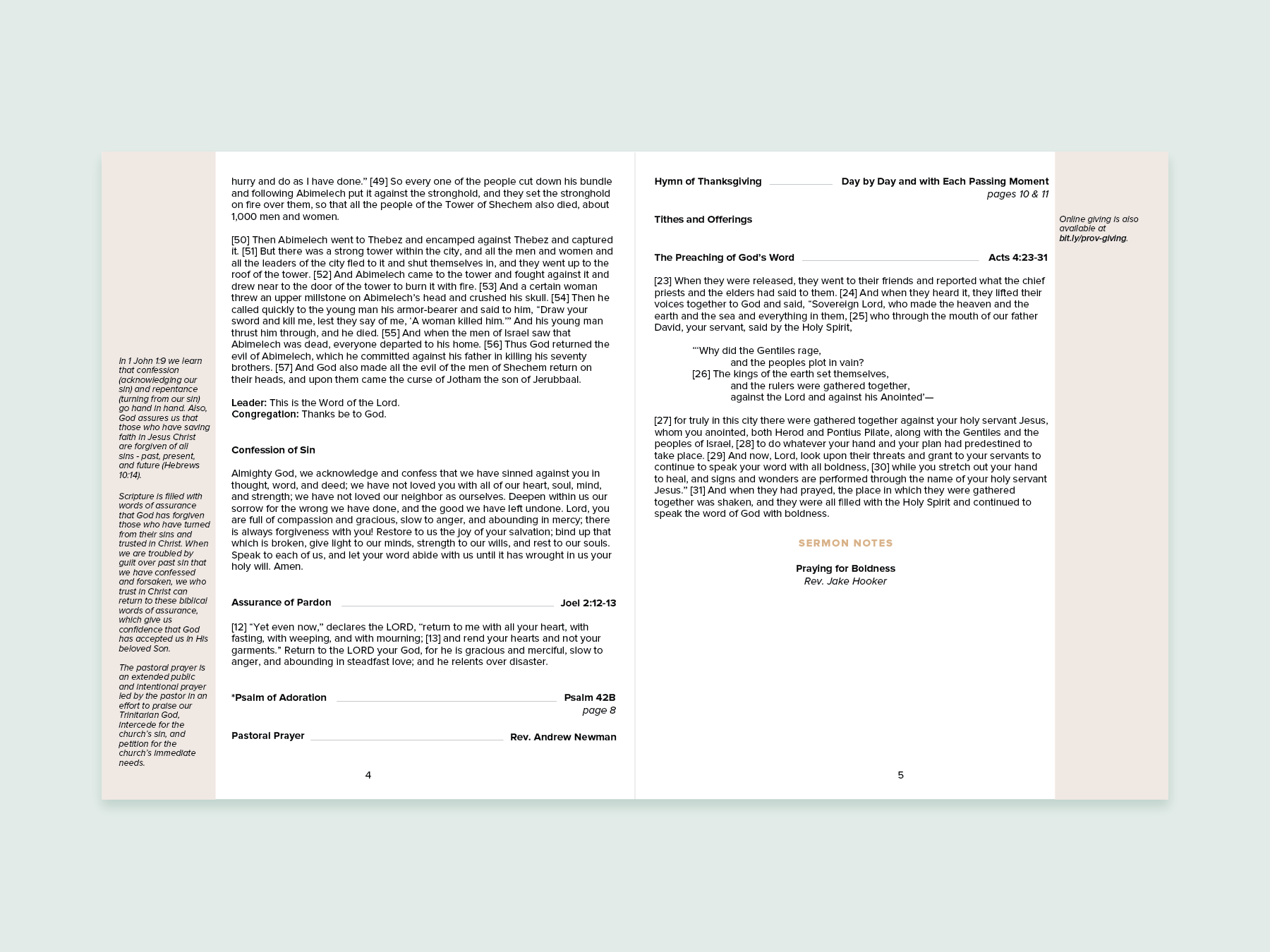
And Psalm 2 describes God as a sovereign King who all the nations oppose. Everyone is out to get God and his anointed Son Jesus Christ. That’s the part that they quote: “Why did the Gentiles rage, and the peoples plot in vain? 26 The kings of the earth set themselves, and the rulers were gathered together, against the Lord and against his Anointed.”
What’s described in Psalm 2 actually played out in Christ’s life. In verse 27, they recount how the world and their kings were opposed to Jesus. The city, Herod, and Pontius Pilate were all opposed to Jesus. But it all happened in accordance with God’s plan.
It’s absolutely futile to stand in opposition to God. It’s a waste of time. He’s going to accomplish His will whether you like it or not. Of course King David understood that. Luke doesn’t quote the part of Psalm 2 that says, “He who sits in the heavens laughs…”
When you dig a little deeper into Psalm 2 the prayer’s point becomes clear. They don’t think of God’s sovereignty as this horrible, arbitrary aspect of His character. They see God’s sovereignty and power as a source of peace, comfort and security especially in seasons of opposition.
I’ve watched the movie The Fugitive countless times. If you know the movie, Harrison Ford is accused of a murder that he didn’t commit and he suddenly finds himself as a fugitive on the run from the police, FBI, everybody is after him. But as he’s on the run he’s doing things to try to clear his name. And like any good movie, there are several moments where it looks like he’s going to get caught. But of course, he escapes, at one point he jumps out of a hole in a dam–if you’ve seen the movie. And eventually he’s proven innocent and his life is restored to normal.
But if you’ve seen the movie, you’re never really worried about how the story is going to end. You know he’s going to make it. You know he’s going to be vindicated. You know the truth is going to come out and his life is going to be restored.
And that changes the way you watch the movie. The danger is real. The opposition is real. The threats are real. But the outcome is secure.
And that’s the kind of confidence God’s sovereignty gives us.
That’s why the early church can pray the way they do in Acts 4. They aren’t naïve about the opposition. They aren't pretending the threats don't exist. They know exactly what Herod, Pilate, the Gentiles, and the people of Israel have done.
But they also know something else: God is still on His throne. And if God is sovereign, then the opposition can never have the final word. And because they trust the God who sits on the throne, they ask Him for the boldness to keep proclaiming His Word.
Isn’t it interesting that they pray for boldness? It isn’t necessarily what you’d expect in the face of opposition. You’d expect a prayer for strength. Or a prayer for protection. Or favor with the authorities. Which are all good prayers by the way.
But that’s not the prayer that the early church prays. They pray for boldness in the face of opposition because that’s when you and I need it the most!
How many times have you thought to yourself, “I wish I would have told him or her the truth. I wish I would have just spoken plainly right there.” But instead, I was too timid. I was afraid of what they might think. I was afraid of how they would respond. I was afraid of what they would think of me.
There are countless reasons why we shrink back. And we’ve all done it. We’ve all been intimidated at some point to speak the truth, to stand for Christ, or to say what we knew needed to be said.
Just think about Peter! It wasn’t all that long ago that a servant girl looked at Peter and said, “You also are one of this man’s disciples.” And Peter denied Jesus Christ three times. One of the apostles shrunk back in one of the most notorious ways imaginable.
But what is Peter praying for now?
Boldness. Confidence.
And not the arrogant kind of boldness. Not the aggressive kind. Not the rude or obnoxious kind of boldness that seems to delight in confrontation.
No, this is holy boldness.
It is the courage to speak the truth because you love Christ more than you fear man. It is the confidence to stand for what is right even when you know there may be consequences. It is the willingness to say what needs to be said—not because you enjoy confrontation, but because you are more concerned about being faithful to God than being accepted by people.
And that’s something the church desperately needs today.
How many times have we watched a prominent Christian get asked a straightforward question about their faith, and suddenly they begin to waffle? Suddenly they qualify everything. Suddenly they become afraid to say what the Bible plainly says.
You see it especially when difficult moral issues come up. The moment homosexuality, abortion, marriage, or some other controversial subject is mentioned, there can be this instinct to retreat—to soften the truth, to avoid saying what Scripture actually says, because we're afraid of how people will respond.
And we need to ask: Where is the holy boldness? Where is the righteous confidence? Where is the willingness to simply say, “This is what God has said”?
Because Christian boldness doesn't mean that we are never afraid. Christian boldness means that our fear of God is greater than our fear of man. And that's exactly what the early church is praying for.
They don't pray, “Lord, make everyone like us.” or “Lord, make this opposition go away.”
They pray, “Lord, give us boldness to keep speaking Your Word.”
Christians proclaim God’s Word boldly (vv. 29–31)
And God answers that prayer.
Look at what happens in verse 31: “And when they had prayed, the place in which they were gathered together was shaken, and they were all filled with the Holy Spirit and continued to speak the word of God with boldness.”
They prayed for boldness and God answered them. And we know that their prayer was answered because God shook the place they were in, they were filled with the Spirit and continued to speak the word of God with boldness.
It’s an amazing thing to pray for isn’t it? Because they didn’t pray for wisdom, or protection, or favor with the authorities. Those are the things that most of us would have prayed for if we were in their shoes. But instead they wanted to pray for boldness for Christ in the face of opposition.
Again, consider Peter. Not only is he now praying for boldness, the Lord has granted it to him.
Many of us have been taught from a young age to be kind. Treat other people with respect. Don’t be hostile. Don’t be unnecessarily forceful. Don’t be rude.
And those are all good things!
Christians should be kind. Christians should be gracious. Christians should treat other people with dignity and respect.
But there is a difference between being kind and being timid. There is a difference between being gracious and being afraid. And there is a difference between refusing to be rude and refusing to stand your ground on the truth.
Christian boldness doesn’t mean being a jerk. It means being willing to stand firm when standing firm comes at a cost.
Think about a church like Early Rain Covenant Church in China. It is a Reformed Chinese house church in Chengdu that has faced years of intense government persecution. In December 2018, more than 100 members were detained, including Pastor Wang Yi and his wife. The church was banned and its property was confiscated. In December 2019, Wang Yi was sentenced to nine years in prison on charges of “inciting subversion of state power” and “illegal business operations.”
And the persecution has continued.
On August 14, 2022, police raided a gathering of more than 50 Early Rain members meeting in a teahouse in Chengdu. They were accused of holding an “illegal gathering” of a banned organization, and one member was detained.
And just this past June, on June 14, 2026, police and government officials raided another Early Rain worship service in Jiangyou, Sichuan. More than 30 believers were taken away for interrogation, and two church leaders were detained.
And yet they continue to meet. They continue to worship. They continue to preach Christ. They continue to gather as the church.
Because the enemies of the church—the world, the flesh, and the devil—want to destroy your faith. They want you to abandon what you claim to believe. They want you to compromise when obedience becomes costly. They want to see whether your faith is real when following Christ actually costs you something.
It is easy to say you believe in Jesus when believing in Jesus costs you nothing.
But what happens when your reputation is on the line? Or it costs you a friendship? Or a coworker thinks you’re weird and different? Or standing for biblical truth makes you unpopular and puts you on the wrong side of history?
It’s in those moments, you need to pray. We need the Spirit’s help. None of us should assume that we just naturally have the courage to stand firm. Peter thought that about himself! Peter literally told Jesus, ““Even if everyone else falls away, I will never fall away.” And that’s when Jesus told him, “actually Peter you’re going to deny me three times.”
But now Peter has been transformed. Now he is standing before the authorities who crucified Jesus. Now he is proclaiming Christ. Now he is asking God for even greater boldness.
So the question isn't simply, “Are you a bold person?”
The question is, “When opposition comes, where will you find your courage?”
Will you find it in your personality? Will you find it in your ability to argue? Will you find it in your confidence in yourself?
Or will you turn to God and say, “Lord, give me boldness to remain faithful to Christ, whatever it costs me?”
Your confidence must rest in God. And that's exactly what the early church is praying for.
And of course, they prayed and the Spirit empowered them to “speak the word of God with boldness.”
I came across a sermon from Pastor Wang Yi in which he made a striking observation about persecution. He said that persecution is a test. The world is testing you because they don’t believe that you really believe in Jesus.
That’s a sobering thought, isn’t it? Do you actually believe Jesus is worth losing everything for? Is your confidence truly in Him? It’s tough to know sometimes, isn’t it? Will you shrink back? Or will you stand firm?
The good news is that Acts 4 doesn’t tell us to simply try harder and be more courageous people. The church doesn’t gather together and give themselves a motivational speech. They pray for boldness and strength.
And notice what they are asking God to do. They aren’t asking God to make their circumstances easier. They aren’t asking Him to remove every threat or silence every opponent. They are asking God to give them the courage to remain faithful in the middle of the opposition.
That’s an important distinction.
There are times where you really might feel afraid. There will be times when the opposition will really bother you.
But you have something you believe is more important than your fear. For the early church, that “something” was actually a Someone: Jesus Christ.
They had seen Him crucified. They had seen Him raised from the dead. They knew that He was the promised Messiah, the risen and reigning Lord. They knew that salvation was found in no one else.
So they could stand firm. And Christian, that is where our boldness comes from too. We don’t stand firm because we are strong. We stand firm because Christ is strong.
The gospel gives us something worth standing for—and the Holy Spirit gives us the strength to stand.
Let’s pray. Amen.
