
There's an interesting moment in Acts 5 that I think helps us understand what is happening in our passage this morning.
The apostles have been arrested and brought before the Jewish council. The religious authorities are furious with them because they continue preaching about Jesus. They've already been warned not to speak in his name, but they refuse to stop. And now the council is considering what to do with them.


At that point, a Pharisee named Gamaliel stands up. He's a respected teacher of the law, someone who commands considerable authority among the people. And he offers the council a word of caution.
He reminds them of two previous movements that had attracted followers. One was led by Theudas, and another by Judas the Galilean. Both men had gathered people around themselves, but when they died, their movements eventually fell apart.
And then Gamaliel makes this observation:
"If this plan or this undertaking is of man, it will fail; but if it is of God, you will not be able to overthrow them. You might even be found opposing God!"
Gamaliel recognizes there's a difference between something that originates with man and something that originates with God. Human movements come and go. Human leaders rise and fall. But when God is at work, no amount of human opposition can ultimately frustrate his purposes.
And what's remarkable is that just one chapter later, we find the Jewish authorities confronting this very issue again.
This time, it's not the apostles standing before them. It's Stephen. He's a man full of faith, wisdom, and the Holy Spirit, boldly proclaiming Jesus Christ. And once again, the religious authorities are determined to oppose the message. They challenge him, twist his words, stir up the people, bring him before the council, and eventually martyr him.
But they’re not really opposing Stephen. Just as Gamaliel warned them — they’re opposing the work of God.
And that's the central truth I want us to see from our passage this morning: The wisdom of God cannot be overcome by the opposition of man. And we see this play out in three ways: first, God empowers his servants (vv. 8-10), second, his opponents resort to false accusations (vv. 11-14), but regardless, God’s grace remains evident (v. 15).
God empowers his servant (vv. 8–10)
It’s interesting because, on the one hand, we don’t know all that much about Stephen. We don’t know his background, where he came from, what his occupation was, or whether he had a family and, if so, what they were like. But on the other hand, Luke tells us something far more important about Stephen: he was a man of godly character.
Earlier in Acts 6, when the apostles were looking for men to help serve the church, they gave three qualifications. They were to be men of “good repute, full of the Spirit and of wisdom.”
These are broad categories that Paul expands upon in 1 Timothy 3, where we find that the qualifications for church officers are concerned primarily with character. Those who serve Christ’s church must be men of proven Christian character—respected by others, committed in their faith, and marked by godly wisdom.
And that is precisely how Luke describes Stephen. When he was chosen to serve the church as a deacon, we’re told in verse 5 that he was “a man full of faith and of the Holy Spirit.”
Notice how similar that description is to what Luke tells us in verse 8: Stephen was “full of grace and power,” and he “was doing great wonders and signs among the people.”
Of course, we shouldn’t think that these things were being done out of the strength of Stephen’s natural abilities. Rather, the clear emphasis is on the fact that the Holy Spirit was working in and through Stephen. So much so that he was “doing great wonders and signs among the people.” The supernatural sign-gifts testified to the fact that the gospel message of the church was in fact, true!
But when you look at just this little bit of Stephen’s life you see an incredible example. A man that every Christian man should strive to be more like. He was honorable. He was trustworthy. He was godly.
Men, are those the sorts of things that people say about you when you’re not around? That man right there is honorable. He’s trustworthy. He’s godly.
But here’s what’s so fascinating about that—those qualities of Stephen both Christian men and women should strive to implement into your own life are the qualities that will inevitably bring you into conflict with the world.
We’re told in verse 9 that members of the synagogue of the Freedmen rise up to dispute with Stephen.
And this, of course, is a recurring theme throughout the book of Acts: faithfulness to Christ does not insulate you from conflict. In fact, sometimes it’s precisely your commitment to Christ that stirs up opposition.
And it’s worth noting that Stephen isn’t going out of his way to provoke anyone. He’s not trying to bait the Freedmen into an argument or pick a fight. He’s simply living as a faithful Christian man and speaking the truth about Jesus.
And that’s the key, isn’t it? They’re certainly opposing Stephen, but at a deeper level, they’re opposing the truth. Their problem isn’t ultimately with Stephen himself. It’s with the message he proclaims.
Maybe you’ve experienced something like that yourself. You bring up Jesus in a conversation, or you begin talking about your Christian faith, and suddenly you can feel a wall go up between you and the friend or neighbor you’re talking to. And often, the issue isn’t really you. It’s the truth about Jesus Christ.
I’ll be honest with you: every now and then, I meet someone new, and they ask me what I do for a living. I tell them I’m a pastor, and just like that, the conversation comes to an end. Suddenly, they don’t want to talk to me anymore.
But for Stephen his opponents want to argue and challenge what he’s saying, but his wisdom is too much. The key phrase is there in verse 10: they “could not withstand the wisdom and the Spirit with which he was speaking.” It’s not a contest between intellects and they’re trading barbs to see who will win an argument. Luke makes it clear that the Spirit is empowering Stephen’s testimony.
That brings us to an important truth in this passage: God empowers his servants. Jesus told his disciples that this would happen in Matthew 10: “• "When they deliver you over, do not be anxious how you are to speak or what you are to say, for what you are to say will be given to you in that hour. For it is not you who speak, but the Spirit of your Father speaking through you.
Doesn’t that perfectly describe what we see here with Stephen! The Spirit is speaking through him! No wonder his wisdom is too much for his opponents!
Now, that doesn't mean God's people will always win every argument, or that the world will always acknowledge the truth when it hears it. In fact, the rest of this chapter makes clear that Stephen's opponents will eventually resort to false accusations and violence. They cannot defeat his testimony, so they will attempt to silence the man who gives it.
But notice the distinction: they may be able to silence Stephen, but they cannot silence the truth he proclaims. They may be able to bring him before the council, but they cannot bring the wisdom of God into submission.
And I hope that's a comfort to us this morning. Because there are times where you’ll be opposed for your faith. We may even see a time when our own state opposes the church. And it’s in those moments it’s easy to wonder what the future holds for the church because the opposition seems too strong.
But this passage reminds us that the success of the gospel does not ultimately depend upon the strength of its defenders. It depends upon the power of God. The same Spirit who gave Stephen wisdom to testify before his opponents is at work in Christ's church today.
So we don't need to be intimidated by opposition, and we don't need to compromise the truth in order to make it more acceptable. Our responsibility is to speak the truth faithfully, with wisdom and grace, and to trust God with the results.
The world may resist the truth. It may ridicule it, distort it, and even persecute those who proclaim it. But it cannot overthrow it. The wisdom of God cannot be overcome by the opposition of man.
His opponents resort to false accusations (vv. 11–14)
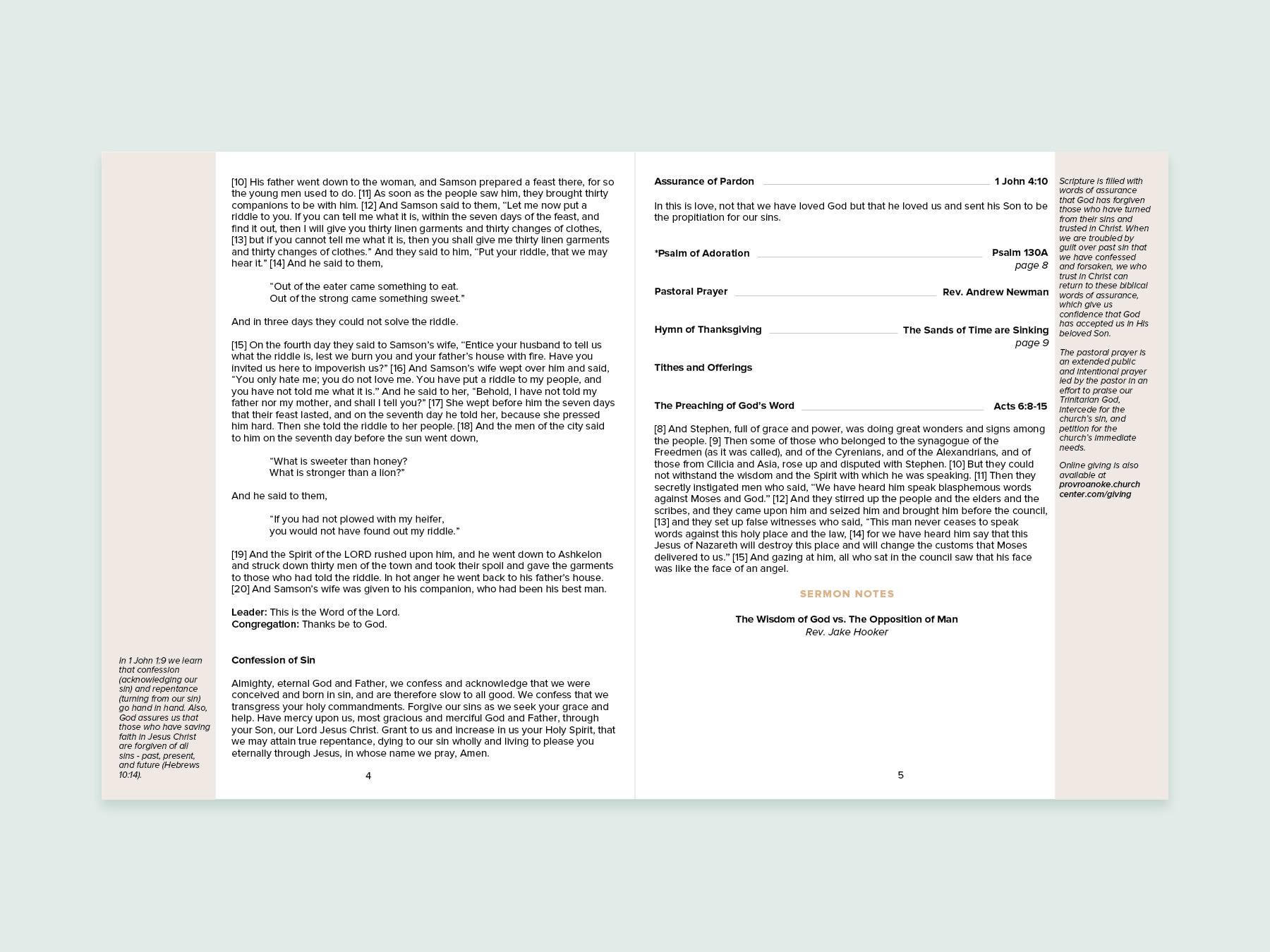
Notice how Stephen’s opponents resort to false accusations in an attempt to silence him. Look at verse 11: “Then they secretly instigated men who said, ‘We have heard him speak blasphemous words against Moses and God.”
Stephen wasn’t blasphemous against Moses or God, and yet, that’s what they accuse him of. They distort his words.
But they use these false accusations to stir up the people, the elders and the scribes so they can put him on trial before the council, that is, the Sanhedrin.
Then in verse 13, they accuse him of, “never ceas[ing] to speak words against this holy place and the law, 14 for we have heard him say that this Jesus of Nazareth will destroy this place and will change the customs that Moses delivered to us.”
They're twisting his words. In fact, they're trying to make the gospel appear dangerous. They're taking the message of Jesus Christ which is the fulfillment of the Old Testament and portraying it as a threat to their Jewish religious traditions.
And there's something quite striking about the contrast Luke gives us. Stephen is speaking openly and publicly. He's proclaiming Christ without shame or hesitation. But his opponents are working behind the scenes. They're secretly persuading people, stirring up the crowd, and arranging false testimony against him.
In other words, they can't answer the truth, so they resort to misrepresenting it. Rather than refute what he says they attempt to destroy his credibility.
A question I've been asked in presbytery meetings is whether or not I support what's called the “Insider Movement.” To be honest, the first time someone asked me about it, I had to tell them that I wasn't familiar with the term. So I took some time to research it and learn more about what it involves.
Broadly speaking, the Insider Movement refers to an approach to Christian missions, especially in Muslim-majority contexts in the Middle East and elsewhere. The basic idea is that people who come to faith in Jesus Christ from a Muslim background should remain within their existing Muslim social and religious communities rather than publicly identifying themselves as Christians.
So they would continue going to mosques and participating in islamic worship services while remaining secret followers of Jesus. We all know why some missionaries would encourage this — you could be killed for leaving Islam. The consequences for leaving Islam are incredibly severe.
But hopefully, you can see the rub that this movement created. Should Christians remain silent about their faith when the consequences for following Christ appear to be high?
Stephen teaches us something here doesn’t he? Regardless of the consequences, Christians should never be ashamed of the gospel.
I doubt any of us have had our lives threatened for being a Christian, but I bet almost all of us have sat quietly in a room with friends or coworkers, where someone mocked biblical values or made light of the Christian faith.
I've been there. And I suspect most of us have.
It’s so easy to forget that it’s not our job to make the truth of the gospel more appealing. Because that’s often the temptation: we want our friends and family to find what we believe to be attractive. But Stephen reminds us that actually our job is to faithfully proclaim the truth regardless of the consequences.
Again, I don’t think that means seeking out confrontations or being unnecessarily argumentative or combative. Christians shouldn’t go out of their way looking for opportunities to offend people. But at the same time, neither should we be embarrassed by what God has revealed or hesitant to identify ourselves with Jesus Christ.
Stephen knows what he believes, he knows whom he serves, and he isn't going to conceal the truth simply because it makes people uncomfortable. The gospel doesn't become less true because people reject it. God's Word doesn't become less authoritative because the culture disapproves of it.
Christians are called to speak the truth with gentleness and respect but also with courage. When it comes to the gospel we have nothing to hide, nothing to apologize for, and no reason to be embarrassed.
Which is admittedly easy to say but hard to do—especially when it seems that the opponents of Christ have the upper hand, which is certainly the case for Stephen. But notice that Luke draws our attention to something no opponent of Christ’s can control.
God’s grace remains evident even before the council (v. 15)
Despite the fact that these people are clearly out to get Stephen, Luke tells us that, “...all who sat in the council saw that his face was like the face of an angel.”
Luke used that description in order to make something clear to all of us here. The Lord is with Stephen. As the commentator F.F. Bruce put it, his face was, “aglow as one who stood consciously in the presence of God.”
You can’t read this without thinking about Moses coming down from Mount Sinai after meeting with the Lord and receiving the Ten Commandments. When the people saw him, the Bible tells us that the skin of his face was shining because he had been speaking with God.
Luke wants us to see Stephen's holiness, righteousness, and godliness in this instance. That’s not to say Stephen was a sinless man. He was a sinner saved by grace just like all of us. It’s just that in this moment, similar to Moses, Stephen is surrounded by the presence of the Almighty.
Stephen is surrounded by men who believe they are sitting in judgment over him. They're examining him, questioning him, and preparing to condemn him, all the while the favor of God upon him.
Can you think of another man who stood condemned and yet the favor of God was upon him?
Think about the night Jesus was arrested. He was brought before the religious authorities. He was questioned, falsely accused, and ultimately condemned. The very men who were supposed to recognize the Messiah were the ones plotting his death. They believed they were sitting in judgment over Jesus, but in reality, they were condemning the very Son of God.
And yet Jesus was perfectly innocent. He was without sin. He was the righteous Son of the Father, who had come to do the Father's will. The approval of men meant nothing compared to the approval of his Father.
And isn't there something of that same pattern here with Stephen? He's standing before the council, facing accusations from men who oppose the truth. They believe they have the authority to determine his guilt or innocence. But Luke has already given us a glimpse of how God regards Stephen. His face is like the face of an angel. The man condemned by the religious authorities is the man who bears the appearance of God's favor.
Of course, Stephen isn’t Jesus. Jesus is the sinless Son of God; Stephen is a sinner saved by grace. But Stephen's experience does remind us of the pattern we see throughout Scripture: God's faithful servants are not always vindicated by the judgments of men.
God’s grace was clearly upon Stephen even in the midst of hostility and condemnation. And it’s a great reminder that our standing before God is not determined by the world's approval or disapproval. We may be misunderstood, misrepresented, and even condemned for our faithfulness to Christ. But what ultimately matters is not how the world regards us, but how we stand before the Lord.
The council may have been preparing to pronounce judgment upon Stephen, but the favor of God rested upon him. And that is a far greater comfort than the approval of any earthly court.
As we come to the end of this passage, I want us to return to the central truth we've been considering this morning: The wisdom of God cannot be overcome by the opposition of man.
We've seen that God empowers his servants with wisdom and the Holy Spirit. We've seen that when Stephen's opponents could not withstand his testimony, they resorted to false accusations and sought to discredit him. And we've seen that even as Stephen stood before the council, facing the hostility of those who opposed him, God's grace remained evident in his life.
And I think that's an important encouragement for us as Christians. Faithfulness to Christ does not mean we will never face opposition. It doesn't mean everyone will welcome the gospel or that our testimony will always be received with understanding. There may be times when we're misunderstood, misrepresented, or even rejected because of our commitment to Jesus Christ. But we must remember that the truth of God does not depend upon the approval of men. The opposition of this world cannot undo what God has purposed to accomplish.
Jesus Christ really is the ultimate example of that, isn’t he? Jesus was the faithful and perfect witness, falsely accused, rejected, and condemned by men. Yet through his death and resurrection, Christ accomplished our salvation. What appeared to be the triumph of his enemies was, in fact, the fulfillment of God's redemptive purposes. No human opposition could prevent the Son of God from accomplishing the work for which he came.
So, brothers and sisters, let us take courage from that truth. Let us bear witness to Christ with wisdom, courage, and grace. Let us not be intimidated by those who oppose the gospel, but neither should we imitate their hostility. We are called to speak the truth in love, trusting that the same Spirit who strengthened Stephen is at work in Christ's church today.
The world may oppose the gospel, but it cannot overthrow it. The risen Christ reigns, his Word endures, and his purposes will stand. The wisdom of God cannot be overcome by the opposition of man.
Amen. Let’s pray together.
