
The Unchanging Love of God - Malachi 1:1-5
Hard providences have a unique way of causing us to question God’s goodness and love. Haven’t we all experienced that in one way, shape, or form? A close relative unexpectedly passes away. A job falls through. You’re facing financial difficulties. Or perhaps, you’ve faced some sort of persecution for your faith.





One of the first things that we often question when life is difficult is whether God truly loves me. Because, as we tend to think, if God truly loved me, well then, things should be going well—my life should be easy.
And so, trials have a way of clouding our perspective, making what the Bible says over and over and again seem uncertain. And if we’re not careful we can begin to impose our dissatisfaction with our current circumstances onto God’s character, rather than letting God’s character help interpret our present circumstances.
And if that happens, doubts almost always begin to settle in.
I’m sure at some point you’ve thought about this–it’s not a new theological problem—but it is the theological problem and at the heart of the book of Malachi. God tasked Malachi with the message of reminding God’s people of His covenant faithfulness. That the Lord still loved them. Which on the surface would seem like a welcome message! Who doesn’t want to be reminded of God’s love? And yet, the people of Israel had grown cold, cynical, half-hearted in their worship, and we’re doubtful of God’s love and faithfulness.
In order to fully understand their doubts, you have to be somewhat familiar with the complex history of Israel. After the death of Solomon, the kingdom was divided into two: the Northern Kingdom, called Israel, and the Southern Kingdom, called Judah.
The Northern Kingdom of Israel was conquered by the Assyrians in 722 BC, and its people were scattered. Then, about a century later, the Southern Kingdom of Judah was conquered by the Babylonians, led by Nebuchadnezzar. Jerusalem was destroyed, and the temple that Solomon had built was destroyed in 586 BC. Many of the people of Judah were taken into exile and brought to Babylon. We read earlier from the prophet Daniel, who was among those carried off in the Babylonian exile.
But that was not the end of the story. In 539 BC, the Persians defeated the Babylonians and took control of the region. Under the rule of Cyrus the Great, the Jewish people were allowed to return to their land and rebuild the temple, which was eventually completed in 516 BC. This is the period recorded by Ezra and Nehemiah, who were contemporaries of Malachi.
And so by the time we come to Malachi, the people are back in the land, the temple has been rebuilt, but they’re living under Persian rule. That’s the setting, Malachi, whose name literally means “by the hand of his angel or messenger,” was prophesying.
And so you might be tempted to think this wasn’t such a bad time in Israel’s history. After all, they were back in their land and able to worship again. But the reality is, there was a significant gap between their expectations and their experience.
They had returned, yes—but they were still under foreign rule, living in poverty, and dealing with droughts and famines. None of the glorious promises of previous prophecies had been realized. In fact, since those glorious prophetic promises had been made, everything for the people of Israel had actually gotten worse. And so what happened was, the people of Israel quietly slipped into spiritual apathy, which explains why Malachi confronted the moral, social, and religious issues of their day.
But this tension between what they expected God to do and what they were actually experiencing, caused them to doubt everything that God had said. And as you can probably see and understand—they began to even doubt God’s love.
But you and I, just like the Israelites of that time, need to remember Malachi’s message: God’s love is always present, unchanging, and sovereign, even when you doubt it. And those are actually our three points we’ll examine this morning: First we see in verses 1-2 that God’s love is always present, second we see in verses 2-3 that God’s love is unchanging, and lastly, in verses 4-5 we see that God’s love is sovereign.
God’s Love is Present—Even When You Question It (vv. 1–2a)
The prophecy of Malachi can be broken down by a series of prophetic disputation speeches. The pattern begins with the Lord making a statement, the people of Israel generally challenging that statement, followed by the Lord demonstrating the truth of his Word.
Which is exactly what we see in verse 2. The Lord makes a profound, glorious statement to the people of Israel living under Persian occupation: ““I have loved you,” says the Lord.”
As I said earlier, what message could possibly be greater? You would think that if you were living during that particular time in salvation history and a prophet appeared on the scene in order to tell you, “Hey God loves you,” you’d be excited about that.
Who doesn’t want to hear that? But you can almost hear the discontentment, frustration, and skepticism in the question that the people respond with: “How have you loved us?”
In other words, “Oh yeah, God you love us? We’re not experiencing your love anywhere. Prove it.”
And of course, their response is a reflection of the frustrations they were experiencing living under Persian rule. They were impoverished. There had been severe droughts that had resulted in famines.
The implication is—God if you really loved us, we wouldn’t be experiencing any of this bad stuff. If you really loved us we’d be on top. The Persians would be serving us, we’d be rich, and the land would be prosperous.
Which was essentially the promise that God had made to Abraham in Genesis. That his descendants would live in a land flowing with milk and honey. He even promised in Genesis 22, that they would “...possess the gate of [their] enemies.”
But here, hundreds of years removed from those glorious promises and their enemies possessed their gates, and there was a noticeable absence of milk and honey. Nevermind the fact that Israel was persisting in idolatry, pagan practices, corrupt and empty worship. The bottom line is Israel had consistently been unfaithful and broken the covenant that God had made with them, and yet, despite all of that, God says, “I love you!”
Doesn’t all of this require us to ask a foundational question: how are we to understand God’s love? Because for the people of Israel, their understanding of God’s love was entirely based upon what they thought God was supposed to do for them.
Which I think is often the way we interpret God’s love. God’s love or lack of love for us is entirely dependent upon current circumstances. When life is good, God really loves me. When life isn’t going in the direction we want it to—well God must not love me.
But of course, that’s not at all what we see in this text! Things are going very poorly for the people of Israel, God’s chosen people, and God still looks at them and says, “I love you!”
Here is the truth that every Christian, everyone who truly trusts in Christ needs to recognize: God’s love is not dependent upon your perception. Just because your life doesn’t look exactly the way you expected it to doesn’t mean that God doesn’t love you.
In fact, it’s incredibly dangerous to tether God’s love to our circumstances because that will turn your spiritual life into an absolute roller coaster. One minute we’ll be certain of God’s love and the next we’ll be doubting it.
But God has never asked you to interpret His love through the lens of your comfort or success. He has revealed it definitively in His Word and ultimately in the person and work of Jesus Christ. The cross stands as the unchanging declaration that God’s love is real, sacrificial, and secure, even when everything else feels uncertain.
And even for the people of Israel, their history was one big declaration of God’s love and faithfulness. You have the Exodus event, you have the taking of the promised land. God is faithful and unchanging.
Which is, of course, good news for all of us this morning, because when expectations are unmet, life feels confusing or even painful, you must learn to preach this truth to your own heart: God’s love has not changed. It is not weaker, not distant, not withdrawn. It is steady, faithful, and anchored in Jesus Christ—not your circumstances.
God’s love is not a feeling to be measured, but like the resurrection, it's a fact that must be believed.
God’s Love is Unchanging—Rooted in His Electing Grace (vv. 2b–3)
Which makes God’s response to the Israelites questioning His love quite interesting. You might expect Him to say something like, “don’t worry. I’m going to do something incredible in the years to come that will absolutely blow you away! I’m going to save you myself!”
But of course, that’s not how he answered! To me, His answer is somewhat unexpected. He points them to the doctrine of predestination.
Look at what he says:
“Is not Esau Jacob's brother?” declares the Lord. “Yet I have loved Jacob but Esau I have hated. I have laid waste his hill country and left his heritage to jackals of the desert.”
Not exactly the proof of God’s love you would expect, right? Israel asks, “How have you loved us?” and God responds, “Jacob I have loved, but Esau I have hated.”
At first, that answer can feel surprising—maybe even unsettling. To begin with, we have to remember the story of Jacob and Esau. Esau was the firstborn, and in the ancient world that meant he would normally receive the primary blessing and inheritance. But Jacob—whom God later renamed Israel—was chosen instead.
Against all expectations, God set His favor on the younger brother. And it’s right there that you have to stop and ask, what did Jacob do to earn God’s favor? Was he a better son than Esau? No. Was he born inherently more righteous than Esau? Well of course not. The answer is Jacob did absolutely nothing to earn God’s favor. Which of course proves that God’s saving, electing, loving grace is not based upon human merit, but is a result of God’s divine, sovereign electing purpose.
And that confronts our instinct to believe that blessing must be earned and that fairness means everyone gets what they deserve. But Scripture presses us in a different direction—it reminds us that if God dealt with us strictly on the basis of merit, none of us would stand.
Predestination or election then, is not about injustice; it is about grace. It is not God withholding what is owed, but God freely giving what is not deserved. And when you begin to see it that way, that the Lord freely dispenses his saving grace upon people who don’t deserve it, it will completely reframe your understanding of God’s love. If God’s favor was tied to effort, circumstances, or some foreseen goodness then it would cease to be grace.
And so my point is, election and predestination doesn’t shrink God’s love—it magnifies it, because it shows that His love is rooted not in us or in our character, but entirely in Him and His character.
And so here’s the point that the Lord is driving home towards the people of Israel—He has chosen to love them and there is nothing that anyone can do to take that away from them. Even when they’re the laughingstock of the ancient world, God still loved them. His love is not dependent upon their success or lack thereof.
And that truth remains even to this day: God’s love is not dependent upon your effort or good works. It does not rise when you are faithful or fall when you stumble. It is not strengthened by your obedience or weakened by your failures. If God’s love were tied to your effort, it would constantly fluctuate, because you do. But instead, His love is anchored in His own unchanging character. That means when you fail, His love does not disappear; when you are weak, His love does not grow distant. It remains steady, secure, and unshaken, because it depends entirely on Him.
The love of God is different from the way you and I think about love. We tend to think of love as an emotion—and a fleeting one at that. One minute you might “love” someone only to one day fall out of “love” with the same person. What a gift that God’s love isn’t like that.
And the truth is, the Christian’s love should, in a small imperfect way, be a reflection of God’s love. When you stood up in front of your friends and family at your wedding, you weren’t professing an emotion that you feel. You were making a commitment to that woman or to that man. That’s why most wedding vows say, “in sickness and in health, till death do us part.”
Your wedding was a covenant–a promise to love, to remain, to be faithful not only in seasons of joy, but in seasons of hardship, frustration, and change.
My overall point is that love is more of a decision or a commitment than it is a feeling! Feelings come and go, but covenant love remains. It chooses to stay, to serve, to forgive, and to persevere. Which is exactly what God is demonstrating in this text! God’s love is a love that doesn’t walk away when things get difficult.
God’s Love is Sovereign—Displayed in Judgment and Mercy (vv. 4–5)
But Malachi doesn’t stop there. It also shows us that God’s love is not soft or sentimental—it is sovereign and discerning. In verses 4–5, we see that while God remains steadfast in His love for His people, He also brings judgment upon Edom.
Look at what verses 4-5 say: “If Edom says, “We are shattered but we will rebuild the ruins,” the Lord of hosts says, “They may build, but I will tear down, and they will be called ‘the wicked country,’ and ‘the people with whom the Lord is angry forever.’” 5 Your own eyes shall see this, and you shall say, “Great is the Lord beyond the border of Israel!””
The Edomites, descendants of Esau, stand as a contrast to Israel. The Lord is continuing to build on His earlier statement: “Jacob I have loved, but Esau I have hated.” This is not merely about temporary outcomes, but about God’s sovereign purposes in history.
Edom’s efforts will ultimately fail, not because of weakness alone, but because they stand outside of God’s covenant favor. Meanwhile, Israel’s survival and restoration testify that the Lord’s enduring, faithful, covenantal, love.
But to us, sitting here today, this can feel incredibly unfair. Why does God judge Edom and show love to Israel? After all, God tells Israel that He loves them, but then turns around and tells Edom that he’s going to “tear them down,” and that “the Lord is angry [with them] forever.”
That’s because the same covenant love that secures His people also sets a boundary. It distinguishes between those who are under His favor and those who persist in sin and rebellion.
Which means that God’s love is not only faithful—it is also just. It does not ignore evil; it judges it and ultimately overcomes it.
You might even think Edom deserves what Israel received—but that overlooks a crucial truth: God justly gives everyone exactly what they deserve. And when you really consider what everyone deserves, well, they deserve exactly what Edom received—”the anger of the Lord forever.” That’s really true for Israel too! They weren’t faithful to the Lord. They broke His covenant. They were knee deep in all sorts of heinous sin.
And so the real surprise to all of us isn’t that some are judged, but that any are loved at all. Grace by definition, is something that isn’t owed. But once you see this, the question shifts—from accusing God of unfairness to marveling at His grace.
And you see, that’s the point the Lord wants Israel to grasp—He had covenanted with them. Which meant His love, His mercy, and His grace would always remain upon them.
God’s love is not a fragile or conditional love, but a committed, covenant-keeping love rooted in God’s own character. Even when Israel struggled to see it, even when their situation made it feel distant, God’s love had not diminished. He had bound Himself to them in love. And that means His love was not temporary or uncertain, but enduring, faithful, and secure in every season.
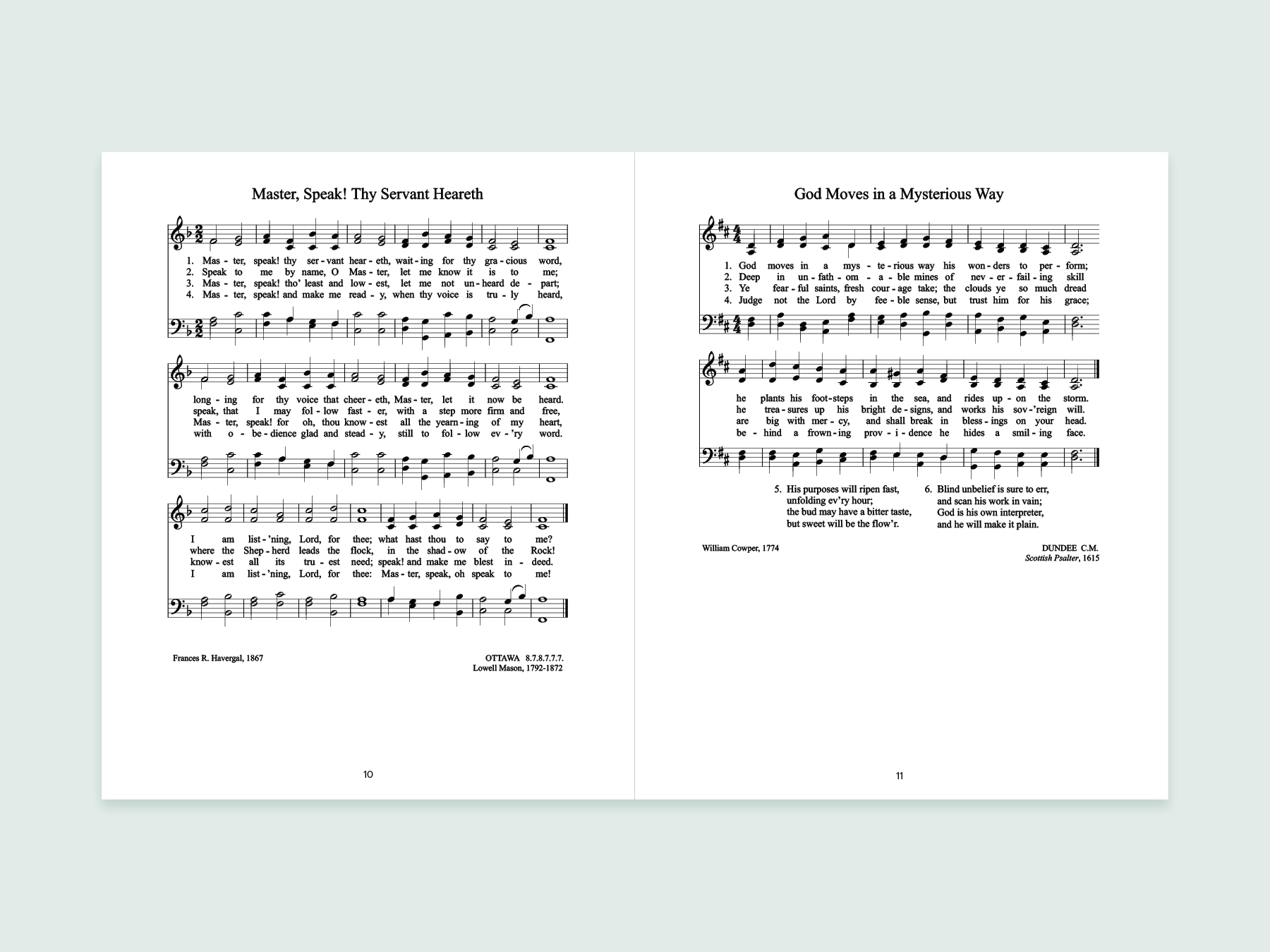
In a few moments we're going to sing a hymn that is probably familiar to many of you—God Moves in a Mysterious Way. But what is probably less familiar to many of you is the background of its author—William Cowper. Cowper was an 18th-century Christian hymn writer who struggled deeply with depression and had serious overwhelming doubts about God’s love for him personally. Even though he believed the truths of the gospel, he often felt as though those promises didn’t apply to him. He was convinced, at certain points in his life, that he was beyond God’s mercy.
And yet in the midst of that darkness, Cowper wrote some of the most hope-filled hymns the church sings today. In God Moves in a Mysterious Way, he wrote:
“Judge not the Lord by feeble sense, But trust him for his grace. Behind a frowning providence, He hides a smiling face.”
Cowper’s life reminds us of something important: even sincere believers can struggle to feel God’s love. And maybe that’s you this morning. But the message of Malachi 1:1-5 is that your present circumstances are not a reflection of God’s character. It’s not a reflection of God’s love.
As Cowper wrote: “...trust him for his grace. Behind a frowning providence, He hides a smiling face.”
What Christians often forget is that we’re not promised a life of comfort and ease. Scripture tells us to expect trials of various kinds. There will be seasons of family strain, frustration at work, loneliness, even deep discouragement. And it is especially in those moments that we must remember this: God’s love is not rooted in who we are or what we’ve done, but in who He is and what He has done.
Jesus is the clearest proof of this. He was rejected, persecuted, and suffered to the point of death—yet the Father declared, “This is my beloved Son, with whom I am well pleased.” If the beloved Son walked a path of suffering, then hardship is not evidence of God’s absence, but often the very context in which His love is most clearly displayed.
Those who trust in Christ are brought into that covenant love—united to Him, forgiven of their sins, and held fast by the same unchanging grace. So the call is not to try to earn that love, but to rest in Christ, to believe in Him, and to find in Him the assurance that God’s love is truly yours.
So if your life doesn’t look the way you wish it did, don’t take that to mean God has removed his love from you. Instead, measure God’s love by His Word, His promises, and above all, by what he has done for you in Jesus Christ. And as you do, you will find that His love is steady, sovereign, and sure—yesterday, today, and forever.
Amen. Let’s pray together.
