
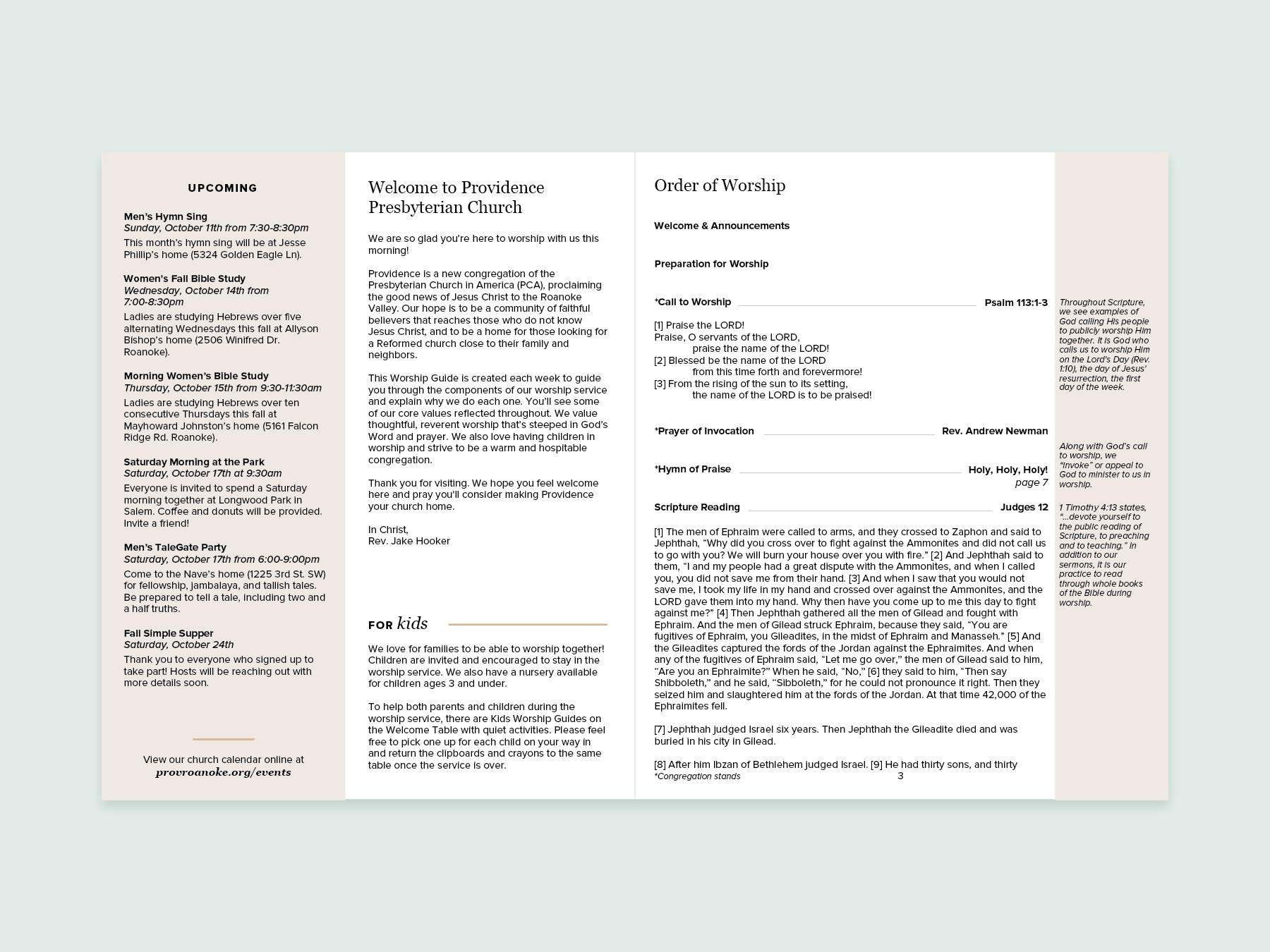
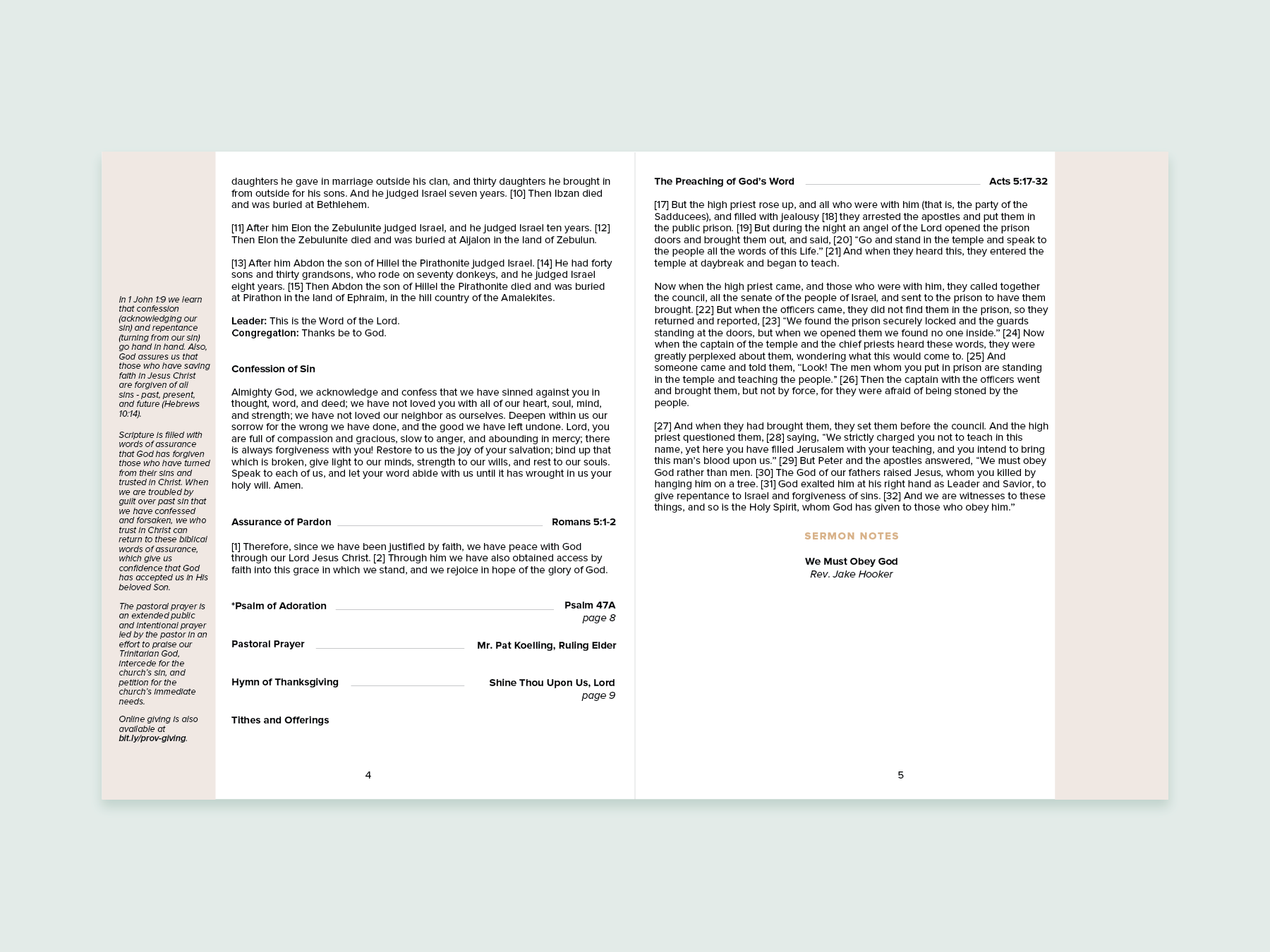
We Must Obey God - Acts 5:17-32
I recently finished reading Jonathan Haidt’s bestseller, The Anxious Generation. In the book, Haidt discusses how the rise of smartphones and social media has affected young people, particularly Gen Z, the first generation to come of age with smartphones and social media as a normal part of everyday life.




One of the things he points out is that this constant connectivity has supercharged Gen Z’s desire to fit in. Think about it: when you were growing up, you could go home at the end of the school day and, for the most part, get away from the social pressures of school. You might wonder what your friends thought about you, or whether you fit in with a particular group, but you weren't constantly confronted with the answer.
That's changed. Now, the social dynamics of school follow young people home in their pockets. Through social media, they can see what their friends are doing, what everyone is wearing, where everyone is hanging out, and what opinions are considered acceptable. They can measure their popularity through likes, comments, and followers. And if they aren't included in a group conversation or invited to an event, they may find out about it almost immediately.
In other words, the pressure to fit in doesn't simply disappear when the school bell rings. It's there when they get home, when they go to bed, and sometimes even when they wake up in the middle of the night. There's always another post to compare themselves with, another opinion to consider, and another opportunity to wonder whether they're measuring up.
And here's the thing: that desire to fit in isn't unique to Gen Z. It's part of being human. We want to be accepted. We want to belong. We want people to like us. But when the opinions of other people are constantly in front of us, it becomes increasingly difficult not to let those opinions shape what we say, what we do, and even what we believe.
And that brings us to an important question: What happens when the desire to fit in comes into conflict with our responsibility to obey God?
Because the pressure to conform doesn't disappear when we become Christians. In fact, there will be times when following Jesus puts us at odds with the very people whose approval we desire. We may have to choose between being accepted by the crowd and being faithful to Christ.
That's precisely the situation the apostles face in Acts 5. The authorities have commanded them to stop preaching in the name of Jesus. They have a choice to make: conform to the expectations of the people around them, or remain faithful to the One who called them to proclaim the gospel.
And Peter's answer is unmistakable: “We must obey God rather than men.”
Those words are the central theme of this passage. “We must obey God rather than men” is a statement that puts everything into perspective. And we learn three things from this passage: first, obedience to God provokes opposition (vv. 17-18), second, obedience trusts God despite the circumstances (vv. 19-26), and lastly, obedience puts God’s authority above man’s authority (vv. 27-32)
Previously we had looked at how many miraculous signs and wonders were being conducted in the church, which resulted in people flooding to the church. And so the Jewish religious leaders, which was the Sanhedrin, wanted it to stop. They wanted the apostles to stop teaching, stop preaching, and stop healing.
Obedience provokes opposition (vv. 17–18)
And we’re told exactly why in verse 17. Luke tells us that they were filled with jealousy.
Remember at this point in redemptive history the early church was regularly meeting at Solomon’s Portico or Colonnade which was effectively a covered walkway that ran along the eastern side of the temple complex. They were gathering there and the apostles were healing people and their ministry was gaining influence. And their expanding influence is what made the Jewish religious leaders jealous.
When I finished seminary I was incredibly naive. One of the ways that I was naive was I thought everyone would support everything I did. That everyone I came into contact with would be encouraging and happy for me. Let me just say, I have experienced a lot of that from many of you sitting in this room. But what I wasn’t prepared for was just how much resistance and opposition I would face. At just about every step along the way, someone has doubted, questioned, or challenged me.
But then I remember an incredibly important point: no Christian is promised a life of ease and comfort. Jesus didn’t even experience that. In fact, obedience to Christ often will create friction between you and those around you.
Just consider what’s going on in this passage: what exactly are the apostles doing wrong? Healing people? Preaching Jesus is the Messiah that every Jew should have been on the lookout for? Lives are being transformed for the better. You would expect that this would be something everyone would celebrate, but instead, they’re facing opposition!
As the church grows the enemies of the church become increasingly hostile.
I think we all inherently believe that when we obey God, and implement His Word into our daily lives, that our lives will improve. If we're obedient, things should start falling into place. That everything will suddenly get easier.
Interestingly enough, that’s exactly what the prosperity gospel teaches. That if you’re doing what God wants you to do then you’ll reap earthly blessings.
But the truth is, the Bible actually teaches us to expect something very different. The Christian life is not a promise that everyone will like us, approve of us, or applaud our decisions. In fact, Scripture repeatedly warns us that faithfulness to Christ will sometimes put us at odds with the people around us.
Pastor Andrew has been leading the men through a study of 1 Peter. And remember, Peter wrote that letter to Christians who were experiencing suffering and persecution because of their faith. He writes to encourage them to remain steadfast, even when following Christ brings hardship. He reminds them that they have been called to follow in the footsteps of Jesus, who Himself suffered unjustly.
Jesus made this point plainly in John 15 when He told His disciples that if the world hated Him, it would hate them as well. Paul tells Timothy that “all who desire to live a godly life in Christ Jesus will be persecuted” (2 Timothy 3:12).
Now, that doesn't mean Christians should go looking for trouble. We shouldn't be needlessly offensive, argumentative, or unkind. Peter himself tells us to conduct ourselves honorably among unbelievers (1 Peter 2:12) and to be ready to explain our hope “with gentleness and respect” (1 Peter 3:15).
But it does mean that we cannot make the approval of other people the measure of our faithfulness. Sometimes people will be offended not because we've been unkind, but because we refuse to compromise what God has said. Sometimes our convictions will make others uncomfortable.
The question is not whether everyone around us approves of our obedience to Christ. The question is whether we will remain obedient when they don't.
And that's exactly what we see in Acts 5. The apostles aren't trying to provoke the Sanhedrin, but they aren't willing to compromise either.
Obedience trusts God despite the circumstances (vv. 19–26)
When you think about it, it’s quite remarkable that the Jewish religious leaders are the ones who want to silence the apostles. The very people who should have been looking, anticipating, searching for the Messiah, are the very ones attempting to silence those who are preaching about him.
We’ll see this over and over again in the book of Acts. They arrest the apostles and throw them in prison in order to silence them. This is standard practice in the book of Acts, but it’s happened all throughout church history where people, government, institutions, have attempted to silence the preaching of the good news of Jesus Christ.
Something similar happened to one of the most well-known Christian authors. John Bunyon, author of the Christian classic, Pilgrim’s Progress was imprisoned in 1660 for preaching without a license. During this time, the church in England was incredibly oppressive. You simply weren’t allowed to minister outside of the church in England. Bunyon refused to give up preaching and as a result spent twelve years in prison.
There were even attempts to silence George Whitefield. When Whitefield returned to Philadelphia in 1739, he initially sought to preach in the churches. But most of the churches closed their doors to him and refused to give him their pulpits. Which is why he ended up doing open-air preaching.
In our text the apostles were thrown into prison for preaching Christ, but what we see is that prison cannot prevent the Word of God from going out in power.
And of course we know what happens here. An angel released the apostles and gave them a very specific charge in verse 20: ““Go and stand in the temple and speak to the people all the words of this Life.” 21 And when they heard this, they entered the temple at daybreak and began to teach.”
That’s a pretty remarkable charge! Because the angel didn’t just set them free and say, “alright y’all make a run for it!” The angel tells them that God wants them to “go right back out there and do exactly what got you thrown in prison to begin with!”
It doesn’t take a rocket scientist to figure out, “If I do that bad things will probably happen to me. It will probably be worse than a simple arrest. They might beat me or try to kill me for this.”
In many ways, this is the crux of the passage. What God commanded the apostles to do was in direct conflict with what the Jewish leaders had commanded them to do.
And that raises a question for us: What would you do? Would you shrink back? Would you try to be a little less public about your faith? Maybe find another place to talk about Jesus, somewhere you’re less likely to face opposition?
Over the years, I’ve had a few different people who wanted to talk to me about being invited to a gay wedding. And of all the examples that I can think of off the top of my head, they know they can’t celebrate a lifestyle that Scripture plainly condemns. For the people I’ve talked to on this subject the issue is almost never whether or not they should attend.
The question that they almost always want to discuss is how do I navigate a relationship that’s strained? What do I do if they hate me now? For that question, I don’t have a great answer.
Because the truth is, at some point, every Christian is going to be faced with a moment where your obedience to Jesus Christ is going to cost you something. Jesus told us that he came not to bring peace but a sword. Faithfully walking with him will cost you. It may cost you a friendship, a job, or even a family member. But it’s in those moments where your allegiance will shine the brightest.
What we see in the apostles is something simple, difficult, and beautiful all at the same time: they trusted in the Lord despite their circumstances. God had told them to, “Go and stand in the temple and speak to the people all the words of this Life.” And so that’s what they were going to do.
Obedience puts God's authority above man's authority (vv. 27–32)
And as we read, the apostles went right back out and continued preaching. Notice what happens when the guards find them in the temple: they bring them in peacefully because they’re afraid of how the crowd might respond. The very people the authorities are trying to silence have gathered a crowd to hear them preach.
And so when they take the apostles back to the Sanhedrin, the Jewish council for questioning, that’s where the council tells them, We strictly charged you not to teach in this name, yet here you have filled Jerusalem with your teaching, and you intend to bring this man's blood upon us.”
They weren’t worried about Jesus’ blood being on their hands at his crucifixion but now suddenly they are.
But Peter famously answers: “We must obey God rather than men.”
So simple and yet, so profound. We sometimes gloss over Peter’s words. Notice that Peter doesn’t tell the council, “We want to obey” or “We’d prefer to obey” or “We’d like to obey.” No, Peter says, we must.
In other words, the apostles understood that they were duty-bound to obey God. From their perspective, there was no question about what they had to do. When God commanded them to preach, they had to preach—even when the authorities told them to stop.
And this is an important principle for us to understand, because sometimes the world around us, our culture, society, and even our government can give us the impression that we are obligated to obey their instructions regardless of whether those instructions conflict with the Word of God.
Think back to the COVID-19 pandemic. We saw a time when ABC stores could remain open, Walmart could remain open, and even tobacco shops could remain open, while churches were told to close their doors. For many Christians, that raised a serious question: What happens when the demands of civil authorities conflict with our God-given responsibility to worship together?
Hebrews 10:25 tells us not to neglect meeting together. Meeting for worship isn't an optional aspect of the Christian life, it's something God commands us to do.
So what happens when friends, institutions, an employer, or a government tells us to do something that directly contradicts God's Word? Whom do we obey?
Now, let me be clear about something. Christians are not anarchists. Romans 13 teaches us ordinarily Christians are to submit to governing authorities assuming they’re not asking believers to do or not do anything that contradicts the Word of God.
But that's precisely the situation we encounter in Acts 5. The apostles are being told to do something that directly contradicts the Word of God. The authorities have directly commanded them to stop doing something God has commanded them to do.
Interestingly enough, when the Westminster Standards (the Westminster Confession of Faith, along with the Larger and Shorter Catechisms) were being hammered out in the 1640s, this very question came up. The Westminster divines addressed it in chapter 20 of the Confession, which deals with Christian liberty and liberty of conscience.
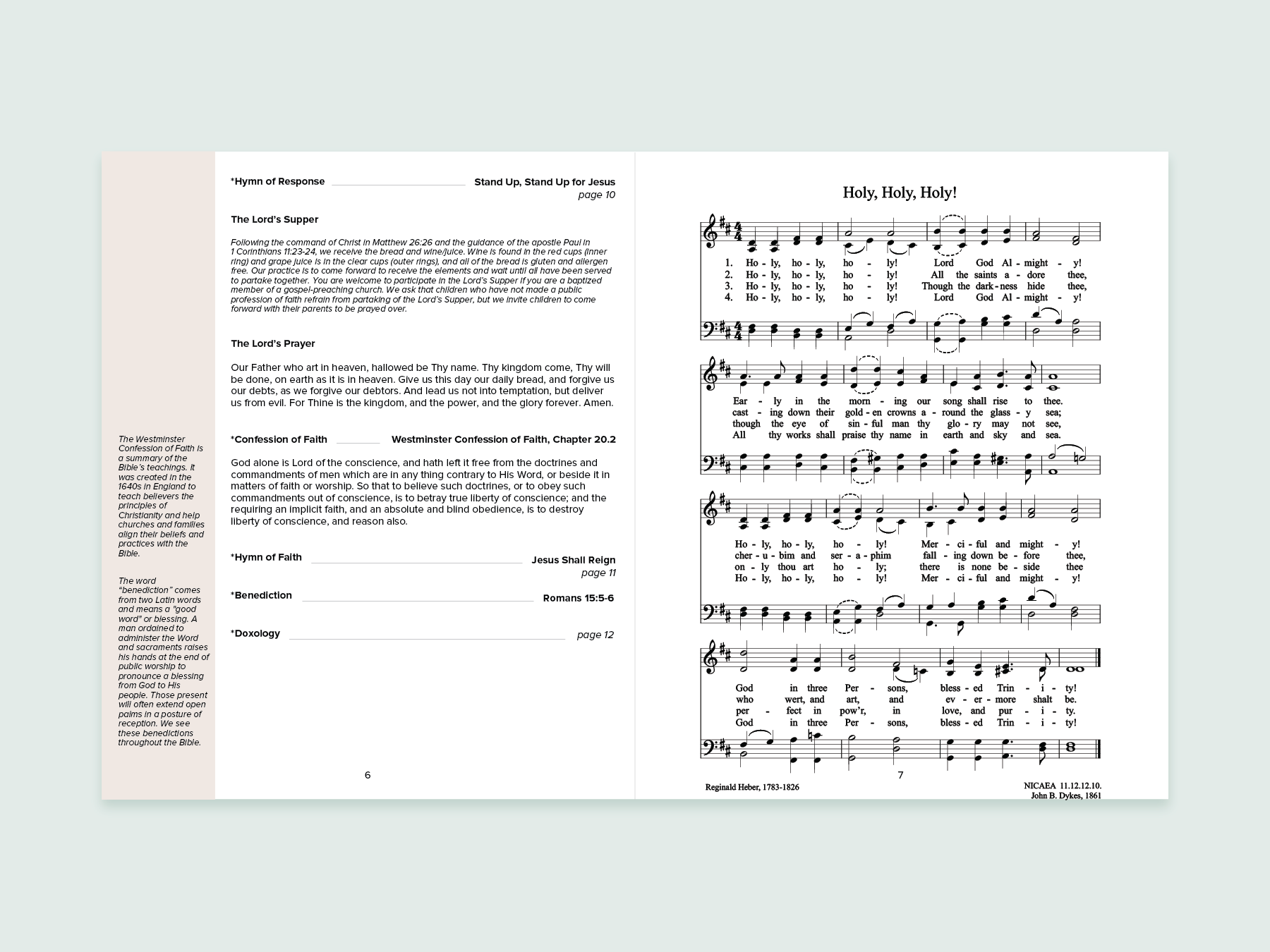
In paragraph 2, they make this important statement: “God alone is Lord of the conscience.” In other words, our consciences are ultimately bound to God and His Word, not to the commands of men when those commands contradict what God has revealed.
So when the commands of men and the commands of God come into direct conflict, the Christian's duty is clear: We must obey God rather than men.
Sometimes that obedience might be incredibly unpopular. It might put you at odds with the culture. It might offend people. But we must obey God.
But that raises one final question: Why? Why obey God rather than men? Why risk your reputation? Why risk your relationships? Why endure ridicule, rejection, or even persecution rather than simply keep your faith to yourself?
The answer is not that Christians are looking for a fight. It’s not that we enjoy being different or that we want to make life difficult for ourselves. And it’s certainly not because we think we’re better than anyone else.
No. We obey because Jesus means that much to us.
Think about what Jesus Christ has done for us. He came into this world to save sinners. He took on human flesh, lived the life of perfect obedience that we have failed to live, and willingly went to the cross to bear the judgment our sins deserved. He was mocked, beaten, rejected, and crucified so that we might be reconciled to God. He gave Himself completely to redeem a people for His own possession.
That is the extent to which He went to save us. He did not turn away when obedience to His Father meant suffering. He did not abandon His mission when the authorities condemned Him. He endured the cross for the joy set before Him, securing our forgiveness and eternal life.
And now, having been loved with that kind of love, how can we treat obedience to Him as something optional? How can we confess that Jesus is Lord on Sunday and then live as though His authority means nothing on Monday?
Brothers and sisters, we do not obey God in order to earn His love. In Christ, we have already been loved beyond measure. We obey because He has loved us, redeemed us, and made us His own. Our obedience is not the price we pay for salvation; it is the grateful response of those who have been saved by grace.
And that means there will be times when following Jesus costs us something. There may be moments when faithfulness puts us at odds with our neighbors, our coworkers, our friends, or even our governing authorities. We may be tempted to keep quiet, to blend in, or to compromise just enough to avoid the discomfort.
But when those moments come, remember what Christ has done for you. Remember the price He paid to make you right with God. Remember that the approval of the world cannot compare with the joy of belonging to Him.
The apostles understood this. They had been commanded to stop preaching Jesus, but they could not remain silent about the One who had conquered death and offered forgiveness of sins. They knew that no earthly authority could claim the allegiance that belonged to their risen Lord.
And so, may the same be true of us. May we be respectful toward those in authority, gracious toward those who oppose us, and humble in the way we conduct ourselves. But may we never be ashamed of Christ, and may we never allow the fear of man to silence the good news of the gospel.
For when it comes down to it, we must obey God rather than men—not because obedience is always easy, but because Jesus Christ is worthy of our obedience.
Amen. Let’s pray together.
