
Compromise, Idolatry, and the Cost to Human Life - Exodus 32:1-8
Since 1973 over 63 million babies have been aborted in America.
That death toll makes the Civil War and the holocaust look like child's play. Abortion is the moral evil of our day.
And of course, the abortion numbers are shocking, but Lifeway research ran a study that found 7 in 10 women who get an abortion identify as Christian. The article goes on to say that, “The 70% of women who’ve had abortions that self-identify as a Christian includes Catholics (27%), Protestants (26%), non-denominational (15%), and Orthodox (2%). Among Protestants, more identify as Baptists (33%), Methodist (11%), Presbyterian (10%), or Lutheran (9%).”

Now you might think to yourself, “well, they identify as Christian… Are these women who are getting abortions just nominal Christians? They identify as Christian but their faith isn’t really sincere?”
And my response is… does it matter? Maybe you can explain some of it away by pointing to the liberal mainline denominations. I think there’s probably something to that, but it can’t explain all of it! To me, this points to a much deeper, more fundamental problem in the church.
My point is, the abortion issue isn’t just “out there,” ladies and gentlemen, it’s “in here.” Abortion is every bit as much a problem within the church as it is outside of it. There’s a massive red flag that’s screaming that we–the broader evangelical church—we’re doing something wrong.
And that’s the question I want us to reflect upon this morning—what are we doing wrong? How did we get to the point where one in four women who get an abortion identify as a protestant christian and among those 10% identify as Presbyterians?
And yet, it seems that this issue is treated very casually in the evangelical church. It’s not talked about very often, and we know why: it’s too political. It’s too controversial. It could upset someone. But the consequence of ignoring it is even greater—it means lives will be lost. We have to talk about it.
I’m sure there are lives here this morning that have been impacted by an abortion and have simply chosen to never speak about it. If that’s you, I want to remind you that the message of the gospel still rings true. There is forgiveness and hope in Jesus Christ. And so everything that I say this morning, hangs under that banner—the grace, hope, and love found only in the gospel of Jesus Christ is held out to you. There is therefore, now, no condemnation for those who are in Christ Jesus.
But if we’re willing to take a cold, hard look at ourselves in the mirror, I think that means we, the church, have to acknowledge our complicity in the abortion industry. Somehow, people think that their only option is to walk out of the church and straight into the abortion clinic. We’re doing something wrong.
The question of “what the church is doing wrong” admittedly has many answers, but one that consistently stands out to me is that the church is unwilling to confront idols.
Which, in many ways, was exactly what we just read from Exodus 32: Aaron, Moses’ own brother, the first high priest, the man responsible for leading worship in Israel, passively went along with their idol worship and then sought to blend it with the worship of the One True God.
Hopefully, that sheds some light on our passage this morning.
Unwilling to Confront Idols (v. 1)
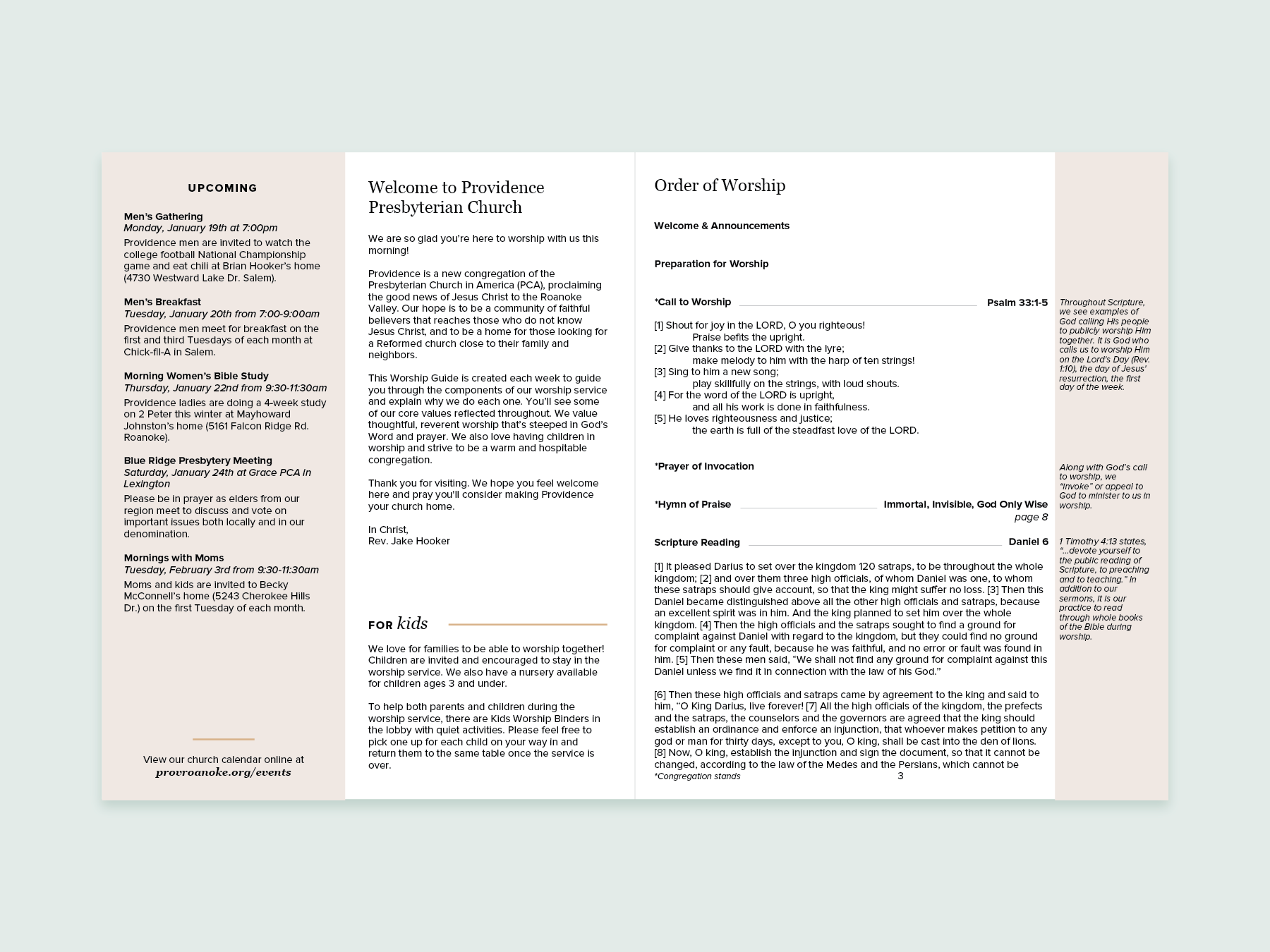
Many of you probably know the backdrop to what’s going on here in Exodus 32. The people of Israel were instructed to stay and wait for Moses because he was going to ascend Mount Sinai in order to meet with the Lord.
Look at what they said in verse 1:
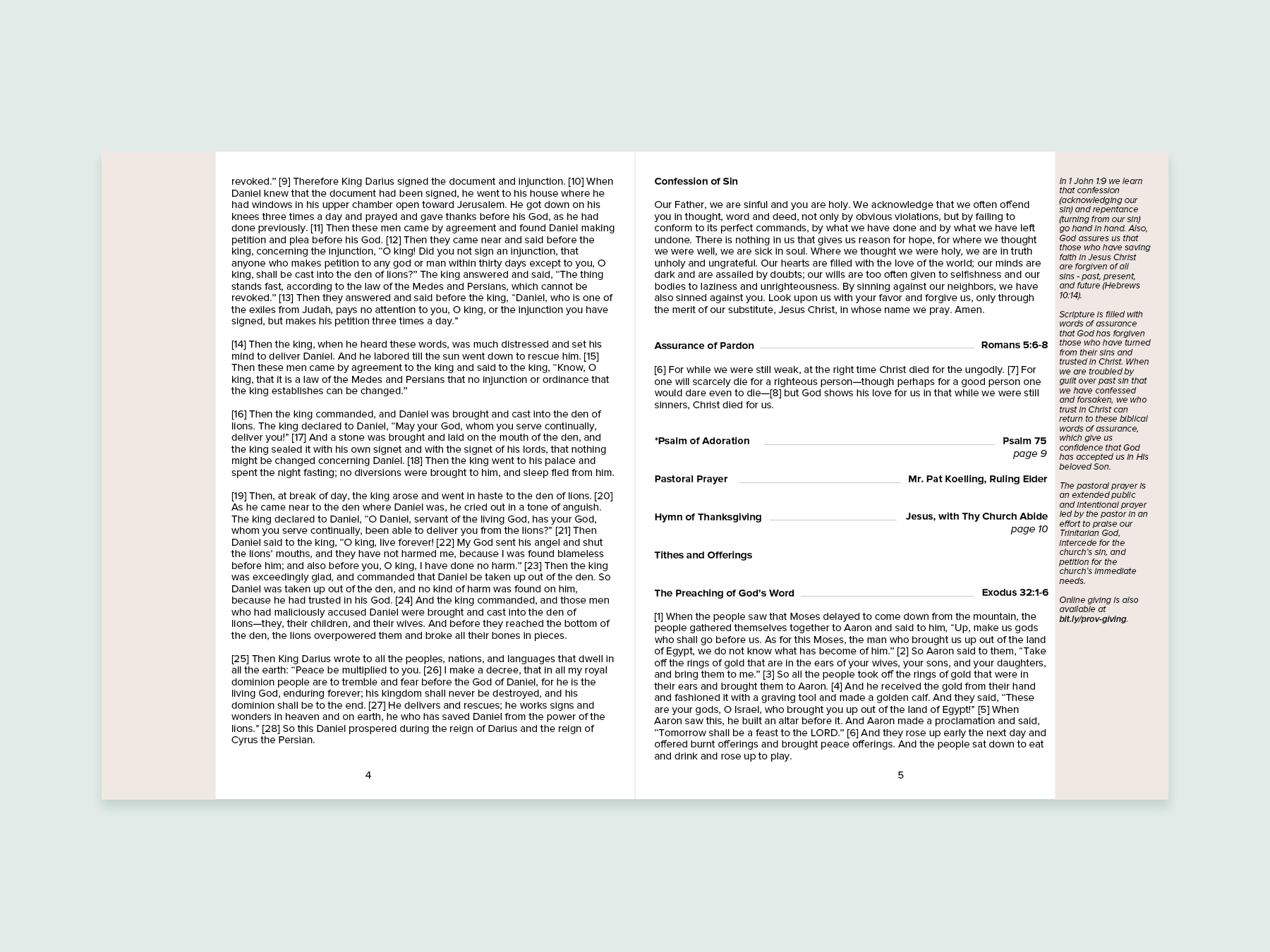
“When the people saw that Moses delayed to come down from the mountain, the people gathered themselves together to Aaron and said to him, “Up, make us gods who shall go before us. As for this Moses, the man who brought us up out of the land of Egypt, we do not know what has become of him.””
It’s quite amazing just how quickly Israel was willing to abandon God.
The same Lord who delivered them from slavery in Egypt, the same Lord who parted the Red Sea, the same Lord who visibly led them by a pillar of cloud by day and fire by night.
But in some sense you almost expect people to resist or turn from God at some point or another. What you don’t expect is for the leadership of the church to go along with it! But that’s exactly what happened! Aaron is right there in the thick of it.
“Take off the rings of gold that are in the ears of your wives, your sons, and your daughters, and bring them to me.” 3 So all the people took off the rings of gold that were in their ears and brought them to Aaron. 4 And he received the gold from their hand and fashioned it with a graving tool and made a golden calf.”
Aaron was totally compliant and complicit in the idolatry of Israel, which is the opposite of what he was supposed to do! You’d expect him to say, “Hold on everyone! The Lord has brought us this far! We need to wait on Him!” But he doesn’t say anything like that. He said give me your gold and formed it into a golden calf.
It’s rather shocking that Aaron wasn’t willing to confront Israel’s desire for an idol.
Which is, frankly, so much of the testimony of God’s Word. Every time I’ve read through the Bible I’m struck by just how it’s saturated with conflict. You have Biblical figures like Elijah confronting wicked king Ahab and Jezebel. Or you have John the Baptist confront King Herod about his illicit relationship with Herodias, his brother Philip’s wife. Or even Jesus himself, was in constant conflict with the Pharisees and Sadducees.
Those are just three right off the top of my head. There are many more. When I think about men who have altered history, the same is true for them. John Knox, the father of presbyterianism on several occasions directly confronted Mary Queen of Scots for her immorality and persistent resistance to the Word of God.
My point is, the church has a long history of conflict and that’s coming from someone who does not seek out conflict. I think of myself as conflict averse. I don’t enjoy it.
There’s a Biblical expectation that Christians’ stand up for what is right. It sounds silly to even say that because it’s so obvious. And yet, when it comes to the abortion issue, few are willing to say anything.
And it’s for all the typical reasons: it’s too political. It’s too offensive. It might hurt someone’s feelings. But the consequences for remaining silent are even greater—innocent lives will be taken!
In my mind, an abortion is the last step. But there are a million little steps that move a woman from an unplanned pregnancy to an abortion.
Mixed in that are a lot of idolatrous beliefs that we don’t talk about enough. One of those idols is our culture’s obsession with egalitarianism–that there are no functional differences between men and women. That women can do anything that a man can do. Which is of course untrue. Women can’t do everything that men can do, and men can’t do everything that women can do. God designed it that way—we need each other, and yet, the church is often afraid to affirm God’s design as good.
In fact, the church is often more willing to affirm that there are no differences between men and women. Women can serve as church officers, they can be their family’s breadwinner, some even think that they can and should serve in military combat! Things have gotten completely out of control and there are few who are willing to say that God designed differing roles, particularly in marriage, not to restrict anyone but so that everyone can flourish!
But the cultural waters that we swim in say something very different. They say that God’s design for marriage and the family is restrictive. And so, marriage and children are treated as a threat to autonomy, productivity, and status—something that needs to be eliminated rather than stewarded.
The statistics even bear this out. Some of the most commonly cited reasons for abortions are: about 40% say they’re not financially prepared, 36% say it’s not the right time in life, and roughly 20% say it will interfere with future plans.
In other words, at the center of many of these decisions to abort is the fear of disruption—the fear of losing control over their life.
The world teaches that the Christian view of marriage and the family is narrow and restrictive. We need to do a better job celebrating, encouraging, and speaking of the beauty of God’s design for marriage and the family, because if we even cede one inch, we’re opening the door to the pro-choice cause.
Attempts to Blend True Worship with Idolatry (vv. 4–6)
One of the other interesting things about Exodus 32 is that Aaron makes the golden calf, the people then celebrate—“here are the gods that led you out of Egypt”—and then what does Aaron do?
He says, “Tomorrow shall be a feast to the Lord.” And they rose up early the next day and offered burnt offerings and brought peace offerings. And the people sat down to eat and drink and rose up to play.
Aaron tries to blend the idolatry of the people with the worship of the true God. He attempts to walk an imaginary tightrope, splitting the difference between the people’s desire for visible gods and his desire to not fully abandon the Lord. He wants peace without faithfulness, unity without obedience, worship without repentance.
There’s a word for that—compromise. Aaron was willing to compromise. He didn’t want to upset the people, didn’t want to provoke conflict, didn’t want to lose influence. So instead of confronting sin, he sanctified it. He dressed it up in religious language and tried to make it seem like what they were doing could coexist with the worship of the one true God.
And in some ways, that’s worse. Because rather than outright rebellion, compromise claims divine approval. It says, “God’s okay with this. God understands. God blesses this.” That is far more dangerous than open defiance, because it trains people to believe that God can be bent, adjusted, and rebranded to fit our desires.
Which, of course, is completely untrue. God was not pleased with any of it. His wrath burned hot against Israel. The only reason the people survived was because Moses interceded on their behalf. God does not tolerate worship mixed with rebellion. He does not accept devotion shaped by human preference. And He does not bless compromise masquerading as compassion.
Now hopefully you can see where all of this is going. Too often, the church’s position on abortion mirrors Aaron’s strategy. We soften the language because the topic is painful. We hesitate because someone might be hurt. We redirect the conversation to broader themes—care, justice, consistency, life from birth to grave. And while those concerns matter, they are often used to blunt the force of moral clarity.
Rather than speaking plainly, we obfuscate. We obscure. We confuse. We turn a clear moral evil into a complex policy discussion. And over time, that silence begins to function as permission. It begins to sound like justification.
That is precisely what Aaron did. He never came out and said, “This is wrong.” He simply rerouted the conversation. This isn’t idol worship—this is for the Lord. Let’s dedicate it to Him. Let’s have a feast. It was a soft justification for sin.
Let me be clear: I don’t want to hurt anyone’s feelings. I have real compassion for anyone who has walked this path. The gospel offers forgiveness, healing, and restoration to all who repent. And yes, we should care for life at every stage. But none of those truths excuse silence. None of them require us to blur what God has made clear. Compassion and clarity are not enemies. Faithfulness demands both.
The church must not repeat Aaron’s mistake. We cannot bless what God condemns, nor remain silent where He has spoken. To do so is not love—it is compromise.
A Costless Christianity Always Produces Compromise (vv. 7–8)
But here’s what’s scary to me: the church’s compromise on abortion rarely sounds like compromise. It sounds like nuance. It sounds like empathy. It sounds like silence for the sake of unity. And so instead of speaking clearly about sin, we retreat into vague language about being “pro-life,” as though a label can replace moral courage. We speak in generalities because generalities are safe. They don’t offend. They don’t confront. They don’t require repentance.
But when the church refuses to speak clearly about abortion, it is not being loving—it is being unfaithful. Silence is not neutrality; it is permission. And that permission slowly trains consciences to believe that God is indifferent where He has spoken plainly. Over time, what once shocked us no longer troubles us. What once demanded repentance becomes a matter of personal choice. And the church, rather than shaping the moral imagination of the culture, begins to echo it.
This is how compromise works. It does not announce itself as rebellion. It dresses itself up as wisdom. It says, “Now is not the right time,” or “This issue is too complex,” or “We don’t want to hurt people.” But the prophets of Scripture were never silent when innocent blood was being shed. Elijah did not remain quiet for the sake of unity. John the Baptist did not soften his message to preserve influence. John Knox did not hesitate to confront sin in high places. They feared God more than man, and they understood that faithfulness often comes at a cost.
So where are the Elijahs? Where are the John the Baptists? Where are the John Knoxs? Where are the pastors and elders willing to say plainly what God has already said—that every human life is made in the image of God and therefore has infinite value? That the deliberate taking of innocent life is sin? That repentance is not cruelty but mercy?
The church must call everyone involved in the abortion industry to repentance—not with self-righteousness, not with hatred, but with clarity and conviction. That includes politicians, providers, institutions, and yes, churches that have remained silent. Repentance is not a word of condemnation; it is an invitation to life.
And this is where what I said at the beginning is so critical: the message of the gospel still rings true. We do not speak because we are better, but because Christ is merciful. There is forgiveness for those who have had abortions. There is healing for those who carry shame. There is restoration for those who feel beyond hope. The blood of Jesus Christ cleanses from all sin—even this one.
Everything I’ve said hangs under that banner. The grace, hope, and love that we all desperately need are found only in the gospel of Jesus Christ. A church that speaks clearly about sin and boldly about grace is not harsh—it is faithful. And by God’s grace, may we be that kind of church.
The cross tells us that life is so valuable that it required the blood of the Son of God.
In Exodus 32, Israel built a golden calf and called it worship. They blended idolatry with sacrifice, rebellion with religion. And God’s holiness burned against them—not because He is harsh, but because He will not share His glory with idols, nor will He allow His people to redefine Him on their terms. Yet even there, mercy intervened.
Moses stood in the breach and interceded for the people, and God restrained the judgment they deserved.
That scene points us forward to something greater. The good news of Jesus Christ begins with the honest diagnosis of our sin and ends with the announcement of God’s mercy. The same God whose holiness exposed Israel’s idolatry is the God whose Son bore its penalty.
Jesus is the greater Moses who stands between God and His people—not pleading with words, but offering His own life. He was not reshaped to fit our desires; He was crushed for our rebellion. At the cross, Christ confronted every idol—autonomy, control, comfort, and self-rule—and defeated them by submitting fully to the will of the Father.
And that means no sin is beyond the reach of His grace. There is forgiveness for those who have participated in abortion. There is cleansing for guilty consciences and healing for deep wounds. The gospel does not excuse what God condemns, but it offers mercy where repentance is real.
So the call before the church is not to build new calves or rename old sins, but to repent and believe. To tear down the idols we’ve tolerated. To stop reshaping God in our image and instead be reshaped by His Word. Faithfulness will cost us comfort and cultural approval—but it will gain us Christ.
And this is our hope: Jesus is building His church, not on compromise, but on repentance and faith. When Christ is exalted, idols fall, consciences are healed, and the church recovers its witness. May God grant us the courage to confront sin, the humility to repent, and the faith to trust that His gospel is enough—for us, for the unborn, and for a world desperate for life and truth.
