
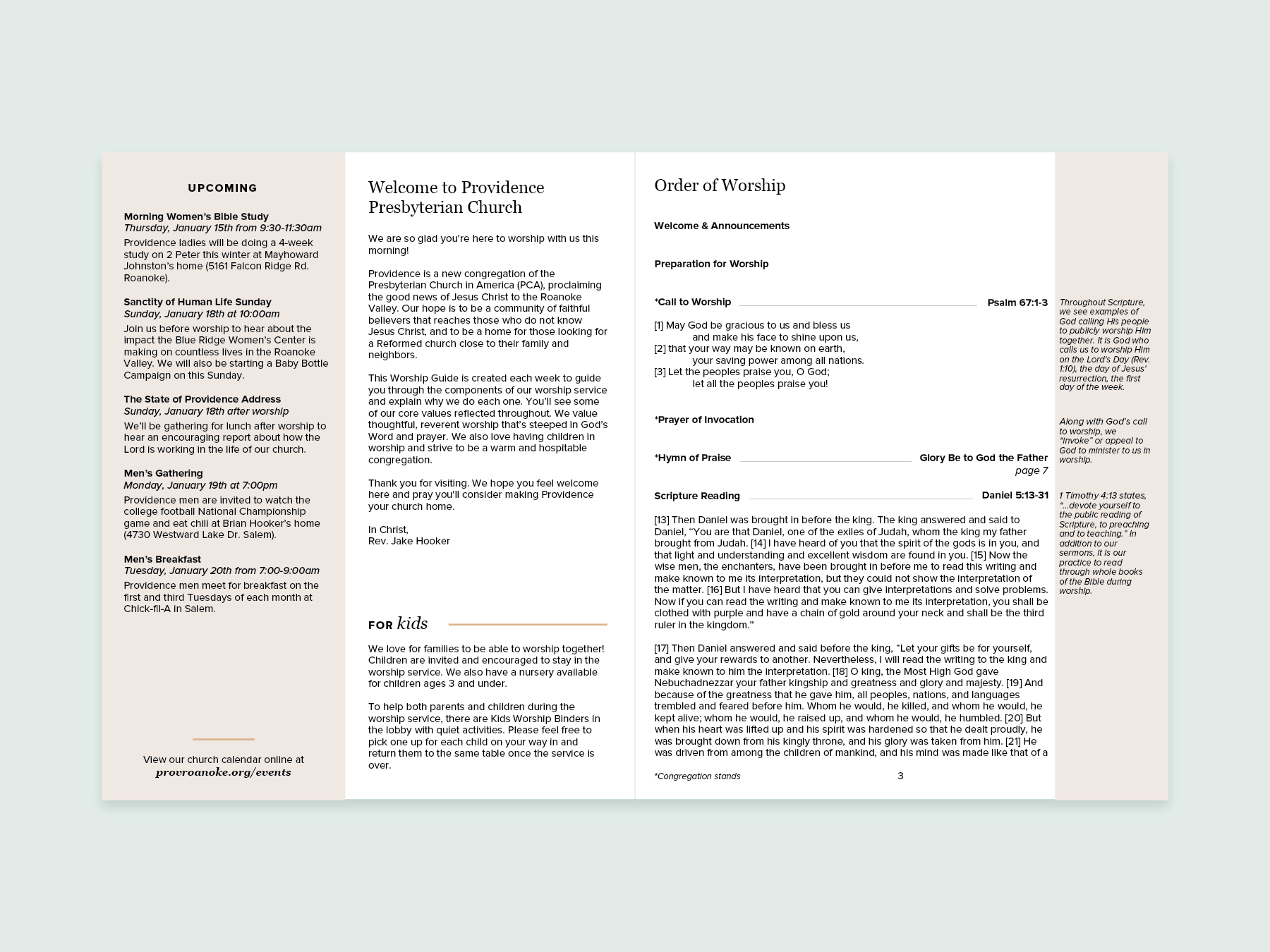
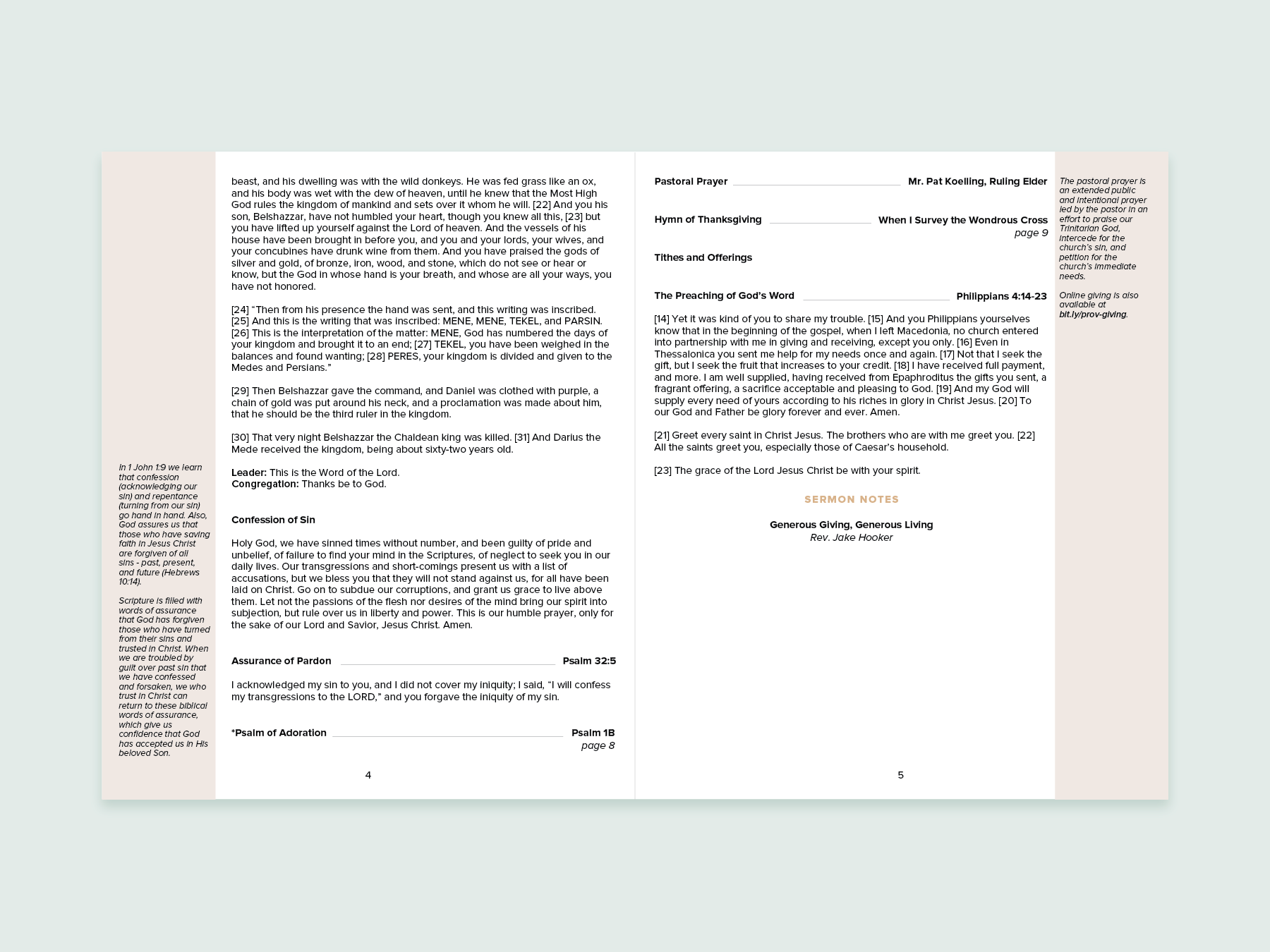
Generous Giving, Generous Living - Philippians 4:14–23
There’s a great scene from one of my favorite TV shows, The Office, where the main character, Michael Scott, is daydreaming about what he wants his life to look like when he finally retires.
Michael says he doesn’t want to just fade away or disappear to some tropical island. He wants to be remembered as someone who gave everything back. In his fantasy, he walks into a hospital and asks, “Who donated that hospital wing that’s saving so many lives?” Someone responds, “We don’t know—it was donated anonymously.” Michael smiles and says, “Well, it was a guy named Michael Scott.” The person pushes back, “If it was anonymous, how do you know?” And Michael responds, without missing a beat, “Because I’m him.”




There are some perks to being generous isn’t there? Michael Scott daydreamed about receiving recognition and glory after telling people that he was a rich, generous, anonymous donor—which is hilarious. Obviously being generous shouldn’t be about the recognition that comes from it. It sort of defeats the purpose.
And of course, that’s the central point that Paul is discussing here at the end of the book of Philippians—he’s expressing his gratitude for the church in Philippi’s generosity towards him. If you remember, he received a generous gift from them by the hand of a man named Epaphroditus. Now, obviously generosity can be understood in a variety of ways, but in our text, Paul is really referring to the Philippians’ financial generosity.
And Paul wants the Philippians to understand that their generous financial support was just incredibly helpful for him, it was going to be beneficial for them as well. In fact, Paul shares three reasons they, and by extension us, should be financially generous. First, you and I should understand that generosity supports the mission of the church (vv. 14-15). Second, generosity produces spiritual growth (vv. 16-17). And lastly, generosity requires you and I to rest in God’s sufficiency (vv. 18-23).
Generosity Supports the Mission of the Church (vv. 14–16)
Now it’s important to remember that Paul is imprisoned in Rome, but he was effectively under house arrest, which of course meant that he enjoyed some measure of freedom. Traditionally, it’s understood that Paul wrote Ephesians, Philippians, Colossians, and Philemon all while imprisoned in Rome—that’s why they're often referred to as the Prison Epistles. The point being, prison didn’t slow Paul down. For Paul, the ministry marshalled right along even while under house arrest. He may not have been able to travel as much, so his ministry adapted—he took up the pen and began to write.
The one thing that Paul couldn’t do was stop, or even slow down in order to feel sorry for himself, because there was far too much work to be done! One of the amazing things about ministry is that there is always something you could be doing. There’s an endless supply of work. Jesus recognized this reality when he said “the harvest is plentiful but the laborers are few.”
Which is why what Paul says in verse 14 is so remarkable: “...it was kind of you to share in my trouble.” Paul understood their continual support and an act of incredible kindness to him.
But Paul emphasizes the fact that they shared in his trouble. Even though Paul was suffering alone, he never felt like he was suffering alone. They were so concerned and supportive of him, that it felt like they were in the ministerial trenches with him. In Paul’s mind, this church that was hundreds of miles away was actually right beside him. Everything he experienced, they experienced too.
Hopefully we’ve all felt something similar to this at some point in our lives. A family member or friend who was so invested, so supportive, so encouraging of you that it was almost like your success was their success or your failure was their failure. They were in trenches with you.
Which is exactly what Paul is saying about the Philippians! It’s so interesting that the word share here has the same lexical root as the word koinonia—the famous Greek word for fellowship or partnership.
Paul intentionally frames their generosity not as a donation, but as fellowship—true partnership in the work of the gospel. And that’s significant, because so often today, appeals for money feel impersonal, transactional, and endless. I’ve heard this criticism of the church as well–that the only thing the church wants is your money.
And of course, that’s not true. We want your stocks, bonds, and gold too. Of course, I’m kidding.
I had a professor in seminary who would often say, “Money isn’t everything, but it is a part of God’s world.” And that’s exactly right. It would be naïve—and frankly irresponsible—to pretend that money doesn’t matter at all. We need money to live. We need it to put food on the table, keep the lights on, care for our families, and plan wisely for the future. Scripture never treats money as inherently evil. But money can serve as a litmus test that reveals what is really important to you.
Your spending habits reveal what you really care about. That’s why people say, “put your money where your mouth is.” It’s easy to say that I really care about this cause, or am passionate about this really good thing, but if that’s all you do is talk about it, then how much do you actually care about it?
Hopefully you can see where I’m going with this: if you believe that the gospel is important and the primary way for nations to be evangelized is through the ministry of the church, that’s Matthew 28 by the way, then it logically follows that you’d financially support the church.
Which was the case for the church in Philippi. They weren’t a perfect church. They were sinners, and people were arguing, and there were theological threats, but one thing that shines through everything else was their love of the good news of Jesus Christ.
How do we know that? Because how they spent their money revealed what they really loved.
Look at what Paul says in verse 15: “And you Philippians yourselves know that in the beginning of the gospel, when I left Macedonia, no church entered into partnership with me in giving and receiving, except you only.” Giving and receiving is business language. He’s saying that they gave him financial support and he received it.
The Philippians were supportive of Paul’s ministry, because they were supportive of the spreading of the gospel. They were an encouragement to Paul who was on the front lines of ministry.
It seems that even in the early days of the Philippian church that they committed to supporting Paul. They had been sending Paul support for some time. But the overarching point that we cannot miss is that the church in Philippi was marked by a spirit of generosity.
Money doesn’t share the gospel. People share the gospel. But no doubt money is a tool that helps people spread the gospel. And frankly, how you spend your money reveals what you value. The Philippians saw Paul’s ministry as worthy of their financial resources.
And that forces us to ask an uncomfortable but necessary question: what does your use of money say about what you value? Do you make any room in your budget for supporting the work of the church? Or is there a laundry list of things that are simply more important to you?
Generosity Produces Spiritual Fruit (v. 17)
The reality is when we look at our personal finances none of us have enough money. All of us could probably make great use of an additional $10,000/month. And so what that creates in all of us is a scarcity mindset. We have such little money that even supporting the ministry of the church stings.
But what we fail to recognize is that we do gain something when we wisely and generously support the mission of the church. It’s not a net loss. There are some great tax benefits that come from it as well. No, I’m just kidding.
Look at what Paul says in verse 17: “Not that I seek the gift, but I seek the fruit that increases to your credit.” One commentator translated verse 17 as, “Not that I seek the gift, but I seek the fruit which increases to your account.”
Paul is using more business language here, and his point is a simple one: there is a spiritual benefit to generously supporting gospel ministry. That benefit isn’t health, wealth, and prosperity. There’s a spiritual benefit to being generous.
And that is, the more you’re willing to direct your financial resources towards things that please the Lord the less power money will have over your heart. Wasn’t that Jesus’ exact point to the rich young ruler? “Go sell all your possessions and give it to the poor.” That wasn’t blanket spiritual advice, that was specific advice to a young man who was obsessed with his money.
To my earlier point, money isn’t everything, but how quickly can it become everything? Remember it’s the “love of money that's the root of all kinds of evil.”
And of course that advice is so important because the reality is, falling in love with money is something that we’re all scepticable to. It doesn’t matter if you have a lot of money or if you have no money. A poor person can be consumed by money every bit as much as a rich person can be. Why do people go rob other people? Because, more often than not, they’re obsessed with money.
Paul is excited to see how the Philippians are going to grow spiritually because of their generosity. And this isn’t some sort of novel teaching— it’s the testimony of Scripture.
Proverbs 19:17 – “Whoever is generous to the poor lends to the LORD, and he will repay him for his deed.”
Psalm 112:5 – “It is well with the man who deals generously and lends; who conducts his affairs with justice.”
2 Corinthians 9:6–8 – “Whoever sows sparingly will also reap sparingly… God loves a cheerful giver.”
Acts 20:35: “It is more blessed to give than to receive.”
The Bible teaches us that we need to cultivate a spirit of generosity. Because at the end of the day, generosity forces you and me to stop thinking about ourselves. Generosity, by definition means you’re thinking about other people.
The opposite of generosity is selfishness and entitlement. Selfishness and entitlement will harden your heart, narrow your vision, and train you to think of everything through the lens of “mine.” Money has a unique way of slowly, often imperceptibly, shifting our dependence off of God and on to ourselves. We can quickly lose the category of blessing and fall into the trap of thinking that everything we have is the result of our hard work. “Look at what I’ve done.” “Look at what I’ve built.”
I’m certainly not saying you shouldn’t work hard and earn an honest living. You definitely need to do that. You should be wise and savvy with your money. My point is that we must remember that everything we have is on loan from God. He’s entrusted you with whatever is in your bank account. He’s blessed you with those lives in your house. That’s the mindset that cultivates a heart of gratitude and thankfulness.
And when you lose sight of that truth, selfishness, entitlement, and ingratitude will take root in your heart.
We’re still coming off of the Christmas season. I’m sure I’m not the only one that still has Christmas lights up at my house. But isn’t what I’m describing what happens in Charles Dickens classic, A Christmas Carol? Ebenezer Scrooge is so obsessed with his money that it makes him this selfish, bitter, miserable person that no one likes. He has to effectively be scared straight by the dream with all the different ghosts to see the beauty of the people and the world around him.
It really seems that the world teaches you and me to be like the miserable version of Ebenezer Scrooge. We’re constantly told to do whatever it takes to get ahead. Protect your own interests at all costs. Guard your resources. Don’t let anyone take advantage of you. It’s up to us to create the picturesque life that we all have in our heads so that we can finally be happy and fulfilled. But Paul tells us that’s a lie. The Philippians are on the pathway to lasting joy because they were so generous with what they had.
The pathway to joy requires you and I to be more open-handed with what God has given you. That’s frankly one of the keys to living a generous life is learning to look beyond yourself. It means looking for ways to serve the church and noticing the person who’s hurting, the family who’s struggling, and asking the simple question: How can I help?
You can really see the spiritual vitality of the Philippian church through their generosity.
Generosity Rests in God’s Sufficiency (vv. 18–23)
The truth is, their generosity went beyond simply being kind. Because Paul says that their generosity was “a fragrant offering, a sacrifice acceptable and pleasing to God.”
That’s Old Testament language often used to describe acts of worship. When sacrifices were offered out of genuine faith, not only did God accept them, he delighted in them. They were a pleasing aroma to the Lord.
Sometimes it’s helpful to pause and reflect on just how costly an animal sacrifice would have been for an Israelite. A bull, lamb, or goat was effectively their currency. That was their money. You were rich if you had lots of livestock. And yet, there was an expectation that they were going to give some of their livestock to the Lord as an act of worship.
This is why it’s so important to have the giving of tithes and offerings in our service. It’s an act of worship.
And effectively what you’re saying when you drop something in the offering plate as it’s being passed is, “Lord I trust you more than this.” I do believe that there is a biblical command to tithe, but more than that, I believe that every Christian should want to tithe.
I’m sure none of us would confess that we trust our money more than God. And yet, when acts of generosity are always postponed or avoided, what message are we actually communicating?
I don’t know for certain what the Philippian church’s financial situation was, but more than likely their generosity wasn’t the overflow of excess, it was the overflow of trust.
Paul actually hints at this earlier in the letter when he reminds them that they partnered with him in the gospel “from the first day until now.” From the very beginning, this was a generous church—even when it likely would have been easier not to.
They weren’t a wealthy congregation by worldly standards. Philippi was a Roman colony, but the church itself was made up of ordinary people—former pagans, a jailer, a businesswoman, families learning to follow Christ in a costly environment.
I once heard a comedian say, “Money can’t buy happiness, but it can buy you a jet ski. Have you ever seen someone frowning while driving a jet ski?” To a certain extent he’s right. You will have fun for about an hour or so on a jetski and then it’s over. But we constantly fall for the lie that if I just had a little more margin, just a little more money—then my life would finally feel content.
The Philippians were able to tune all of that out and gave anyways. Not because it was convenient, but because they were convinced that no matter what, the Lord was going to take care of them.
Which is why Paul tells them that, “...my God will supply every need of yours according to his riches in glory in Christ Jesus.” Notice that Paul doesn’t say your generosity will meet my needs, or that good circumstances will meet your needs. He says my God—the God I have trusted, the God who has never failed me—will supply every one of your needs.
Paul is reminding them that the same God who had saved them would also sustain them.
Isn’t this the exact thing that Jesus talked about in Matthew 6? “Therefore do not be anxious, saying, ‘What shall we eat?’ or ‘What shall we drink?’ or ‘What shall we wear?... Seek first the kingdom of God and his righteousness, and all these things will be added to you.”
We are called to be responsible, thoughtful, and careful with what the Lord has entrusted to us. But the danger comes when we subtly begin to believe that money can provide what only God can. Money can purchase experiences, convenience, and temporary relief—but it cannot deliver peace.
Christian generosity is ultimately an expression of where our trust lies—is it in the sufficiency and goodness of God, or in our finances, our abilities, and the world around us.
At the end of the day, Christians are supposed to reflect, in small, microscopic ways, the character of God. And what did the Lord do? Paul reminds us in Romans 8 that “He who did not spare his own Son but gave him up for us all, how will he not also with him graciously give us all things?”
You and I are called to live generous lives because we serve a generous, gracious, loving, God. He sent Christ to redeem us from our sins. We’re not called to simply admire generosity, we’re called to implement it in our own lives.
Which is exactly what we see in the lives of the Philippians. They gave sacrificially, freely, and abundantly, without any hesitation or any strings attached. When we reflect His generosity, we mirror that same attitude: giving not because someone deserves it or because we gain recognition, but because we have been blessed and want to bless others in return. Generosity is a tangible way to display that we trust the Lord more than even our own finances.
Generosity frees us from the grip of greed and selfishness, and aligns our hearts with God’s purposes. It’s more than an action—it’s a lifestyle, a reflection of God’s grace, and a witness to the world of His love. When we give as God gives, we point the world to His redemptive work in our lives.
Amen. Let’s pray.
