
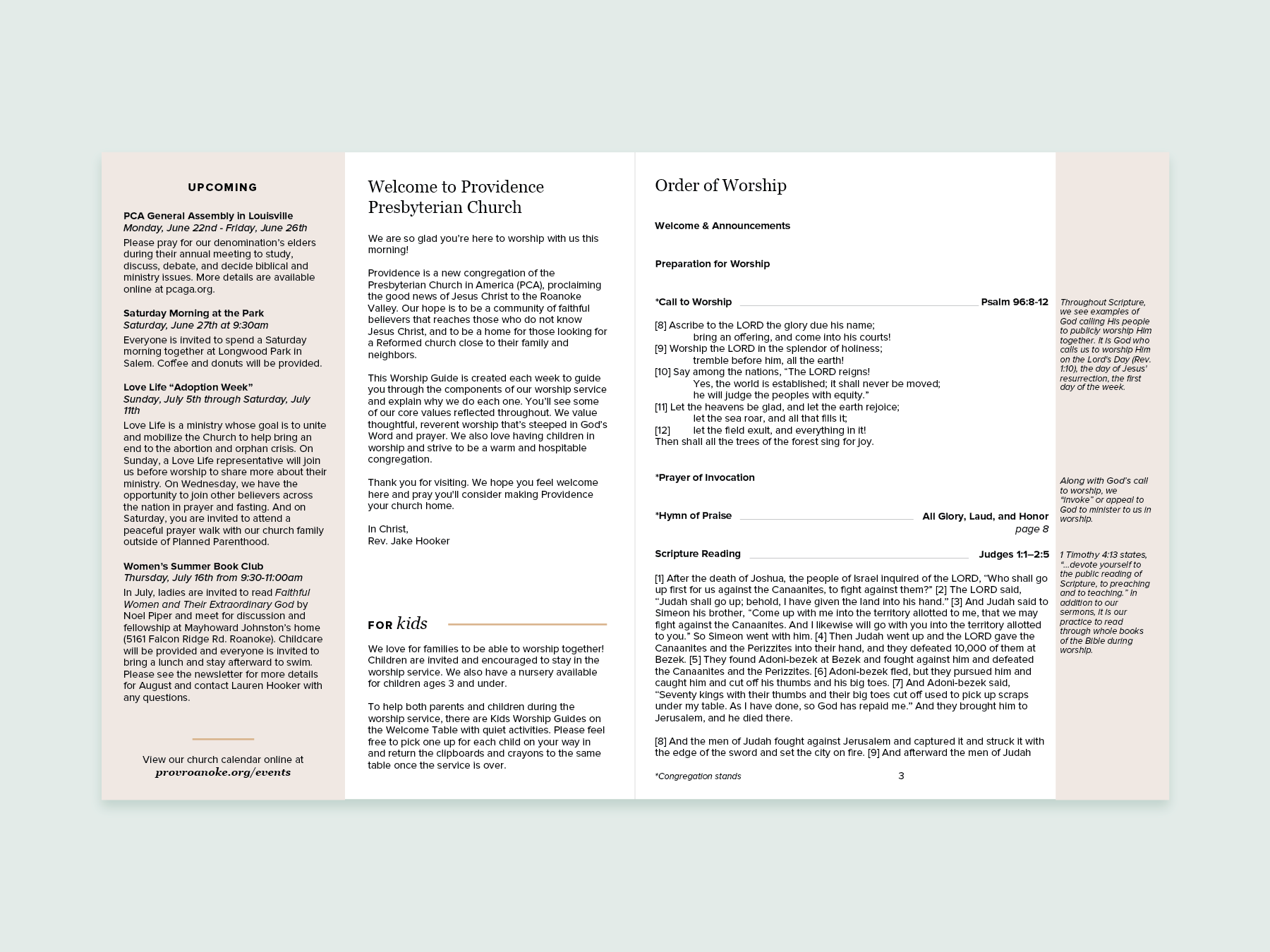
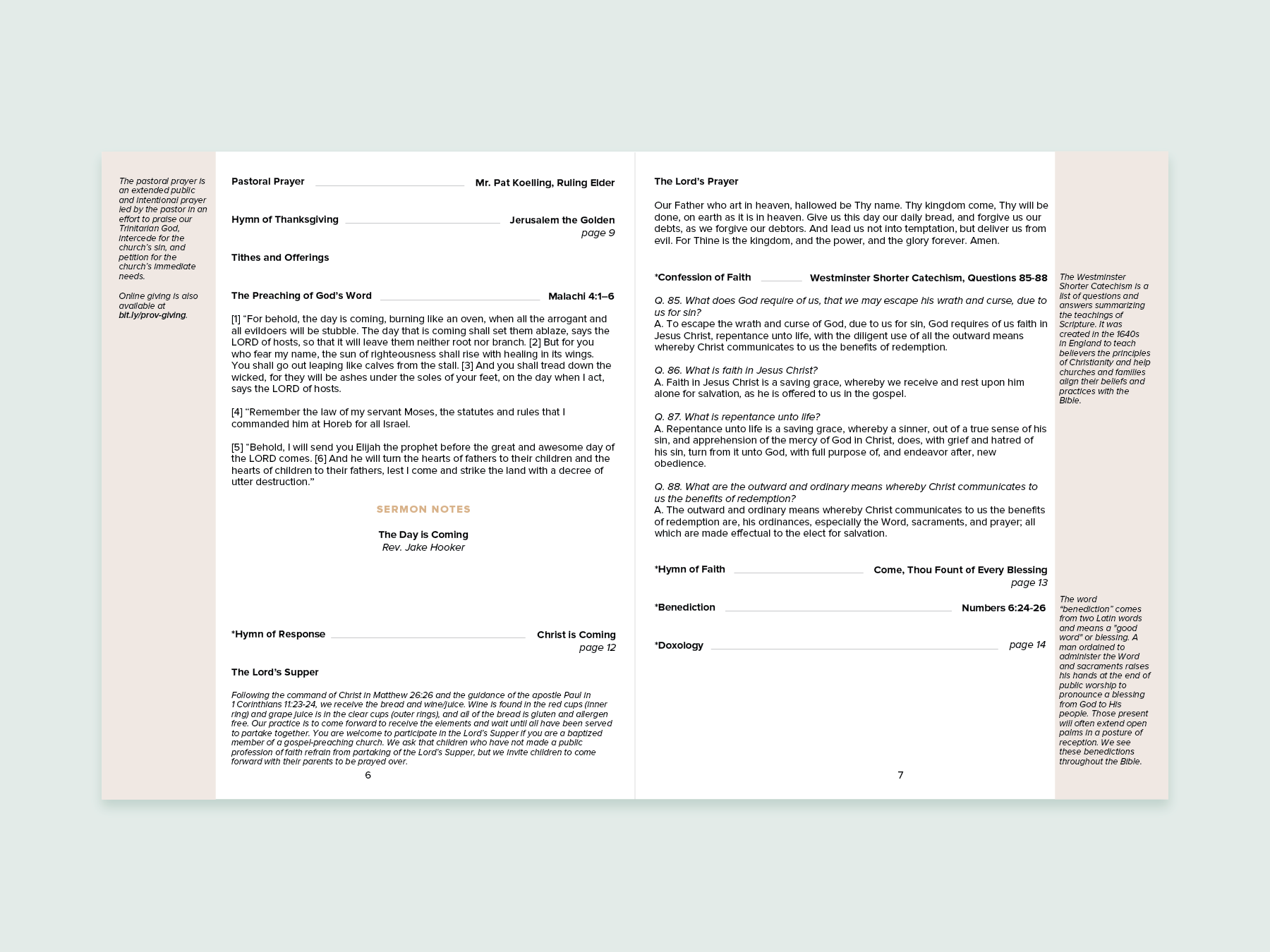
The Day Is Coming - Malachi 4:1-6
The Bible makes it crystal clear that the world is not caught in some sort of endless cycle. All of human history is moving towards a final day. God has appointed a day when He will judge evil, vindicate His people, and establish His kingdom forever.
Here Malachi points us to the final Day of the Lord—the day of God's ultimate judgment and salvation, what Christians often refer to as Judgment Day.





Malachi reminds us that the last day is both a day of judgment and a day of hope. It is a day of judgment for those who persist in unbelief, for God will justly hold every sinner accountable. But for those who belong to Christ, it is a day of comfort and joy. The day that brings judgment upon God's enemies is the very day that brings vindication, healing, and everlasting life to His people.
And this is exactly where Malachi ends his word of prophecy. Remember from chapter 3, the cynics were asking, "What is the point of serving God?" Malachi doesn’t say to these Jews who were living as exiles under Persian rule that all the frustration and pain they were experiencing was some sort of illusion. That actually, they had a great life, but they just didn’t appreciate it. He doesn’t say that. Instead Malachi points them to the future.
Why should they continue serving the Lord? Because the final day is coming. There will be a day when God sets everything straight. In the end, everyone will get exactly what they deserve. And so what believers long for and anticipate in the future should affect how they live today, in the here and now.
And we see three reasons for this in our text. First, the day of judgment is certain (v. 1). Second, the day of salvation is certain (vv. 2–3). Third, the need for preparation is certain (vv. 4–6).
The Day of Judgment Is Certain (v. 1)
One of the developments in broader evangelicalism is that judgment day cannot be used as a theological motivator. And the primary reason for that is, somewhere along the way it became bad or wrong to use fear as a motivator. Even though that’s precisely what’s going on here at the end of Malachi.
Look at what Malachi says in verse 1: “For behold, the day is coming, burning like an oven, when all the arrogant and all evildoers will be stubble. The day that is coming shall set them ablaze, says the Lord of hosts, so that it will leave them neither root nor branch.
Obviously, this is a reference to hell, which is the place of eternal, conscious, torment. And when the Lord says that He will leave neither root nor branch he’s not describing annihilationism, rather, he’s saying that the judgment will be complete.
But that language is much stronger than anything most of us have ever heard. …the day is coming, burning like an oven, when all the arrogant and all evildoers will be stubble. There will be a day when evildoers will be burned up like stubble.
But the important thing that I want us all to focus on is the certainty of it all. Malachi doesn’t say, ““there might be a day,” or “a day could come.” What does he say? “For behold, the day is coming…”
It is fixed. It is certain. There is no getting out of it. There will be a day when wicked evildoers will be punished.
And you really have to keep in mind the context here. Remember that in the previous chapter of Malachi the Jewish exiles had questioned God’s justice. They had questioned God’s justice because their lives were much harder than the people who didn’t serve God. The wicked nations around them were prospering while the people of God were struggling!
And it was that fact that led the people to conclude in chapter 3 verse 14, that it was, “...vain to serve God.” It was pointless to serve God because the righteous suffered and the wicked got away with whatever they wanted.
What we have here in our text is God’s response. Often, when people talk about the prosperity of the wicked and the suffering of the righteous, things can get very philosophical. You get into theodices, which are philosophical defenses of God’s goodness when faced with the problem of suffering and evil. You can unlock a whole philosophical world if you want to by going down that rabbit trail.
But God doesn’t do that here. When His justice and goodness were questioned because of the suffering of his people his answer was simply: “wait for the day.
The implication being: on that day, no one will question His justice or goodness. He will hold the wicked accountable. He will make sure the arrogant are exposed. The unjust will answer for what they’ve done.
The wealth, the power, the influence, the reputation, the prestige of wicked, unrepentant sinners will melt in the heat of God’s perfect judgment.
That day is for certain and it is coming—you just have to wait.
Every Christian looks forward to the day where the Lord will ultimately vindicate them. There’s all sorts of wickedness going on in the world that seem to get away with it. We want to see those people held accountable. The problem that we all have with it is the waiting.
We want two day Prime shipping on God’s justice! Because that’s the world that we live in! We live in a world of instant gratification. We hate waiting for anything!
We want God to operate according to our timetable. We want to see Him hold those who’ve sinned against us and have never taken one step towards repentance—we want those folks held accountable right now.
And when that doesn't happen, often, people begin to question God’s justice, His wisdom, or even His goodness. Who can’t sympathize to some degree with the Jewish exiles of Malachi’s day? We too, look around and see corruption rewarded, wickedness celebrated, and those who disregard righteousness prospering, and we wonder, will anyone ever be held accountable?
As I was thinking about this, I was reminded of what the Lord told Abraham in Genesis 15:16, that "the iniquity of the Amorites is not yet complete." God knew the evil of the Amorites. He was totally aware of their sin. Yet He delayed His judgment according to His perfect wisdom and timing.
And that’s the thing that you and I have to wrestle with. God’s is going to hold unrepentant sinners accountable, but He’s going to do it according to His timetable. And that certainly doesn’t mean that he’s unjust, rather, it means that He’s patient and slow to anger. It’s simply a postponement. It’s a delay. But a day is coming when He will follow through with exactly what He’s promised. That day is fixed.
And of course, this is true on a broader scale, but it’s also true for you too. Many of you have suffered and experienced pain because someone sinned against you. And perhaps to rub salt in the wound, they’ve never repented or apologized. Maybe even that person took their sins against you to the grave.
Here’s what you have to recognize: the lack of justice on this earth doesn’t mean that God approved of it or is simply going to let them get away with it! A day is coming when the record will be set straight.
That’s precisely the tension of Malachi 4! And so one of the questions before us this morning is: Do you trust that God's timing is wiser than your own? Do you believe that the Judge of all the earth will do what is right? Faith rests in the certainty that God will keep His promises, even when His certain justice seems delayed.
The Day of Salvation Is Certain (vv. 2-3)
And part of the problem is that we've all witnessed the miscarriage of justice. We've seen evil go unpunished and wrongdoing seemingly rewarded. And so there's a real temptation to project that onto God. We assume that because our earthly justice system is imperfect, God's justice must be imperfect too. But Malachi reminds us that nothing could be further from the truth.
In fact, God's perfect justice is precisely what makes the believer's future so glorious. The same day that brings judgment upon the wicked brings salvation to those who fear the Lord. The certainty of judgment is also the certainty of deliverance for God's people. That's why Malachi immediately turns from the destruction of the arrogant in verse 1 to this beautiful promise in verses 2–3:
"But for you who fear my name, the sun of righteousness shall rise with healing in its wings. You shall go out leaping like calves from the stall. And you shall tread down the wicked, for they will be ashes under the soles of your feet, on the day when I act, says the Lord of hosts."
That honestly might be one of the most beautiful Messianic images in all of the Old Testament. Malachi describes Jesus Christ as the sun. Not S-O-N Son, but S-U-N sun. Just as the sun is the source of light, Christ is the source of spiritual light, and Malachi says that He rises with healing in His wings.
Which is an absolutely beautiful description of Jesus! So much of Jesus' earthly ministry was centered around healing. He healed the blind, the lame, the sick, and the demon-oppressed. But most importantly, He healed sin-sick hearts. He forgave sinners, restored outcasts, and reconciled rebellious people to God.
But on the final day, a full and complete healing will take place. Every effect of sin will be removed. Every disease, every sorrow, every heartache, every disappointment, every struggle with temptation, every lingering consequence of the fall will be gone forever. The bodies that now grow weak will be raised in glory. The minds that are clouded by anxiety, fear, and doubt will be made whole. The hearts that are often weighed down by grief will know only joy.
That is the future Malachi is describing. The Sun of Righteousness will rise, and His healing will reach every part of our lives. Nothing broken by sin will remain broken. Nothing wounded by this fallen world will remain wounded. Christ will not simply improve His people—He will completely restore them. The healing that began when He first saved us will finally be completed when we stand in His presence. And on that day, God's people will discover that every promise He made was true. And that day will be as joyous as a calf who’s just been released from his stall. There will be sweet vindication on that day!
One of the interesting things about the tension of the final day, that it will be a curse for the wicked and a blessing for the righteous, is something that is suggested throughout Scripture. Consider the flood: God used it to judge wickedness on the earth, while at the same time saving and vindicating Noah and his family. Or the Red Sea: God used it to judge the Egyptians, and yet He delivered Israel through those same waters.
We see this pattern ultimately fulfilled most clearly at the cross. The judgment of God fell upon Christ, the innocent Son, so that guilty sinners like you and me might be saved. At the cross, a great exchange took place: our sin was laid upon Christ, and He willingly bore the punishment that we deserved. In return, those who trust in Him receive His righteousness, His holiness, and His standing before the Father.
The cross is the clearest demonstration that God does not simply overlook sin or sweep evil under the rug. His justice is real, and every sin must be accounted for. But the cross also reveals the depth of God's mercy, because He provided the way of salvation for His people. The judgment we deserved was poured out on Christ, so that the mercy we could never earn could be freely given to us.
And so something really emerges from these verses: the Christian life isn’t so much about avoiding God’s judgment. Rather, it’s looking forward to something. It’s anticipating something joyful. Just as the Lord saved Noah, Israel through the Red Sea, the Lord will be rescuing you and me from the sin, pain, suffering, and sorrow of this world. Isn’t that something to look forward to?
The Christian does not live simply trying to escape punishment; the Christian lives with hope because God has promised redemption. We are not just waiting for something bad to end—we are waiting for Someone to come and rescue us. We are waiting for the return of our King, the One who has already defeated sin and death on our behalf. The same Lord who has carried us through every trial, every disappointment, and every season of suffering will one day bring us safely home.
That means the hardships of this life are not the final chapter of our story. The pain we experience is real, but it is temporary. The suffering we endure matters, but it will not have the last word. The Day of the Lord is not merely the end of something; it is the beginning of something far greater.
The Need for Preparation is Certain (vv. 4-6)
And so the question that remains is: are you ready for that day?
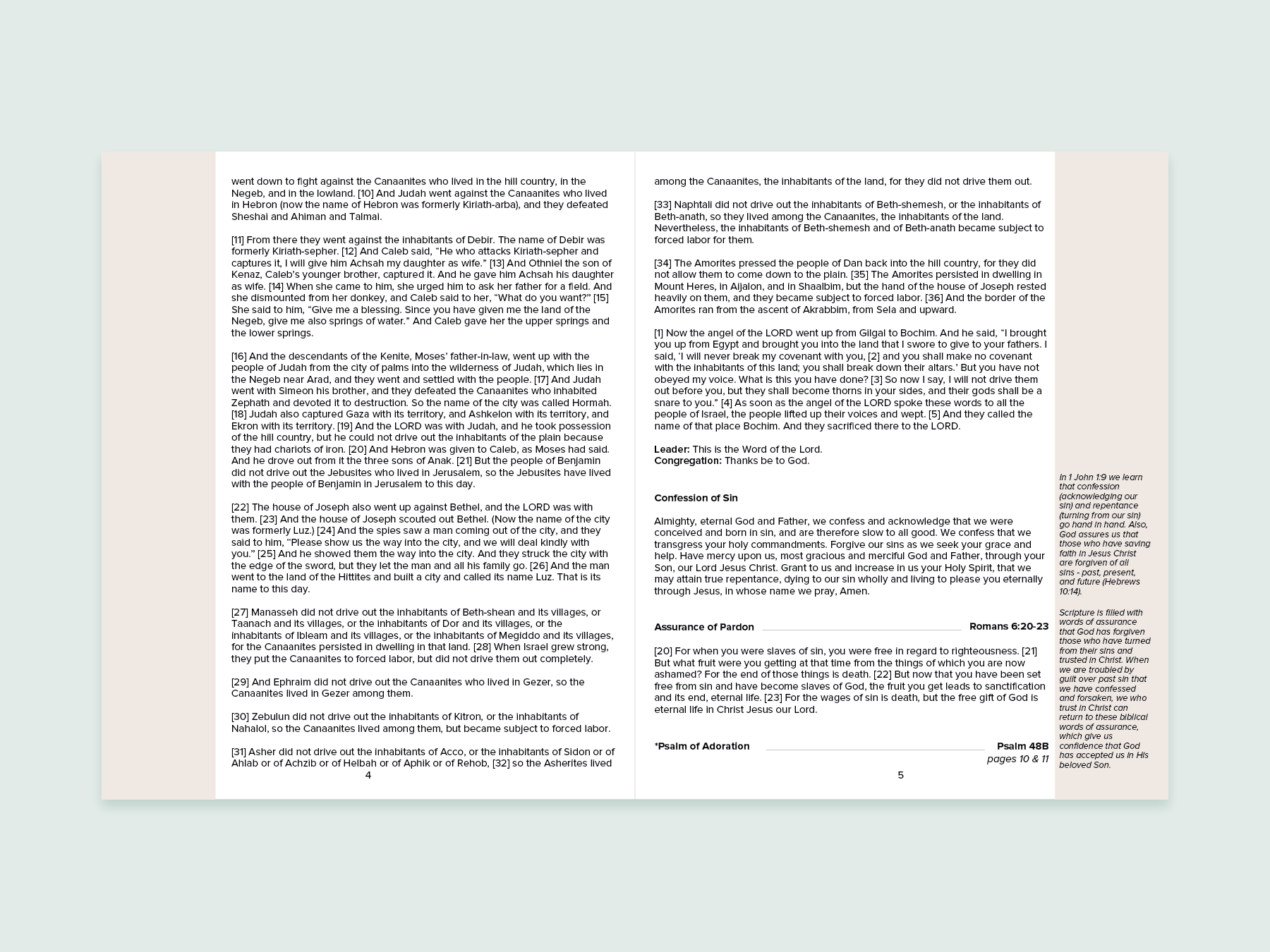
Notice that Malachi finishes his prophetic word with two commands. The first command is in verse 4. Look at it with me: “Remember the law of my servant Moses, the statutes and rules that I commanded him at Horeb for all Israel.”
The law, when used in a general sense, is typically a broad reference to the Scriptures. So the Divine speaker is saying, remember my Word. Remember my Scriptures. Remember what I’ve said. Remember My promises. Remember My faithfulness.
Which, for the Jewish exiles, was an absolutely necessary command. They had begun to think that the world would triumph. They had started to believe that God’s promises were nothing more than wishful thinking. They looked around and saw the wicked prospering, the righteous suffering, and how that seemed to contradict everything God had promised.
I’m sure many of you are familiar with folks referring to being “red-pilled” and “blue-pilled.” It's obviously a reference to becoming “conservative” or “liberal” but there’s another one, and that’s being “black-pilled.” And that means, there’s no hope, we’re all doomed, it’s a very dark, black, view of the world. And it’s hard not to get there sometimes!
But notice what God’s doing here: God’s not giving them any new promises, but pointing them back to the promises He’s already made. And that's the key to not getting “black-pilled!” You have to remember that God hasn’t changed. His covenant-faithfulness has not changed. The circumstances of this world will not determine whether or not God will be true to His Word!
The Scriptures are there to anchor us when our circumstances tempt us to doubt. The world may tell us that God's promises are unrealistic, outdated, or impossible, but the Lord reminds us that the grass withers and the flower fades but the Word of the Lord stands forever.
The second command that Malachi gave to the exiles in Judah and Jerusalem was to wait for God's messenger.
Look at what is said there in verses 5-6: “Behold, I will send you Elijah the prophet before the great and awesome day of the Lord comes.”
Elijah is mentioned here as the great representative of the prophetic ministry. Throughout Scripture, Elijah stands as a model of faithfulness—a prophet who called God’s people back to covenant obedience. After Elijah, that prophetic ministry continued through men like Elisha, and ultimately found its final Old Testament fulfillment in John the Baptist, who came "in the spirit and power of Elijah" to prepare the way for Christ.
And from Elijah’s day to our own, God has continued to raise up faithful witnesses who proclaim His Word and call His people to repentance and faith.
And Malachi concludes his prophetic word by saying, “6 And he will turn the hearts of fathers to their children and the hearts of children to their fathers, lest I come and strike the land with a decree of utter destruction.” At the end of the day, the prophet’s goal was effectively the same: to turn the hearts of the fathers and the hearts of their sons to the Lord.
But if you do not turn to the Lord, He will “strike the land with a decree or curse.” The idea is that the Lord punishes the guilty not on a whim. Not randomly. But after a period of patience and long suffering.
Malachi is calling everyone to repentance before that day comes. That’s what it means to turn to the Lord! And it’s a great way to end such a powerful prophetic book. If you want to be prepared for that day, the idea here is that you need to repent and turn to the Lord by faith!
Conclusion
It’s fitting that today is father’s day, because I recently heard someone giving advice to fathers. His suggestion was simple: spend twenty uninterrupted minutes each day with your children. During that time, enter into their world. Play their games. Listen to their stories. Follow their imagination. And try for twenty minutes to resist the urge to give instructions and tell them what to do. Try to be present with them–for just twenty minutes.
His overarching point was this: you don’t want your children to groan or hide in fear when Dad walks through the door. You don’t want them thinking, “Here comes another lecture,” or “What does he need me to do now?” or “What am I in trouble for this time?” You want them to light up with excitement and say, “Dad’s finally here!” You want your presence to bring them joy because they know they are loved, known, and delighted in.
The way we anticipate someone’s arrival reveals something about our relationship with them. If someone is a burden, we dread their coming. But if we love them, we get excited for their arrival. We find ourselves checking the driveway, waiting for the sound of the door opening, wondering, “Have they gotten here yet?”
And that is exactly the distinction Malachi places before us. On the final day, there will only be two groups of people. There are those who are arrogant and unrepentant, who will be consumed like stubble in the fire of God’s judgment. And there are those who love and fear the Lord, who will experience the healing and joy of His salvation.
The difference between these two groups has nothing to do with earthly success. It has nothing to do with how respected you are in the community, how much influence you have, or how impressive your accomplishments may be. The dividing line is much more significant: do you belong to Jesus Christ?
The Sun of righteousness has already risen. The Savior has already come. The One who bore the judgment of God on behalf of sinners now offers mercy, forgiveness, and eternal life to all who trust in Him.
When our Savior walks through the door on the last day, God’s people will cry out with joy, “He’s finally here.” On that day, wrongs will be made right, and the promises of God will be fulfilled. Will you be ready?
Amen. Let’s pray together.
