
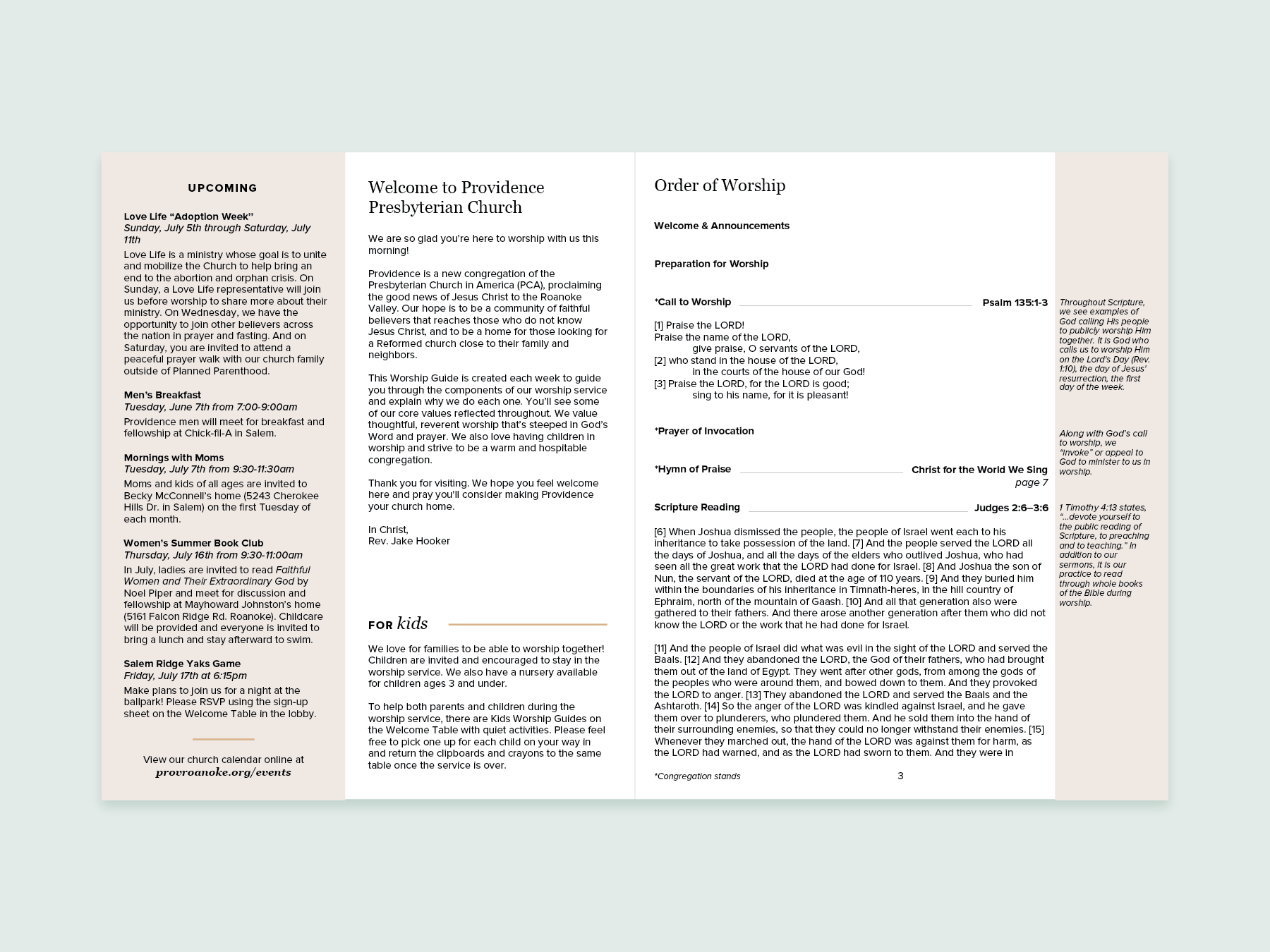
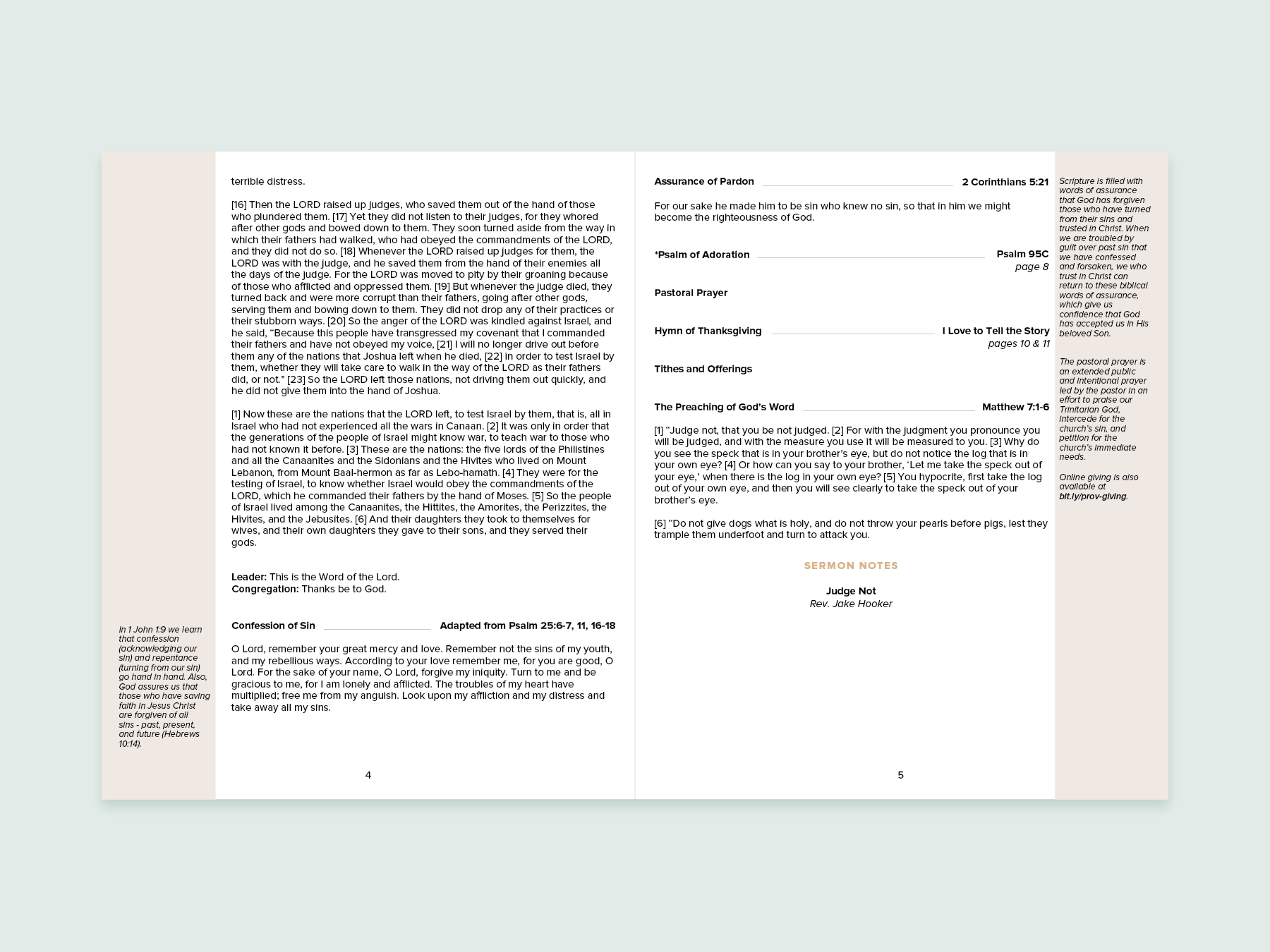
Judge Not - Matthew 7:1-6
I’m going to go out on a limb and say that you’ve probably heard this passage at some point or another. We just read “judge not, that you be not judged.” But the more common way we refer to it is “judge not lest you be judged.”
Our culture generally hates the Bible, but for whatever reason, it seems to love this passage. And much of the reason our culture loves this passage is because it’s become something of a shield. It’s been reinterpreted to mean, “Christians are not allowed to condemn the actions or behaviors of anyone.”
And so, “Judge not lest you be judged,” has become a slogan for immunity. “You can’t criticize or condemn anything that I’ve done because, well, judge not…”
How many times has someone criticized or questioned you and then you threw out, “judge not lest you be judged!”
But things get somewhat complicated if you know your Bible, you probably know that Jesus also commanded in John 7 to “judge with right judgment.”
(Unfortunately, we were unable to capture the audio for this sermon.)





And then earlier in the Sermon on the Mount, where this passage appears, Jesus said, to beware of false prophets. How do youjudge with right judgmentor be on the lookout for false prophets if you’re not allowed to critically evaluate what they do or say?
What is Jesus doing? Is he schizophrenic? Is he just contradicting himself? Well of course not. The answer is obviously the way our society ordinarily refers to this passage is incorrect. It’s misunderstood.
Contrary to popular belief, Jesus isn’t denying your right or anyone’s right for that matter to criticize, evaluate, question, someone’s lifestyle choices or decisions. And he certainly wasn’t giving you a counter attack to anyone who is trying to hold you accountable for your actions.
Rather, Jesus is condemning our inclination towards merciless, harsh, unfair, uncharitable, hypercritical judgments of those around us.
And so we see three things from this passage: first, reject hypercritical judgment (vv. 1–2), second, we should pursue humble self-examination (vv. 3–5), and lastly, we should exercise gracious discernment (v. 6).
Reject Hypercritical Judgment (vv. 1–2)
So I’ve already given the thunder of this sermon away by telling you that Jesus isn’t prohibiting judgment altogether when he says, “judge not.” That understanding would be a direct contradiction to so many passages in the Bible.
The Apostle Paul tells us in 1 Thessalonians 5 to, “test everything; hold fast what is good.” Or what about the Bereans who we commended for evaluating what they were told against Scripture?
What’s in Jesus’ crosshairs when he says, “Judge not,” is a hypercritical spirit. It’s a spirit that is eager to find fault, quick to assume the worst, and delights in exposing the failures of others. We all know the type. The sort of people who enjoy learning about the personal struggles and pains of others so they can condemn them. They become self-appointed prosecutors, always gathering evidence against others while rarely examining themselves. They magnify the weaknesses of everyone around them but minimize or excuse their own sins.
They are suspicious rather than charitable, cynical rather than compassionate, and their first instinct is criticism rather than mercy. Instead of mourning over another person's sin and praying for their restoration, they seem almost pleased to discover another failure. Jesus says that kind of judgment has no place in the heart of one of His disciples.
The best two examples of a hypercritical spirit were the TV personalities Simon Cowell or Gordon Ramsay. They’re notorious for their harsh, heavy, and at times mean-spirited criticisms. Their public personas were built around finding flaws, exposing weaknesses, and delivering cutting remarks that could be entertaining to audiences but devastating to the person receiving them. That kind of fault-finding may make for popular television, but Jesus says it has no place in the life of His disciples.
But whether we admit it or not, we’ve all been guilty of searching for the faults of another person and then using it as a crutch to make ourselves feel superior to them. Or we project an incident unfairly onto a person's whole being. We assume someone’s a huge jerk all the time because they cut us off in traffic one time.
It’s that sort of mentality that Jesus has in mind here. But what makes things worse, is that more often than not, we don’t think twice about our hypercritical spirit and instead, expect fair treatment when our faults are exposed.
Which is why Jesus says, “For with the judgment you pronounce you will be judged, and with the measure you use it will be measured to you.”
There’s really even a practical side to what Jesus is saying here: don’t be surprised when your lack of charity is returned. If you’re always assuming the worst, constantly putting others down, condemning the actions of others, don’t be surprised when the shoe is inevitably on the other foot, and you sin publicly or make some sort of egregious mistake and those around you judge you harshly in return.
Dr. Martyn Lloyd-Jones developed three sermons off of this passage and you can read them in his Studies in the Sermon on the Mount. It’s Lloyd-Jones at his absolute best. I would highly encourage all of you to read it. But in one of his sermons on this particular passage makes the point that Christians should judge according to principle. That is, we should evaluate others based upon ethics, morals, standards, and Scripture, not in terms of personality. Because when we do that, we begin to impute motives and make assumptions about their character.
Which is exactly what we’d want someone to do for us. We often expect a level of understanding whenever our decisions or actions are under the microscope. “You need to take all the surrounding circumstances into consideration!” “I was tired when I said that!” “I was having a rough day when I did that!”
That leniency that we are so often unwilling to give, is the leniency that we expect from others.
Of course, God sees all of this. He sees the double standard. He sees the inconsistency. He sees how we excuse our own failures because we know our motives, yet we condemn others because we only see their actions.
But really it’s the heart that’s the issue in this passage.
You have to keep in mind where we are in Matthew’s gospel. These words come in the context of Jesus’ famous Sermon on the Mount. And the Sermon on the Mount was directed at the hearts of believers. Those instructions for anger, lust, divorce, oaths, and so on are directed for believers.
And the reason that that matters is because Jesus is showing how so often God’s people will gladly receive His mercy, but then refuse to extend any measure of that mercy to those around them.
Pursue Humble Self-Examination (vv. 3–5)
It’s so incredibly hypocritical! Which is exactly what Jesus is getting at with his famous speck and log illustration in verses 3-5:
“Why do you see the speck that is in your brother's eye, but do not notice the log that is in your own eye? Or how can you say to your brother, ‘Let me take the speck out of your eye,’ when there is the log in your own eye? You hypocrite, first take the log out of your own eye, and then you will see clearly to take the speck out of your brother's eye.”
There are some whose judgment is so harsh and unrelenting that they’re willing to point out small, insignificant, minor issues in someone’s life.
We might call this making a mountain out of a mole hill.
But what makes it particularly egregious is the fact that you are willing to make a mountain out of a mole hill, all the while, persisting in some sort of glaring, unresolved fault in your own life.
Again, Dr. Martyn Lloyd-Jones, is incredibly helpful in thinking through this passage. He writes:
“The spirit of hypercriticism... is one which is concerned with personalities rather than with principles. That is the trouble with many of us in this respect. We are really interested in the person we are criticizing, not in the particular subject or principle; and our real desire is to condemn the person, rather than to get rid of the evil that is in the person.”
Because the pretense is always, I’m pointing this fault out in your life as a favor! When in reality, we’re doing it more to tear them down than build them up. But of course, the irony, and humor of the statement is that you’re eager to deal with the speck, but unwilling to deal with your own log.
And so, Jesus’ whole point with this famous illustration is that before you confront someone, before you point out a minor fault in the life of a family member, friend, or colleague, first take a moment of self-examination. First, take a cold hard look at yourself in the mirror, and ask yourself, if there are any glaring issues, or sin-struggles that are painfully obvious to everyone around you? In other words, deal with the log in your eye, before you go and try to remove the speck out of someone else’s eye.
When my sister was at Liberty University, she told a great story. Apparently there was a pretty big sword fighting club on campus.
And one day, as she was heading across campus, she noticed a student riding a skateboard down the sidewalk. At some point, the skateboarder lost his balance, fell, and another student nearby thought it was absolutely hilarious. He was openly mocking the skateboard kid.
And the whole time he was laughing at the skateboarder who had just fell, he had a fake, cardboard sword strapped to his back.
Seems like a pretty good analogy for the speck and the log, am I right?
It’s really a picture of how easy it is for us to notice the flaws in others while being completely unaware of the things we carry ourselves.
It’s worth noting that Jesus never denies the existence of the speck. It’s not like Jesus says there’s nothing there. Again, Jesus isn’t saying that you cannot evaluate someone’s lifestyle. Nor is he saying you can never confront someone. Again, if that were the case then he’d violate his own rule! Jesus, the disciples, and especially the Apostle Paul all regularly confronted people.
Jesus’ point is that you and I should humble ourselves before going to confront someone. Look for the logs in our own eyes. Is there something obvious that I need to repent of? I must deal with that before I correct someone else.
Jesus actually says in verse 5, “You hypocrite, first take the log out of your own eye, and then you will see clearly to take the speck out of your brother's eye.” The goal is not to ignore your brother’s sin—it is to help him. The humble Christian does not confront others to prove he is right or to make himself feel superior. He confronts because he genuinely loves his brother or his sister and wants them to live a godly, righteous, and sober life.
Repentance prepares us to minister to others with compassion rather than condemnation. When we have first stood before God in humility, confessing our own sin and receiving His mercy, we are far less likely to approach others with pride. Instead, we come as fellow sinners who have been shown grace, eager to speak the truth in love and gently restore those who have wandered.
But that's not what Jesus is teaching here. Ironically, people often quote "Judge not" as a way of judging the person confronting them. They use Jesus' words not to cultivate humility, but to silence correction altogether. The verse becomes a shield against accountability rather than a call to self-examination.
The issue, then, is not whether Christians should ever confront sin. The issue is the posture of the heart. Are we confronting others out of love or out of pride? Are we seeking restoration or do we simply enjoy pointing out the faults of others? Have we first humbled ourselves before God and dealt honestly with our own sin?
Jesus is not abolishing discernment—He is abolishing hypocrisy. He is teaching that those who have received God's mercy should be the first to extend mercy, even as they lovingly help a brother or sister walk in faithfulness.
Exercise Gracious Discernment (v. 6)
Jesus encourages humility, charity, and self-examination when confronting or evaluating someone’s lifestyle, but that certainly doesn’t mean that you and I should leave wisdom and discernment at the door.
Christians are always supposed to be discerning. Which is exactly what Jesus is getting at when he says in verse 6, “Do not give dogs what is holy, and do not throw your pearls before pigs, lest they trample them underfoot and turn to attack you.”
The language Jesus uses here is important. Under the Old Testament ceremonial law, it would have been unthinkable for God's people to take meat that had been consecrated for sacrifice and throw it to scavenging dogs.
Jesus uses a second image to drive his point further home. Pearls represent something exceedingly precious—the truths of the gospel, the kingdom of God, and His Word. To throw pearls before an unclean animal like pigs would be just as absurd. Pigs cannot recognize the value of a pearl. They simply trample it underfoot.
Jesus' point is that God's truth is infinitely valuable, and His disciples must exercise wisdom and discernment in how they steward it.
And so Jesus' point is that there must be discernment and wisdom when extending charity and mercy. Christians are called to be gracious, patient, and compassionate, but we are not called to be naïve. There are times when people genuinely want to hear the truth, and we should gladly give it. But there are also times when someone has so hardened their heart that they have no interest in receiving God's Word.
They simply want to mock it, argue against it, or use it as an opportunity to attack the messenger. In those situations, wisdom recognizes that continuing the conversation is not an act of love but a misuse of something holy. Discernment knows when to speak, how to speak, and, at times, when it is appropriate to remain silent and entrust that person to the Lord.
If you're not careful, when Jesus says, “judge not,” it can almost sound like he’s encouraging you and me to let those around us take advantage of us. But that isn't His point at all. Jesus is not calling His disciples to abandon wisdom or discernment.
Jesus’ teaching here is incredibly balanced. Because there are two ditches: The ditch on the one side is to become hypercritical. No one can do anything right. All you see is the faults of everyone around you all the time. The other ditch is naïve, gullible, careless, trust. You just assume that everyone around you is always operating in good faith, and everyone will appreciate your Christian perspective and take it to heart. That just simply isn’t true!
I had a seminary professor that would say, “you have to be balanced as the Bible is balanced.”
Christians are to be generous with mercy, patient with sinners, and eager to extend grace, but there comes a point when persistent rejection reveals that a person is not seeking the truth—they are simply despising it. In those moments, wisdom recognizes that continuing to cast what is holy before someone who continually mocks it is not loving stewardship. Jesus calls us to be compassionate without being naïve, merciful without abandoning discernment.
Throughout the Sermon on the Mount, Jesus has been teaching us that true righteousness is not merely external—it begins in the heart. He exposes our anger, our lust, our hypocrisy, our anxiety, and our self-righteousness. And now, Jesus raises a searching question: How can someone who is the recipient of God’s love and grace become so quick to condemn everyone around them? That is the issue behind the words, "Judge not."
The problem isn't that Christians make moral evaluations. The problem is that we often do so from a position of pride rather than humility. We are quick to notice the speck in someone else's eye while remaining strangely blind to the log in our own. We expect others to overlook our failures, to give us the benefit of the doubt, to assume the best of our motives. Yet we are often unwilling to extend that same charity to those around us.
The more clearly you see the cross, the less impressive your own righteousness becomes. The more deeply you understand God’s mercy that He has shown you, the more patient you become with the weaknesses of others. People who know they have been forgiven much become people who forgive much.
That doesn't mean we ignore sin. Jesus certainly doesn't. He calls us to remove the log from our own eye so that we can see clearly to help our brother with the speck in his. The goal has always been restoration, never condemnation. Christians don't confront sin because they enjoy exposing failures; they confront sin because they love their brothers and sisters enough to help them walk in faithfulness.
Imagine what our churches would look like if this passage shaped us. We would be people who are quick to repent and slow to criticize. Quick to listen and slow to assume the worst. Quick to restore and slow to condemn. We would speak the truth, but always with tears in our eyes rather than stones in our hands.
And isn't that exactly how Christ has treated us?
He has never compromised the truth, yet He has never ceased to abound in mercy toward all who come to Him in faith.
So before you concern yourself with the specks in everyone else's eyes, spend time before the cross. Look again at the mercy that has been shown to you. Remember the Judge who became your Savior. Let His grace humble your heart. Let His forgiveness soften your spirit. Then go and love your brothers and sisters with the same patience, gentleness, and mercy that Christ has so lavishly shown to you.
Amen. Let’s pray together.
