
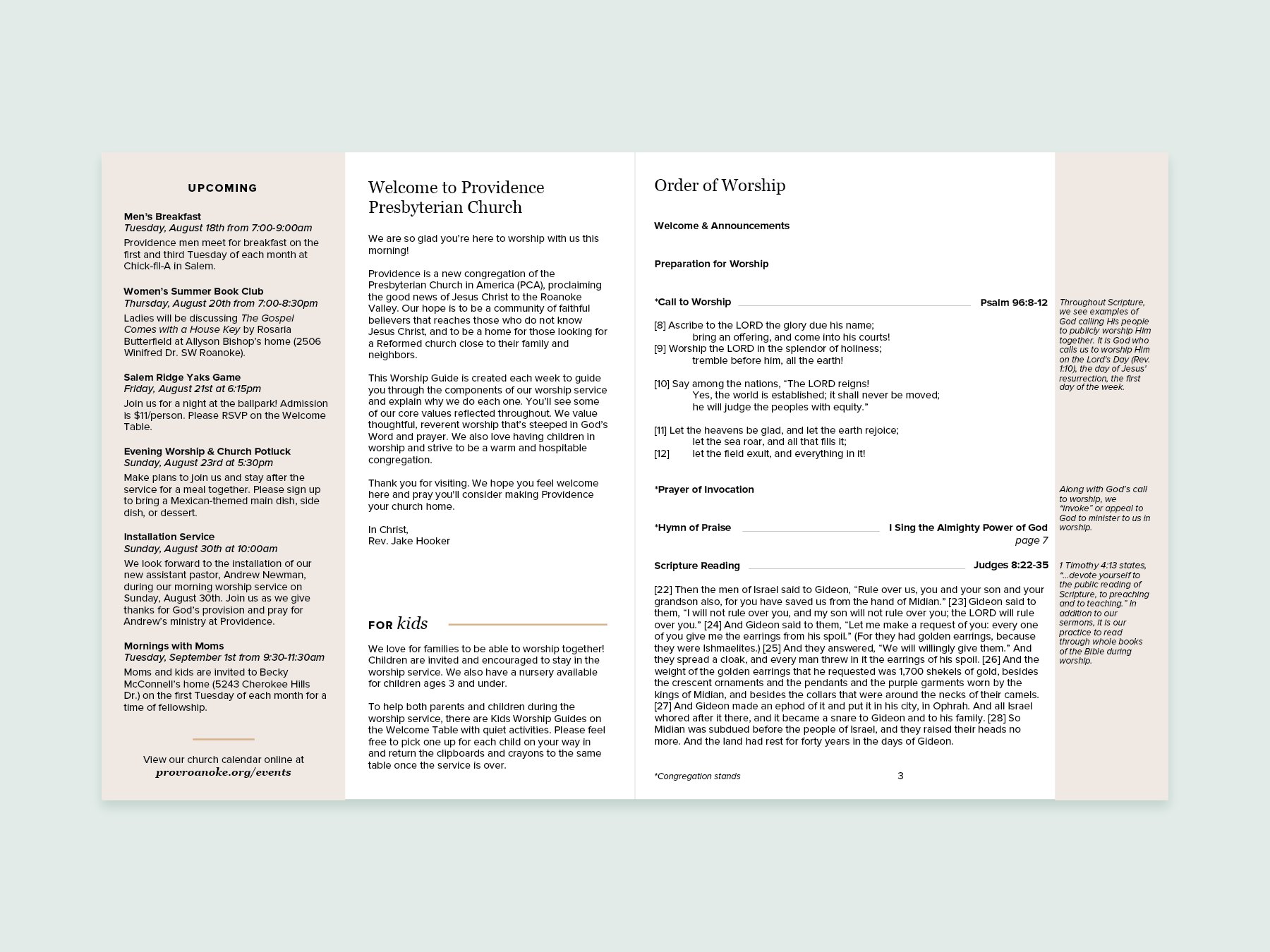
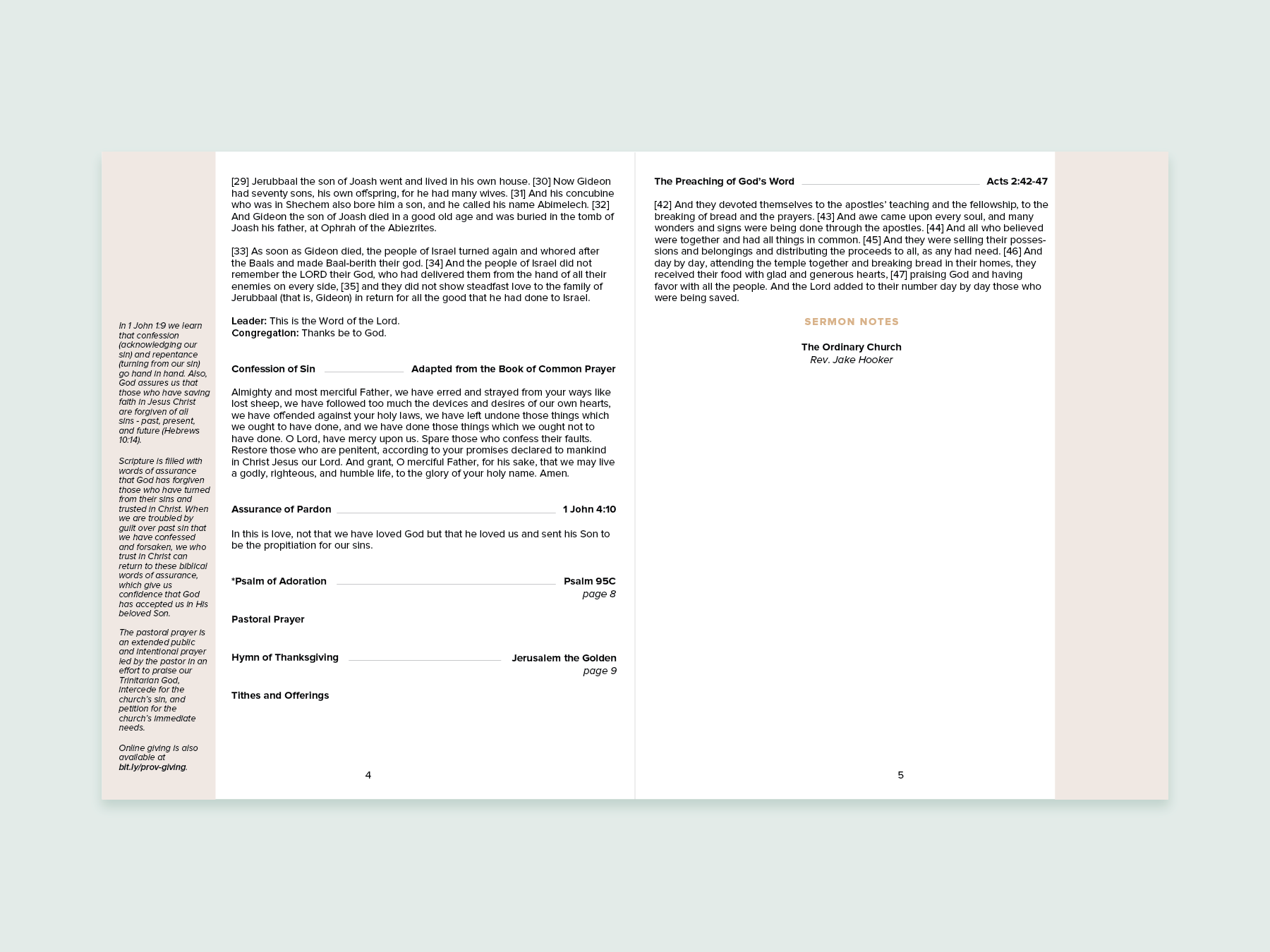
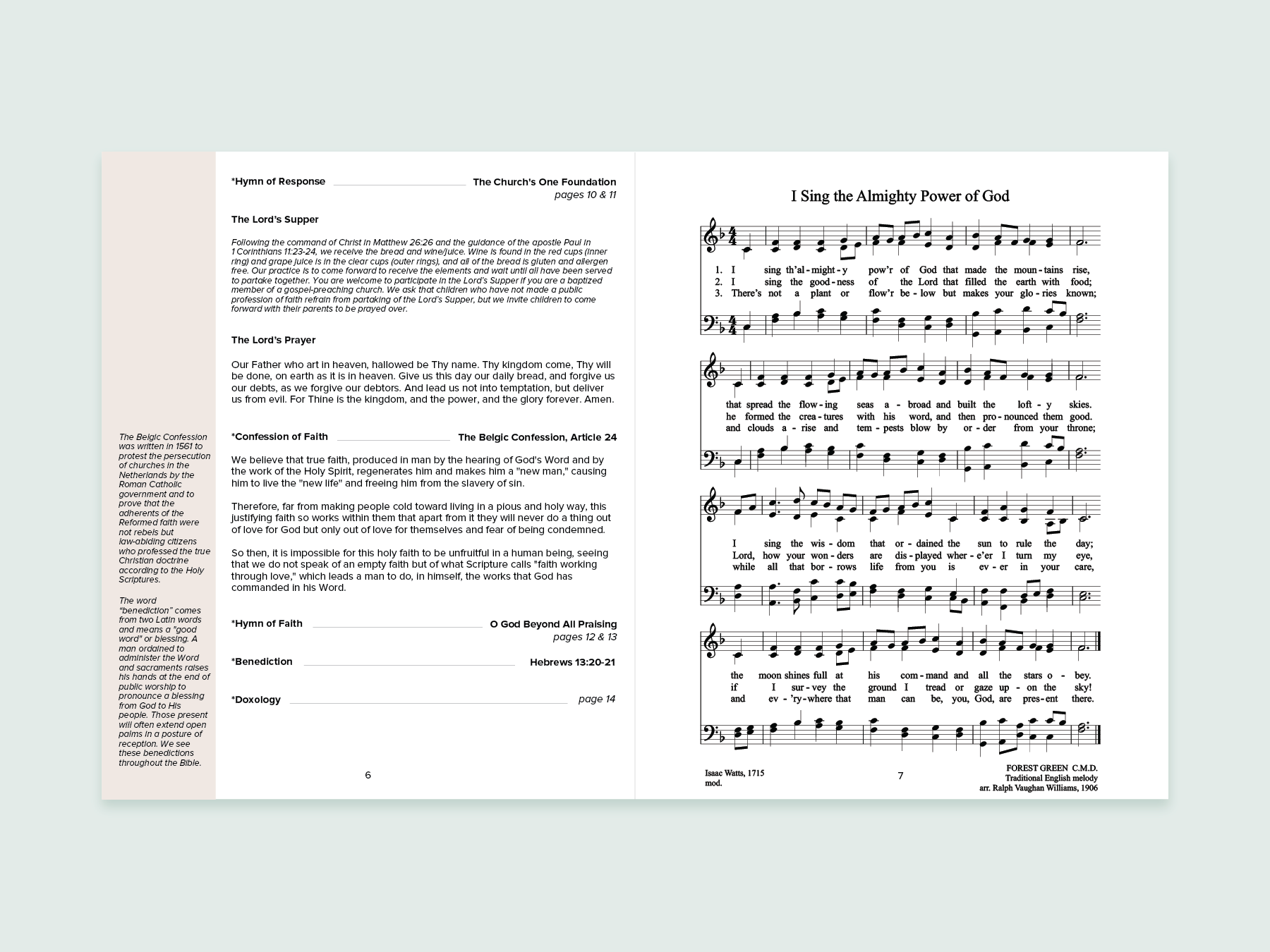
The Ordinary Church - Acts 2:42-47
The term ‘ordinary’ has become something of an insult. If I were to walk up to you on the street and say, “you’re an ordinary guy or lady,” you’d probably be offended! No one wants to think of himself or herself as ordinary. We all want to think of ourselves as extraordinary. In our own eyes and the eyes of all of our mothers – we’re all very special.


But the reality is, most of our lives consist of pretty mundane stuff. We wake up about the same time. We eat at the same time every day. We get in the same car, drive to the same place so we can continue to do the same work day in and day out.
And yet it’s through ordinary faithfulness, consistent plodding, businesses are built, families are raised, marriages are strengthened, and communities are formed. The things that matter the most in life are almost never built in one spectacular moment. They're built through the ordinary, faithful things we do over and over again.
The same is really true for the church. No doubt over the course of redemptive history miraculous things have taken place. 3,000 people were saved in a miraculous way, but then the church settled into a weekly routine, consisting of preaching, baptism and the Lord’s Supper, and prayer. What we would think of as the church basics.
Which is contrary to the way we think of the church today. It’s so easy to believe that in order for the kingdom of God to advance we need to do more. We need bigger and bigger buildings. Increasingly sophisticated sound systems. High resolution screens. And if we’re not careful suddenly that’s what church becomes all about. Chasing the byproducts of ministry over the Lord himself.
Which is why the basics are so important. Jesus Christ builds the extraordinary church through His ordinary means of grace. By the ordinary means of grace, I mean the Word of God, the sacraments of baptism and the Lord's Supper, and prayer. This language is especially associated with the Westminster Standards, though the idea itself certainly did not originate with the Westminster Assembly. In fact, the Westminster Shorter Catechism asks, “What are the outward and ordinary means whereby Christ communicateth to us the benefits of redemption?” And it answers: “His ordinances, especially the word, sacraments, and prayer.”
The point of that language is simply this: God has appointed means or ways through which He ordinarily saves, sanctifies, nourishes, and strengthens His people. God certainly can work in extraordinary ways, and He sometimes does. But He has not left us wondering how He intends to build His church. He has given us His Word, His sacraments, and prayer, and He has promised to work through them.
And that's exactly what we see happening in Acts 2. The church has just been born, thousands of people have been converted, and what do they do? They devote themselves to the ordinary things: the apostles' teaching, the breaking of bread, and the prayers. And through those ordinary means, Christ begins building an extraordinary church.
We Hear God's Word (v. 42)
There seems to be a lot of interest in the early church today. People want to know, “What did the church look like in the beginning? Are we doing the same things they were doing?”
Well, Luke tells us the first thing the early Christians devoted themselves to was “the apostles’ teaching.”
That means the early church was a teaching and preaching church. The apostles preached the gospel, but they also instructed these new believers in what Christ had taught them and what it meant to follow Him. They didn't simply hear the gospel and move on. They continued sitting under the teaching of God's Word.
And if you go back and read Acts 1 and 2, you can see what that apostolic teaching looked like. When Peter needs to explain what happened with Judas, he opens the Scriptures. When he explains Pentecost, he opens the Scriptures. When he makes the case that Jesus is the promised Messiah, he opens the Scriptures.
Peter's authority didn't come from his personality or his own wisdom. His authority came from Christ, and he exercised that authority through the Word of God.
The apostles were uniquely commissioned by Christ, and their office no longer continues today. But we still have their teaching because God has preserved it for us in the New Testament. The church today remains under apostolic teaching because we remain under the Word of God.
And that's important because the church has never been built upon the personality, charisma, or wisdom of its leaders. The church is built upon the Word of God. Even the apostles themselves were ministers of that Word.
And that's why Luke says these new Christians “devoted themselves to the apostles' teaching.” They understood that if they wanted to grow in their faith, they needed to continue hearing and learning the Word that Christ had given to His church.
And the same is true for us.
We don't need to reinvent Christianity every generation. We don't need a new message. We don't need some novel spiritual experience. We need the same Word that Christ gave to His church.
That's why the preaching of God's Word is so central to the ordinary life of the church. When the Scriptures are opened and faithfully proclaimed, Christ is feeding His people through His Word. The pastor's authority doesn't come from his personality, charisma, or special wisdom. His authority is ministerial: he has been entrusted with the responsibility to faithfully teach what God has already spoken.
That's why a healthy church is a Word-centered church. It is a church that hears God's Word, believes God's Word, submits to God's Word, and continually gathers around God's Word.
And notice where Luke begins his description of the church: with something remarkably ordinary. They devoted themselves to the faithful teaching of God's Word.
That's why expositional preaching matters. The goal isn't for the pastor to come up with something clever or inspirational. The goal is to open God's Word, explain what God has said, and faithfully apply it to God's people.
The power of the church has never been in the preacher or any individual. The power is in the Word of God.
We Share in Christ's Sacraments (v. 42)
Notice the second thing that Luke mentions there in verse 42: “...they devoted themselves to the apostles' teaching and the fellowship, to the breaking of bread…”
At first glance, you might read that and think that Luke is referring to the spirit of hospitality in the early church. And that certainly was an important component of the early church. In fact, Luke specifically emphasizes how hospitable the early church was when he mentions, “breaking bread in their homes,” in verse 46.
But there’s a definite article in verse 42 that’s missing in verse 46. In verse 42 Luke says, “the breaking of bread.” Most scholars believe that Luke is referring to something more than hospitality in verse 42, rather, he’s referring to the Lord’s Supper.
As the early church takes shape, they devote themselves to things that are familiar to us: the preaching of God’s Word, fellowship, and the sacraments. Basic church stuff right? These aren't practices that the church invented centuries later. They are part of the church’s life from the very beginning.
The church wasn’t constantly trying new things to see what people liked. And somehow along the way, preaching seemed to stick, the Lord’s Supper seemed important, and prayer seemed to work, so we just kept doing them. But that's not how the church works. These aren't practices that the church stumbled upon over the course of two thousand years. Christ Himself has given them to His church as the ordinary means through which He ministers His grace to His people.
These are the very means Christ has given to His church to continue ministering to His people. The ascension was not the end of Christ’s ministry; in many ways, it was the beginning of its worldwide expansion. During His earthly ministry, Jesus ministered in a particular place and among a particular people. He walked the roads of Galilee and Judea, preached to crowds, healed the sick, and personally taught His disciples. But after His resurrection, He ascended to the right hand of the Father and poured out His Spirit upon His church.
And now the risen Christ ministers to His people all over the world. He does so through the means He has appointed: through the preaching and teaching of His Word, through the sacraments, and through the prayers of His people. The physical presence of Jesus is no longer confined to one geographical location. The exalted Christ is present with His church wherever His people gather in His name.
So when we partake of the Lord’s Supper, we aren't simply remembering something Jesus did a long time ago. The living Christ is actively ministering to us. He strengthens and nourishes our faith through the sacraments.
And that's what makes the ordinary means of grace so extraordinary. They're ordinary because they're familiar and they're repeated week after week. But they're extraordinary because Christ Himself uses them to minister His grace to His people.
The same Jesus who walked the roads of Galilee is now exalted at the right hand of the Father, ruling over His church. And He has not abandoned His people.
We Pray Together (v. 42)
The same is true for prayer. Luke says, “They devoted themselves to...the prayers.” Here in Acts 2:42 we’re getting a glimpse of the worship practices and priorities of the early church.
And so, when Luke mentions the prayers he’s not talking about individual Christians praying. He’s talking about corporate prayer. Prayer as a worship practice within the context of the early church.
I’ll never forget several years ago, at the church I served in South Carolina a young college girl visited our church and she didn’t grow up in the presbyterian world. And because of that, I was curious to hear her thoughts after our service. So after our service was over I went up to her and asked, “so what did you think?”
She said, “It was good. But you guys pray for a long time!” I looked at her and said, “where are you supposed to pray if you can’t pray at church!?”
The Westminster Shorter Catechism defines prayer as “an offering up of our desires unto God, for things agreeable to his will, in the name of Christ, with confession of our sins, and thankful acknowledgement of his mercies.”
I’ve always appreciated that phrase: “an offering up of our desires.” Prayer isn't an attempt to manipulate God or force Him to give us what we want. We are bringing our desires before Him, but we're bringing them with open hands. We're asking Him for those things that are agreeable to His will. And that's exactly what we do when we pray, both privately and corporately.
And notice what that means about prayer. Prayer is an expression of dependence. When we pray, we're acknowledging that we need something that only God can provide. We need His wisdom. We need His strength. We need His forgiveness. We need His provision. We need His blessing upon our families, our church, our ministries, and our witness.
That's why prayer isn't some novel function of the church. Prayer is foundational to the life of the church. In fact, I think prayer is one of the clearest ways you can gauge the spiritual health of a church.
A praying church is a dependent church. It recognizes that, regardless of how gifted its pastor is, how faithful its people are, or how well-organized its ministries might be, unless the Lord builds the house, those who build it labor in vain.
But a prayerless church can easily become a self-sufficient church. We may still preach. We may still sing. We may still run programs and conduct ministries. We may look busy and successful on the outside. But if we aren't praying, what are we really saying? We're saying, in effect, that we can do this on our own.
And that's why Luke's description of the early church is so convicting. They didn't simply devote themselves to teaching and fellowship. They devoted themselves to “the prayers.” They knew that everything they were doing depended upon God.
So perhaps one of the simplest questions we can ask ourselves is this: Which kind of church are we? Are we a church that recognizes its dependence upon the Lord? Or are we a church that is quietly learning to depend upon itself?
We Live Generously (vv. 44–46)
If the church prioritizes the ordinary means of grace in corporate worship devoted to the one true God, then generosity and fellowship will naturally follow.
When Luke says the early church, “...had all things in common. 45 And they were selling their possessions and belongings and distributing the proceeds to all, as any had need.”
He’s not describing some sort of communist commune. He’s describing a people who had been genuinely transformed by Jesus Christ, and that transformation began to shape the way they lived. They understood that everything they had ultimately belonged to the Lord and that what they possessed was something God had entrusted to them.
They worshiped together. They fellowshipped together. They shared with one another. They cared for those who were in need. They were having each other over in their homes for meals together. Their faith in Christ wasn't merely something they believed; it impacted their relationships.
And we should also remember where we are in redemptive history. At this point, these early Christians still understood themselves as Jews who had come to believe that Jesus was the promised Messiah. That's why they were still going to the temple. The church had not yet developed into a completely separate community in the way we might picture it today.
And yet, something profoundly new had happened. They were now a people united to Christ and to one another. Luke says they lived with “glad and generous hearts.” Their generosity wasn't compelled by the government or imposed upon them by some communal system. It flowed naturally from hearts that had been changed by the gospel. They had received the generosity of God in Christ, and that generosity began to overflow into the way they treated one another.
What I think is important for us to see is that the Word, sacraments, and prayer weren't producing isolated Christians. They were producing a community. It was producing a family.
We Witness Together (v. 47)
But what’s amazing about this passage is the incredible spiritual fruit. We learn that the church was “praising God and having favor with all people. And the Lord added to their number day by day those who were being saved.”
And of course, it’s crystal clear who is doing the saving—the Lord. Luke says, “the Lord added to their number day by day those who were being saved.” The growth of the church was not something the apostles manufactured through clever strategies or human ingenuity. God was doing the work.
And that raises an important question: If God was doing the spiritual work, what then, is the church’s responsibility? Our responsibility is to be faithful to the means Christ has given us and to trust Him to use those means according to His purposes.
And that’s what is so remarkable about this passage. The early church wasn't doing anything particularly novel. They were devoted to the apostles’ teaching, the fellowship, the breaking of bread, and the prayers. They were living together as the people of God, caring for one another, and the Lord was adding to their number.
There were no screens. There were no sophisticated sound systems. There wasn't a cutting-edge children's ministry or a carefully designed marketing campaign. There was no elaborate strategy for attracting visitors. And yet, the Lord added to their number.
Now, I’m not saying there is anything inherently wrong with technology, good communication, or thoughtful ministry planning. Those things can certainly be useful tools. The point is that none of them is the source of the church's power. We can use tools wisely without placing our confidence in them.
The temptation for the church has always been if we can just find the right strategy, the right program, the right personality, or the right ministry philosophy, then we can produce a thriving church. But Acts 2 reminds us that we cannot manufacture spiritual life. Only God can save sinners. Only Christ can build His church.
So our calling is remarkably simple: be faithful. Preach the Word. Administer the sacraments. Pray. Make disciples. Love one another. Proclaim the gospel. And then trust God with the results.
The amazing thing is that God has chosen to use ordinary things to accomplish extraordinary work. The church doesn't need to manufacture growth. We need to faithfully use the means Christ has given us and trust the Lord to do what only He can do.
We sow the seed. We water it. But God gives the growth.
And I hope that you see something even bigger here: The church is not only central for reaching the lost but for strengthening your faith.
Do you want to become the man or woman God is calling you to be? Do you want to raise children who know and love Jesus Christ? Do you want to put sin to death and grow in holiness? Do you want your faith to become stronger and your love for Christ to deepen?
Then, at the most basic, foundational, ordinary level, you need to prioritize the church.
That doesn't mean that the church is the only place where you can grow spiritually. You should be praying in your home, reading the Scriptures throughout the week, cultivating personal holiness, and teaching your children the things of God. But you should never imagine that you can live the Christian life well while treating the gathered church as optional.
The early church wasn't spending a lot of time developing ministry strategies, debating philosophies of ministry, or trying to figure out the latest way to attract people. They simply devoted themselves to the things Christ had given them. They heard the apostles' teaching, they participated in the sacraments, they prayed together, and they lived faithfully as Christ's people.
And that's important because we can sometimes make church ministry far more complicated than Christ intended. We can become preoccupied with bigger buildings, budgets, and attendance. But Acts 2 gives us a much simpler picture: be faithful to the ordinary means God has appointed, and trust God to do His extraordinary work through them.
Be with God's people. Sit under God's Word. Receive the sacraments. Pray. Live in fellowship with God’s people.
These things may seem ordinary. They may not always feel spectacular. But this is the ordinary way Christ has chosen to build his church. Amen. Let’s pray together.
