
Worship Fit for a King - Malachi 1:11–14
If the President invited you to the White House or the King of England invited you to Buckingham Palace for dinner, what would you wear? How would you act? You wouldn’t show up casually or thoughtlessly—you’d give careful attention to your appearance, your posture, your words. You would think about what is appropriate, what shows honor, what reflects the significance of the invitation. Because you understand who you’re standing before. There’s a weight to it. There’s a sense of occasion. You recognize that this is not ordinary, and you adjust yourself accordingly.



You wouldn’t stroll in late without concern. You wouldn’t criticize the food or the experience in front of them. Hopefully, your demeanor would communicate respect, attentiveness, and a desire to honor the one who invited you.
How much more should that be true when we come to worship the living God? The One who is infinitely greater than any earthly king—the One who rules over all things—invites us into His presence. This is not a casual gathering. This is not just another event on your calendar. This is where you show your honor and reverence to the King of kings. And yet, far too often our worship is like walking into the White House or the Buckingham Palace in your pajamas, carelessly unprepared, distracted, and indifferent.
And that’s exactly what Malachi is describing in chapter one. The Lord, through the prophet Book of Malachi, charges Israel with lazy, indifferent, apathetic, careless worship. And what makes that so striking is the timing. This is taking place during Israel’s post-exilic years. The people are back in the land. The temple has been rebuilt through the efforts recorded in Ezra, and the walls of Jerusalem have been restored under Nehemiah.
There’s momentum. There’s visible evidence of God’s faithfulness. Things aren’t perfect, but they are certainly better than they were in exile. So you would expect gratitude. You would expect zeal. You would expect a renewed sense of reverence in worship.
But instead, what do we find? Indifference. A people going through the motions. A people who have the right forms, but the wrong hearts.
And that’s what brings us to the heart of this passage—because the Lord confronts their small view of Him with a much bigger reality: His glory, His fame, and His greatness will spread to the ends of the earth—with or without Israel.
And that’s a powerful truth that we must recognize this morning: God’s glory, fame, and greatness isn’t dependent upon you. His greatness is bigger than you, bigger than this church, bigger than our state, country. His greatness extends to the ends of the universe.
Which means our worship is what makes God great—it’s a response to His greatness. Worship doesn’t stroke God’s ego, it properly recognizes who He is. And if that’s true, then our worship should, in some measure, reflect the weight, the majesty, and the glory of the King. He deserves worship that is built around Him and His greatness and not us and our convenience. We see this play out in three ways in our passage. First, we see that the King’s name will be great (v. 11), second, the King’s worship is profaned by convenience (vv. 12-13), and lastly, the King demands your reverence (v. 14).
The King’s Name Will Be Great (v. 11)
In verse 11 the Lord reminds Israel that, “...from the rising of the sun to its setting my name will be great among the nations, and in every place incense will be offered to my name, and a pure offering. For my name will be great among the nations, says the Lord of hosts.”
The glory of the Lord extends to the ends of the earth. He’s not somehow limited to Israel only. His greatness extends far beyond their borders, because He’s sovereign over all things.
Israel’s worship had become apathetic. They were offering blind, lame, and sick animals—when God had clearly required their very best. So here in verse 11, the Lord confronts them with a sobering reminder: His name will be great regardless of their failure to worship Him as He deserves.
In other words, Israel’s unfaithfulness does not diminish God’s glory. Just because they refused to honor Him rightly doesn’t mean He would not be honored. His name will be great among the nations. There are people far beyond the borders of Israel who will praise His holy name.
And of course, this points forward to a glorious future—when people from every tribe and tongue, both Jew and Gentile, will gather together to worship the Lord. But even at this point in redemptive history, God was not without witnesses. Even outside of Israel, there were those who feared Him and honored His name.
The point is clear: God’s glory is not confined to one people, nor is it dependent on their faithfulness. He will be worshiped. The only question is whether His people will joyfully take part in that worship—or stand guilty of neglecting it.
And probably to their shock and amazement, the Lord didn’t look at that and say, “pretty please bring me your best. It would really make me feel good.” No. He says, “bring your best, but even if you don’t my name will still be great.”
Too often we’re led to believe that God is dependent on us. He’s somehow needy for your attention. It’s not like God created the world in order to get the recognition He desperately needed. God is and has always been entirely self-sufficient. If you want the theological term, we’re talking about the aseity of God. Which simply means that God exists in and of Himself—He is completely independent, self-sufficient, and owes His existence to no one and nothing.
This is best captured in the name God reveals to Moses at the burning bush: “I AM WHO I AM”. From that revelation comes God’s covenant name, represented by the four Hebrew letters YHWH. Older English translations often rendered this as “Jehovah,” while most modern scholars believe the original pronunciation was closer to “Yahweh.”
But my point in bringing all of this up is your worship isn’t what makes God great. Your worship is a response to God’s greatness. He’s not dependent on us, you and I are dependent on Him.
The King’s Worship Is Profaned by Convenience (vv. 12–13)
Which is why the Lord is offended when you and I don’t do that. Look at what the Lord says in verses 12-13.
“But you profane it when you say that the Lord's table is polluted, and its fruit, that is, its food, may be despised. 13 But you say, ‘What a weariness this is,’ and you snort at it, says the Lord of hosts. You bring what has been taken by violence or is lame or sick, and this you bring as your offering! Shall I accept that from your hand? says the Lord.”
Notice the Lord’s critique of Israel’s worship. He says that His table had been polluted. Last week, I made the point that burnt offerings were, in a sense, like food presented to the Lord. The people were to bring what was fit for a King, and the Lord would “receive” it on the altar.
And the priests were the gatekeepers. They were responsible for upholding God’s standards for worship. They should have ensured that only what was acceptable was brought before the Lord. But instead, they allowed people to bring what was “taken by violence,” or what was lame and sick.
In other words, they didn’t guard the honor of God—they lowered the standard. It’s as if priests were standing at the doors of the Buckingham Palace, watching people walk in in their pajamas, bringing microwaved fish and reheated french fries to serve to the King and they stand there and say, “That’s fine.”
And in doing so, they weren’t just tolerating poor worship—they were participating in the dishonor of the King Himself.
The worship of the living God had become a burden, and so, they cut corners. They made it easier on themselves. They made worship more convenient. Instead of bringing their best they offered what didn’t cost them anything. A stolen sacrifice or an animal on the verge of death anyway.
The priests and the people were guilty of trying to make worship better or more convenient, which certainly still happens today. I see a similar mindset when I look at the seeker-sensitive movement. A subtle but critical shift happens when we want worship to be easy, convenient, entertaining, and costless.
The focus is subtly turned away from the Lord and onto us. All of a sudden, our top priority isn’t worshiping God—it’s making sure everyone is having a good experience. It’s making sure no one feels uncomfortable, making sure everything runs smoothly, making sure the service meets expectations and keeps attention.
And in doing that, without even realizing it, we begin to reshape worship around human preferences rather than divine instruction. We start asking, “What will people enjoy?” instead of, “What has God commanded?” And the danger is that when worship becomes centered on us, it may feel engaging, entertaining, and meaningful—but God is no longer the audience, the people in the pew… or in our case the brown chairs are the audience!
How is that not sacrificing something that has been “taken by violence,” lame or sick? It’s not our best, because it’s not about God! Worship will almost inevitably rake against your sinful desires because it’s not catered or intended for you. It’s supposed to be catered to God as He has outlined for us in His Word.
The King Demands Reverence, Not Leftovers (v. 14)
And if worship is fundamentally about the Lord, then it must be reverent. But in Israel they traded reverence for indifference.
Look at what he says in verse 14: “Cursed be the cheat who has a male in his flock, and vows it, and yet sacrifices to the Lord what is blemished. For I am a great King, says the Lord of hosts, and my name will be feared among the nations.”
Apparently the people in Israel would even publicly vow their best to the Lord, and then when it was time to sacrifice to Him, they would offer what was blemished. They would talk a big game about worship but would never actually bring their best.
Because it wasn’t just a failure of follow-through—it was hypocrisy. Their words said one thing, but their actions revealed something entirely different. They wanted the appearance of devotion without the cost of it. They wanted to be seen as committed without actually being committed. And in doing so, they were treating God as if He wouldn’t notice, as if He were indifferent to what they brought. But the Lord sees not just the offering—He sees the heart behind it. And what they revealed was a heart that valued itself more than it valued Him.
And that’s offensive to the Lord! “Cursed be the cheat…”
But of course, none of that will stop the glory, fame, or greatness of the Lord from spreading to the ends of the earth. ”For I am a great King… my name will be feared.”
Israel’s hypocritical, casual worship was completely devoid of any reverence. They didn’t respect the Lord. They didn’t fear the Lord.
There was a time when people dressed in their Sunday best because they wanted to reflect a sense of honor and reverence to the Lord. For the record, I’m usually happy when people show up to worship, so I’ll never comment on what anyone is wearing. I’m not going to fashion police anyone. As long as you’re here and fully clothed, I’m generally happy.
But it is interesting, at least to me, that the sense of reverence and awe that used to drive people to dress well on Sundays has largely been replaced by casual familiarity, as if worshiping the living God is no different from attending any other weekly gathering. And to be fair, many evangelical worship services have stripped away any real sense of reverence and fear from their gatherings. In an effort to be accessible and engaging, the atmosphere can begin to mirror a performance or a casual event rather than a holy assembly before God. When that happens, the weight of God’s presence is diminished, and worship subtly becomes something we consume rather than something we offer.
But the issue isn’t really the clothing—it’s what clothing reflects. It’s about the posture of your heart. Do we come ready with reverent hearts before the living God, or is it just another item on your schedule? Do we approach worship with anticipation and humility, or with distraction and indifference? Because the way we prepare, the way we participate, even the way we carry ourselves, all communicate something about what we believe is happening here. If we truly believed we were coming before the holy, sovereign God of the universe, it would shape not just what we wear—but how we listen, how we sing, how we pray, and how we respond to His Word.
The casual nature of worship services that is so common is completely different from the worship service that Israel participated in on Mount Sinai. Moses told Pharaoh that he needed to let his people go so that they could go and worship. Do you remember that? Pharaoh was supposed to let Israel go so they could worship the Lord.
When they finally get to Sinai to worship in Exodus 19, the Lord descends onto the mountain with “thunder, lightning, thick cloud, trumpet blasts, fire, and smoke.” And then in chapter 20 the people say, “Now when all the people saw the thunder and the flashes of lightning and the sound of the trumpet and the mountain smoking, the people were afraid and trembled, and they stood far off and said to Moses, ‘You speak to us, and we will listen; but do not let God speak to us, lest we die.’”
The people feared the Lord to the point where they thought they were going to die. There was a weight, a seriousness, a sense that they were standing before the Holy One of Israel.
Hebrews 12 comments on this whole event and says, “Let us offer to God acceptable worship, with reverence and awe, for our God is a consuming fire.”
My point in all of this is that worship has always been a serious thing. It doesn’t matter if you’re looking at the Old Testament or the New Testament—the worship of the living God is never casual, because the Lord is not common, and He is not to be treated lightly. He is the holy King who speaks galaxies into existence and sustains every breath we take. And if that is who He is, then anything less than reverence, awe, and wholehearted devotion is entirely out of place.
Israel in Malachi’s day had forgotten all of this! The priests were culpable along with the people, because they were the ones entrusted to guard the holiness of worship. Instead of correcting the people, they permitted what was dishonorable. Instead of upholding God’s standards, they lowered them. And when leaders lose their sense of reverence, the people will inevitably follow. The result was a community that still gathered for worship, still went through the motions, but had lost sight of the very God they claimed to honor. And that’s the danger for all of us—it’s possible to be present in worship, and yet far from God in heart.
But here’s the thing that I want us to remember: God doesn’t invite us to worship because He wants to intimidate us, or make you suffer, or take something from you—He wants to give something to you. Like waves that continually roll onto the shore, He wants you to be washed over again and again with the good news of gospel.
Worship, rightly understood, is not God’s way of extracting something from us; it is God’s way of giving Himself to us. When He calls us into His presence, He is not summoning us into a cold courtroom where we brace for condemnation. He is inviting us into the warmth of His covenant love, where we’re reminded of His all sufficient grace.
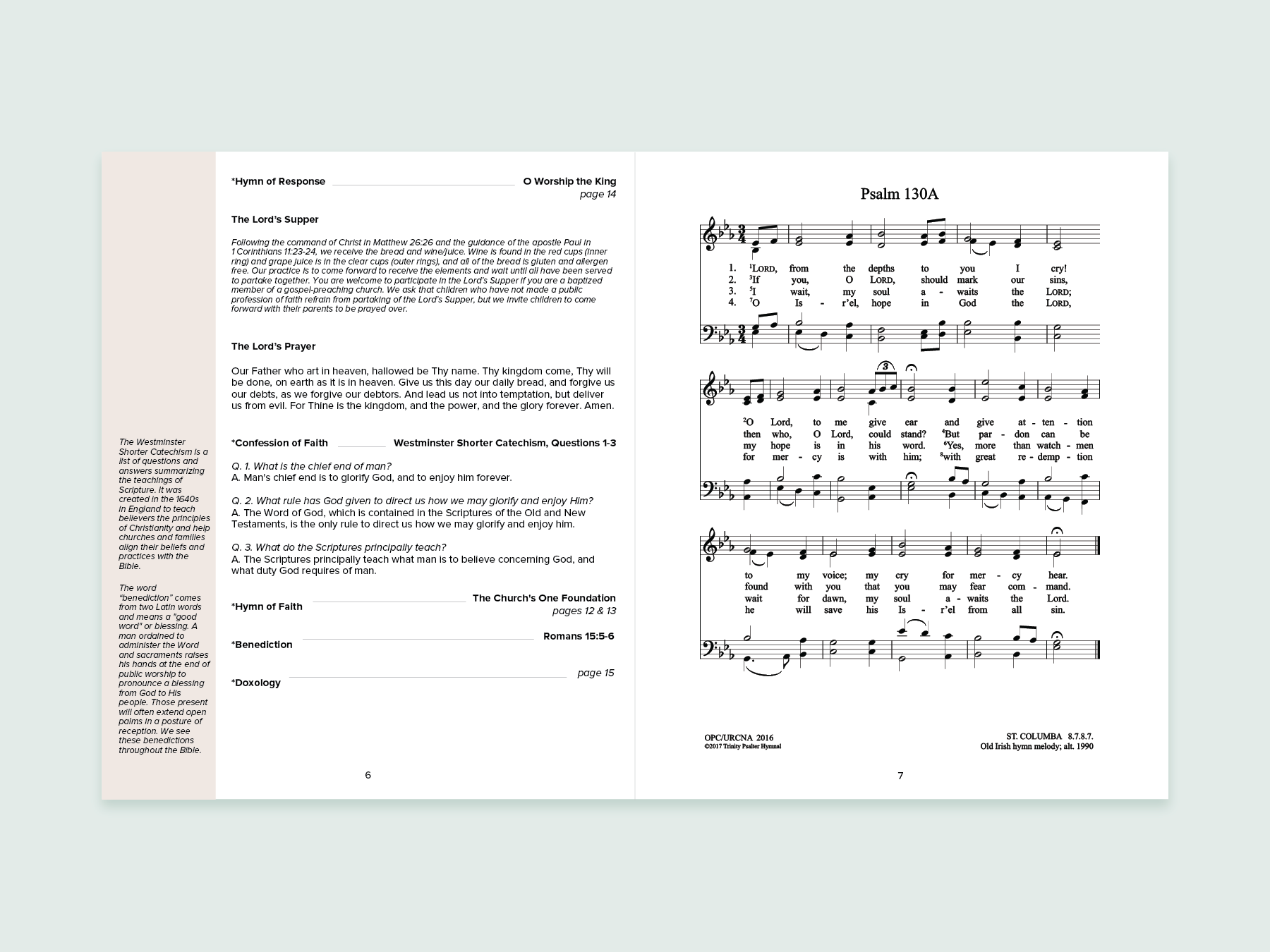
This is what the first question of the Westminster Shorter Catechism question 1 gets at when it asks:
What is the chief end of man?
Answer: Man's chief end is to glorify God, and to enjoy him forever.
We’re to glorify and enjoy. Not glorify and suffer in misery.
We are coming to be reminded that the same God who is holy beyond our comprehension is also the God who has made a way for sinners to draw near through grace. And that way is the gospel of Jesus Christ.
That is why worship is so central to the Christian life. It is not merely something we do once a week—it is the recalibration of our hearts. We come weary, distracted, burdened, and spiritually dull, and God meets us with living truth that awakens what has grown cold. He reminds us that our standing before Him is not based on our performance, but on Christ’s finished work.
And that changes everything. Because if acceptance before God is already secured in Jesus, then worship is no longer about earning His favor—it is about enjoying His presence. It is about being renewed in the joy of salvation. It is about having our vision lifted from the smallness of our daily anxieties to the greatness of a God who reigns in glory and yet draws near in grace.
This is why the psalmist says, “Taste and see that the Lord is good.” Not merely “know” or “acknowledge,” but taste—experience, receive, delight. God wants His people not only to understand truth but to be nourished by it.
So worship is not a burden to endure; it is a gift to receive. It is not a weight crushing us down; it is grace lifting us up. And every time we gather, God is re-centering our hearts on what is most real and most lasting: that in Christ, sinners are welcomed, loved, forgiven, and brought near.
That is what He wants to give you—not more pressure, not more distance, but Himself. Israel had lost sight of that, but may you and I remember that.
Amen. Let’s pray together.
