
Content in Christ - Philippians 4:10-13
This morning we find ourselves back in the book of Philippians, and in fact, we’re actually almost done with the book of Philippians. We’re actually going to finish our study in the book of Philippians next week. It’s hard to believe that the last time we were in the book of Philippians was the end of November, so it’s been some time.
But our passage this morning is probably a familiar one to most of you. Especially verse 13: “I can do all things through him who strengthens me.” It’s been co-opted into a bumper-sticker inspirational slogan, but what we often fail to recognize is that it’s not a mantra, or inspirational quote. Rather Philippians 4:13 comes in the context of something that is rarely talked about today: contentment.
And when you pull back and reflect on what’s going on in the book of Philippians—it’s amazing that Paul even brings it up. Remember that Paul is imprisoned.
When was the last time you ever heard of a content prisoner? It’s frankly the exact opposite of basically every person who’s ever been imprisoned. Prison is full of malcontents, because everyone in prison is trying to get out! Now of course, it’s true that Paul was under house arrest which meant he had some measure of freedom–but still! Who wants to be under house arrest?
On top of all of that, Paul’s not even sure what his future holds–there was a chance that he would be executed. And yet, it’s in the midst of that Paul says, “I have learned, in whatever situation I am, to be content.” Those are powerful words given the circumstance, right?
But that is precisely the point that Paul wants to drive home to us this morning: contentment is not found in your circumstances, your self-sufficiency, or even your ability to achieve personal goals—contentment is only found through faith in Jesus Christ, who gives strength to endure any and every season of life.
And so in our passage this morning we first see that contentment begins with God (v. 10), second, contentment is learned (vv. 11-12), and lastly, contentment is rooted in Christ’s strength (v. 13).
Contentment Begins with God (vv. 10)
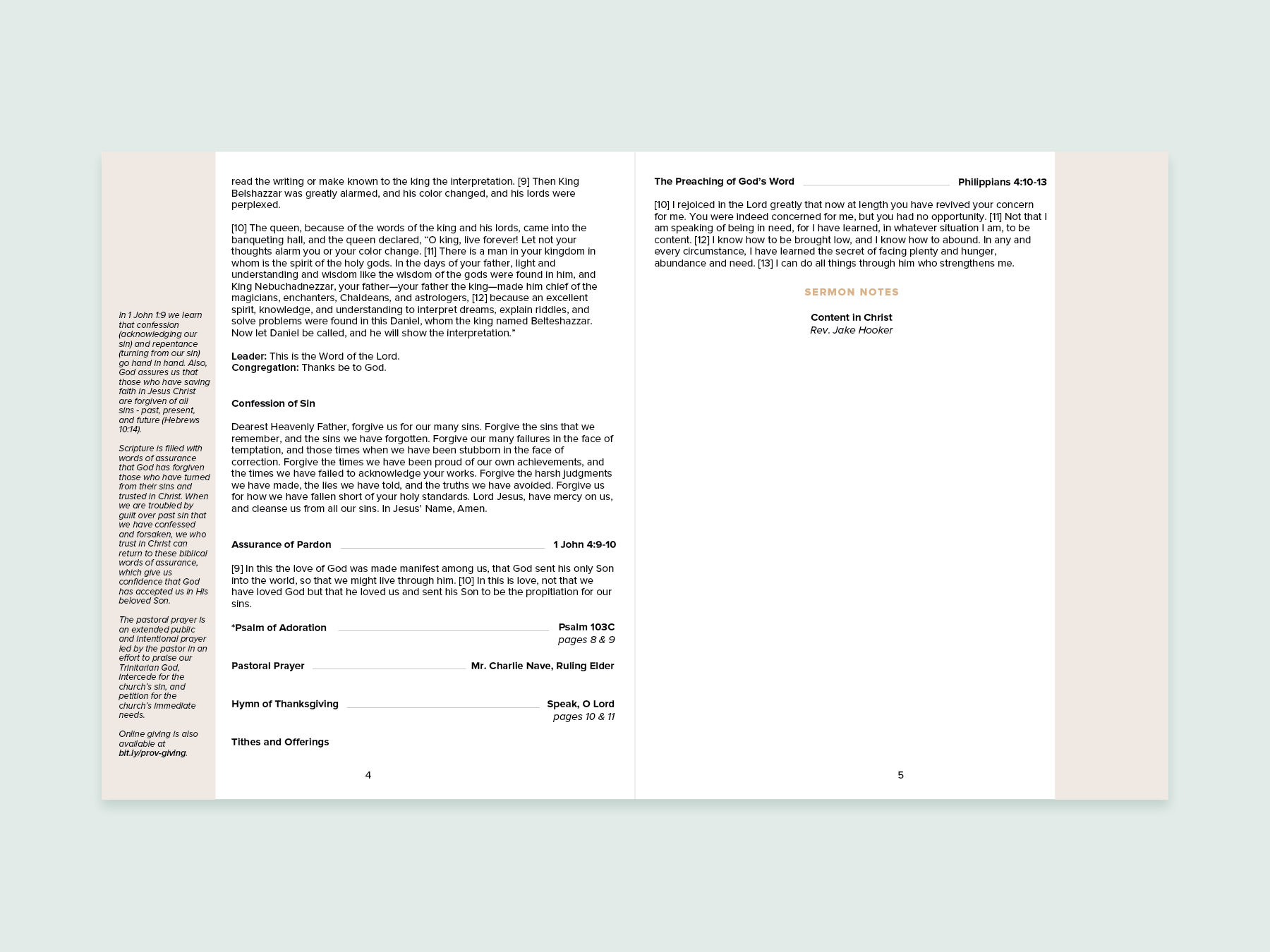
Look at what Paul says in verse 10: “I rejoiced in the Lord greatly that now at length you have revived your concern for me. You were indeed concerned for me, but you had no opportunity.”
In many ways, Paul’s letter to the Philippians was a ‘thank you’ letter. Now you have to remember why Paul would have had to thank the Philippians to begin with. Paul was thanking them because they had sent him a financial gift by the hand of Epaphroditus. And Paul is incredibly grateful! He wanted them to know just how appreciative he was of their gift, but he wanted to be clear: he wasn’t simply thankful because they gave him a gift, he was thankful because they were demonstrating their love and concern for him.
Undoubtedly, they were worried about him and had heard that he was suffering. After all, he was imprisoned! And apparently, the Philippians had wanted to send Paul support for some time, however, they “had no opportunity.”
Perhaps they couldn’t find a messenger, or it took a long time to gather up the funds that they wanted to send to Paul, the truth is, there are a million potential reasons they were unable to get it to him. But eventually they were able to cobble together their support and send it to him.
Paul was, of course, thankful for the gift itself along with the thoughtfulness and generosity of the Philippians. Paul wanted to stop and say ‘thank you,’ but notice that he says at the beginning of verse 10, “I rejoiced in the Lord…”
Paul is careful. He doesn’t say, “I rejoiced greatly because you sent help,” but “I rejoiced in the Lord.” In other words, the Lord is the source, the center, and the reason for his joy. The Philippians’ generosity becomes an occasion for rejoicing, but not the foundation of it.
It’s sort of like being excited to go to church to see your friends. Of course, there’s nothing wrong with that—we should all be excited to see folks that we haven’t seen in a while. But that shouldn’t be the primary reason you want to be here—hopefully we come to church to receive from the Lord, and being able to see a friend or loved one is icing on the cake.
Paul is careful that there is no confusion. The Lord is the foundation of his joy, and the gift that the Philippians gave him was icing on the cake.
And of course, there is a deeper point that Paul is driving home here: his happiness wasn’t dependent on what they did for him. In fact, his satisfaction, his contentment wasn’t attached to what anyone did for him—even when people go way out of their way to be generous. Of course, Paul isn’t going to be rude, he’s obviously a gracious southern gentleman.
And so he was going to express his thankfulness to them, but at the same time, Paul wanted them to know that his joy in life wasn’t tethered to their generosity.
His contentment rested somewhere far more secure—in his faith in Christ.
Haven’t we all seen this? A person whose entire well-being is wrapped up in what someone else does. A parent who is so tied to their child’s performance that their mood rises and falls with every grade, every game, every decision. A spouse whose sense of worth is dependent on whether they feel appreciated or affirmed. A worker whose joy evaporates the moment recognition dries up. In each case, their contentment is so fragile because someone else holds it.
That’s exactly what Paul is pushing back against. He refuses to place the weight of his joy, peace, and stability on the actions of others—even well-intentioned, generous ones. When our happiness is tethered to people, we become anxious, demanding, and easily disappointed. But when our contentment is anchored in Christ, we are freed to receive gifts with gratitude without being controlled by them. We can rejoice when others bless us, and we can endure when they fail us—because Christ, not human approval or provision, is our sufficiency.
Which is why Paul says, “I rejoiced in the Lord greatly…” His joy isn’t fragile or circumstantial. There’s something deeper underneath it all that keeps Paul anchored when circumstances shift. His emotions aren’t swinging wildly based on provision or lack, praise or neglect, comfort or hardship. Paul’s joy is tethered to Christ Himself—the steady, unchanging anchor that holds firm no matter how big the wave is that crashes against him.
Contentment Is Learned (vv. 11–12)
Which is hard, isn’t it? The cultural waters that we swim in are always encouraging us to find contentment in the things of this world. We are constantly told that our satisfaction is just one purchase away, one promotion away, one life upgrade away.
Which is why what Paul says in verse 11 is so significant: “Not that I am speaking of being in need, for I have learned in whatever situation I am to be content.”
He was certainly thankful, so wasn’t speaking of “being in need,” in some sort of desperate way, because he had learned something very valuable: regardless of the situation he found himself in, regardless of his circumstances, he is to be content.
His words are very deliberate, aren’t they? Because he doesn’t say that he’s some sort of robot who never has his flesh rise up and long for what he doesn’t have. He’s not claiming to have achieved some level of stoic piety that the rest of us should aspire to.
He says he’s learned to be content. Because as we all know, contentment is not natural. I mean if I was to poll everyone in the congregation right now and ask, “are you honestly content with the way your life looks right now?” What would you say? It’s hard isn’t it?
And yet it really seems that the people in our society that seem to have it all, power, money and fame are the most depressed, anxious, malcontented, dysfunctional people in the world! My point is, even if you had it all, it probably still wouldn’t be enough!
Like Paul, contentment is a lesson that you and I need to learn. It’s not innate. The tenth commandment which is “thou shall not covet,” certainly implies that you and I should be content. Which is exactly what Westminster Shorter Catechism teaches about the tenth commandment. Question 80 asks:
What is required in the tenth commandment?
Answer: The tenth commandment requireth full contentment with our own condition, with a right and charitable frame of spirit toward our neighbor, and all that is his.
We must be content with our own condition. On a certain level, we have to be okay with the way things are, and yet, I don’t think that that means contentment is shrugging your shoulders, lowering your expectations, and just enduring life as it comes.
I can’t tell you the number of times I’ve spoken with people who believe that that is the most spiritual approach to life. As if God is somehow pleased when you just give up and stop caring.
That’s not contentment. That’s passive resignation.
Paul never gave up. The whole time Paul was imprisoned, he was still laboring for the church, praying for the church, and hoping for the church. He didn’t learn contentment by disengaging from life.
And yet at the same time he says, “I know how to be brought low, and I know how to abound. In any and every circumstance, I have learned the secret of facing plenty and hunger, abundance and need.”
The secret that Paul has learned is regardless of whether life is going well, or poorly, whether his belly is full or empty, either way, his happiness, satisfaction, and joy isn’t anchored to whatever life is throwing at him—it’s anchored to Jesus Christ. Paul certainly worked hard, but at the end of the day, he understood that everything he needed was rooted in Jesus Christ.
Contentment Is Rooted in Christ’s Strength (v. 13)
At the end of the day, if you’re looking around hoping that more money, a harmonious family, or a dream vacation is going to give you peace you’re going to perpetually wind up being disappointed. In order to find contentment that doesn’t fade away it has to be rooted in something beyond this world. Your strength for contentment cannot come from yourself.
This is a point that the Puritan writer Jeremiah Burroughs made in his book, The Rare Jewel of Christian Contentment. He said, “If I become content by having my desire satisfied, that is only self-love; but when I am contented with the hand of God and am willing to be at His disposal, that comes from my love to God.”
True contentment is rooted in your relationship with the Lord. Because the strength that you and I need to be able to face every type of situation that life will inevitably throw at you: Christ gives you and me the strength to face every one of those situations. When your faith is in him, there’s a grounding to your life.
Which is why Paul says, “I can do all things through him who strengthens me.”
The NBA superstar, Steph Curry, actually writes Philippians 4:13 on his basketball shoes before every game. And he does so because Philippians 4:13 sounds like the ultimate inspirational quote! I can literally do anything because of Christ! I can become a billionaire, I can climb Mount Everest, I can bench press 500lbs because of Christ who strengthens me. That’s how this particular verse is commonly quoted.
I had a friend who, as a joke, would take uninspiring Bible verses, put them on inspirational looking images, and then he would send them to his friends. He once sent me this majestic looking image with a reference to Leviticus 13:3, which says, “and the priest shall examine the diseased area on the skin of his body. And if the hair in the diseased area has turned white and the disease appears to be deeper than the skin of his body, it is a case of leprous disease.”
I thought it was funny.
That verse from Leviticus is not as funny when you’re reading through Leviticus. But when you isolate it like that you strip it from its context. Which was my friend’s joke!
Paul wasn’t trying to write an inspirational quote when he said, “I can do all things through Christ who strengthens me.” Paul isn’t encouraging self-confidence with a little bit of Jesus sprinkled on top. He’s encouraging total dependence upon Christ in every season and circumstance in life.
He wanted to teach the Philippians what he had learned: He could face any circumstance, any obstacle, any challenge, and remain content because his happiness was never rooted in his circumstances—it was rooted in Jesus Christ!
This is where the rubber meets the road for us. Jesus never promises to tailor your life to your liking. Nowhere does he promise to give you a life of comfort, ease, financial security, or relational peace in the way the world defines those things. Instead, He promises something far better: His sufficiency. Christ may not give you everything you want, but He will be enough for everything you face.
Some of you may be familiar with the Romanian Pastor Richard Wurmbrand, who was the founder of the organization called The Voice of the Martyrs. And he founded the organization because he personally knew something about persecution: he was imprisoned and treated horribly under Communist rule in the mid-20th century and spent 14 years in prison. Much of his time in prison was in solitary confinement without any light, human contact, or even the Bible. What kept him going was “preaching sermons in his mind,” reciting Scripture from memory, and even composing hymns.
And once he eventually got out, he would later say that there were moments in solitary confinement that he felt closer to Christ than he ever felt when he had his freedom. And of course, he felt that way despite the fact that Christ never removed his chains. But you know what Christ did give him? The strength to endure.
We’ve all experienced pain. We’ve all felt anxiety over the future. We’ve all suffered to varying degrees. It’s in the midst of those moments you and I must remind ourselves what Paul would remind himself: “I can do all things through Christ who strengthens me.”
The question should never be, will Christ meet my expectations? The better question is: Do I believe that no matter what happens to me that Jesus Christ is always enough?
Here’s the amazing truth: As your dependence upon Christ increases your contentment with your position in life will increase.
That is precisely what Paul has been teaching us. He does not say that circumstances stop mattering, or that hardship suddenly becomes easy. Paul is honest—he knows what it is to be brought low, and he knows what it is to abound. He has experienced hunger and plenty, need and abundance. But somewhere along the way, through suffering, loss, uncertainty, and provision, Paul learned something deeper: that Jesus Christ is enough.
And that lesson doesn’t come naturally to us. Everything in our world trains us to believe that contentment lies just beyond our current situation. If we had a little more money, a little more comfort, a little more recognition, a little less stress—then we’d finally be satisfied. We live in a constant state of “almost.” Almost content. Almost happy. Almost at peace. But Paul says true contentment is not found in what changes; it is found in the One who never changes.
That’s why Paul can say, “I can do all things through him who strengthens me.” This is not a slogan about personal achievement or accomplishing our dreams. It’s a confession of dependence. Paul is saying, “I can endure. I can remain faithful. I can press on—because no matter what the circumstance His strength is sufficient for me.” Christ does not promise to give Paul everything he wants, but He promises to give Paul everything he needs to remain faithful, hopeful, and secure.
And this is where the gospel meets us this morning. Because contentment is not ultimately about learning better techniques or adjusting our expectations—it’s about trusting a Savior who has already secured everything that matters most. Jesus Christ did not suffer on the cross so that you could live a more comfortable life. He gave Himself fully so that you could have eternal life. He entered into poverty, rejection, humiliation, and death so that you might gain forgiveness, righteousness, peace with God, and the hope of glory.
When Christ is your greatest treasure, circumstances lose their ultimate power over you. They still affect you—but they no longer define you. Loss cannot destroy you. Success cannot control you. Want cannot undo you. Plenty cannot deceive you. Why? Because your life is hidden with Christ in God.
And that changes how we live. Instead of constantly grasping, we can receive. Instead of complaining, we can give thanks. Instead of anxiously striving, we can trust. Instead of measuring our lives by what we lack, we begin to measure them by what we’ve been given in Christ—grace, mercy, forgiveness, adoption, hope, and eternal life.
So let me ask you plainly: where are you looking for contentment? Is it in your circumstances? Your bank account? Your health? Your relationships? Your plans for the future? Those things will eventually let you down, but Christ will not.
The invitation of this passage is not to lower your expectations for life, but to raise your expectations of Christ. To believe that He really is sufficient. That His grace really is enough. That His strength really does meet you in weakness. And that when you have Him, you have everything you truly need.
Paul learned this lesson over time. And we will too—sometimes slowly, sometimes painfully—because Christ is faithful to His people. He who did not spare His own Son will surely give us all we need to walk with Him.
So rest in Him. Depend on Him. Trust Him. And as you do, you’ll find that contentment grows—not because life gets easier, but because Christ becomes greater. Amen. Let’s pray together.
