
Let's Go to the House of the Lord - Psalm 122
How was it getting here this morning? Did you feel rushed? Maybe a little stressed? Did frustrations boil over? Was it just another task that needed to be done? At some point or another, I’m sure we’ve all felt this way as we drive into church.



Sometimes, when we’re feeling this way, heading to church is the last place we want to be. We’re tired, frustrated, and top of all that, someone from church said something offensive, and that other person did something I didn’t like—if we’re looking for reasons not to go to church, it’s quite easy to find them.
There seems to be an entire cottage industry that has cropped up on the internet wholly devoted to sharing church horror stories. In many ways, this seems to be one of the major reasons people wind up “deconstructing their faith.”
My point is, sometimes worship doesn’t feel encouraging. It’s not necessarily something that we get excited about. Sometimes it feels routine, or even disappointing.
We come with heavy hearts, distracted minds, or past hurts that weigh us down; which is why what David writes here in Psalm 122 is a complete shock to the system. The way David describes worship, isn’t a painful, challenging, monotonous task. It’s a heartfelt delight. It’s not a burden but a blessing. Gathering with God’s people to worship fills him with joy, anticipation, and gratitude, because he knows he is drawing near to the living God who dwells with His people.
David doesn’t speak negatively about worship as is so common today, in fact, everything David says is overwhelmingly positive. David teaches us that we shouldn’t just tolerate worship, rather we should long for it.
The people of Israel were required to make three annual pilgrimages to Jerusalem: Passover, the Feast of Weeks (or Pentecost), and the Feast of Booths (or Tabernacles). Of course, they could take voluntary pilgrimages as well, but those were the times that all of Israel was supposed to meet in Jerusalem for worship.
In case you didn’t notice, Psalm 122 is a Psalm of Ascent. The Psalms of Ascent are Psalms 120-134. And the people of Israel would sing these Psalms as they made their way up to the temple mount in Jerusalem.
An interesting fact is that David centralized worship in Jerusalem, but never saw the Temple. It was actually his son, Solomon who would oversee the construction of the temple. For David, worship was centered around that big, mobile, tent that contained the ark of the covenant—the Tabernacle.
Obviously, we don’t worship at a Temple or Tabernacle or are required to make annual pilgrimages to Jerusalem because Jesus has fulfilled the ceremonial law. There is no centralized location where Christians have to gather for worship, rather, Christians gather all over the world in various places to worship the Lord.
I think it’s helpful to know all of this, but honestly it shouldn’t have an impact on how we view and apply this Psalm.
Because the principles and things that David articulates in Psalm 122 is every bit as applicable today as it was when he wrote it. Our approach to worship should absolutely mirror what David describes in this particular passage.
Joy in Worship (vv. 1-2)
No matter if you were going to worship at the Tabernacle or at the Temple Mount in Jerusalem, I think it’s probably fair to say that it was tougher to get to worship than it is now. You probably woke up this morning, had a nice breakfast, drove here in an air conditioned car, and yet, we still complain about the challenges of getting to church today. Imagine for a second what it was like for the Old Testament people.
It was dangerous going to worship. Psalm 121 talks about how your help comes from the Lord and how he will keep you from evil, because there was a chance you could get attacked or robbed on your way to Jerusalem. There was a practicality to singing Psalm 121 that we miss living in the 21st century.
And yet none of that stops David from saying, “I was glad when they said to me, “Let us go to the house of the Lord!” The house of the Lord was synonymous with the presence of God. David wasn’t worried about difficulty of travel, or potential danger because he longed to be in the presence of the Lord.
David describes what it feels like from longing to be in the presence of the Lord to arriving in the church parking lot when he says in verse 2, “Our feet have been standing within your gates, O Jerusalem!”
What David describes here reminds me of what it feels like to go on an exciting trip. When you leave the house, you’re desperate to get on the road, and as you get closer and closer to your final destination your anticipation and excitement begin to reach a fever pitch.
That’s the way David describes going to worship despite the fact that it was decreed for Israel. There was a mandate or an expectation for the people of Israel to go to worship, but that did not dampen David’s enthusiasm.
Which is very different from the way we tend to think about worship. Many of us have been taught that if there is any sort of expectation or demand that will automatically kill any enthusiasm. In order to be excited about anything, it has to organically well up inside of you—you can’t be told you have to do this. That’s a very common belief, isn’t it?
And yet, David doesn’t see these things as being in conflict. There is a command to go and worship the Lord, but his obedience is not casual, flippant, or begrudging. He goes gladly. He delights in responding to God’s call to worship.
For whatever reason, duty and routine have been demonized by evangelicalism. We’re often told that if it feels dutiful or routine then it’s not truly worshipful. There’s an unspoken belief that worship is an organic outpouring of emotion, and if you’re not experiencing that then you’re not truly worshiping. But the truth is our emotions are terrible guides for our actions. If worship was solely based upon how we feel many of us might not be here right now!
In India arranged marriages are still very much a thing, and I heard someone share a part of a conversation that he had with an Indian man about the differences between western marriages and Indian marriages. His Indian friend said, “your marriages start hot and then over time grow cold. Our marriages begin cold but then over time burn hot.”
I’m not endorsing arranged marriages. Let me just go ahead and get that on the record. I only bring that up because he made what I think is a very powerful point that has been under attack: commitment often precedes affection.
The more faithfully you give yourself to something—to a marriage, a vocation, a friendship, or the gathered worship of God—the more your heart is shaped by it over time. God uses ordinary faithfulness in ordinary rhythms to soften our hearts, reorient our loves, and renew our joy. Worship isn’t meant to be driven by emotional highs, but by your faithfulness and thankfulness to the Lord. And as we keep showing up, week after week, God meets us there—slowly training our hearts to delight in Him.
Because David was committed to participating in the gathered worship of the Lord, his heart burned red hot for the living God.
David found joy in worshiping the Lord.
God-Focused Worship (vv. 3-5)
But for David it was never about worshiping the Lord in isolation. It wasn’t just about him and Jesus. It was always about worshiping the Lord in community, which is exactly what he describes in verses 3-5. In those verses David describes the various tribes of Israel gathering together in Jerusalem to worship the Lord.
Look at verses 3-5 with me.
Jerusalem—built as a city that is bound firmly together, 4 to which the tribes go up, the tribes of the Lord, as was decreed for Israel, to give thanks to the name of the Lord. 5 There thrones for judgment were set, the thrones of the house of David.
Notice how Jerusalem was “bound firmly together” when the tribes of Israel would “go up” together as was, again, “decreed for Israel.”
Which of course means there were rules when it came to worship. For the people of Israel, gathered worship in Jerusalem came at certain times of the year. There were three annual feasts, but then, people were free to make their own personal pilgrimages to Jerusalem whenever they felt so inclined.
But look at what’s going on here in this text: David was glad when they said “Let us go to the house of the Lord…” “as was decreed for Israel!” David’s heart was glad when he, along with all of Israel, were called into worship.
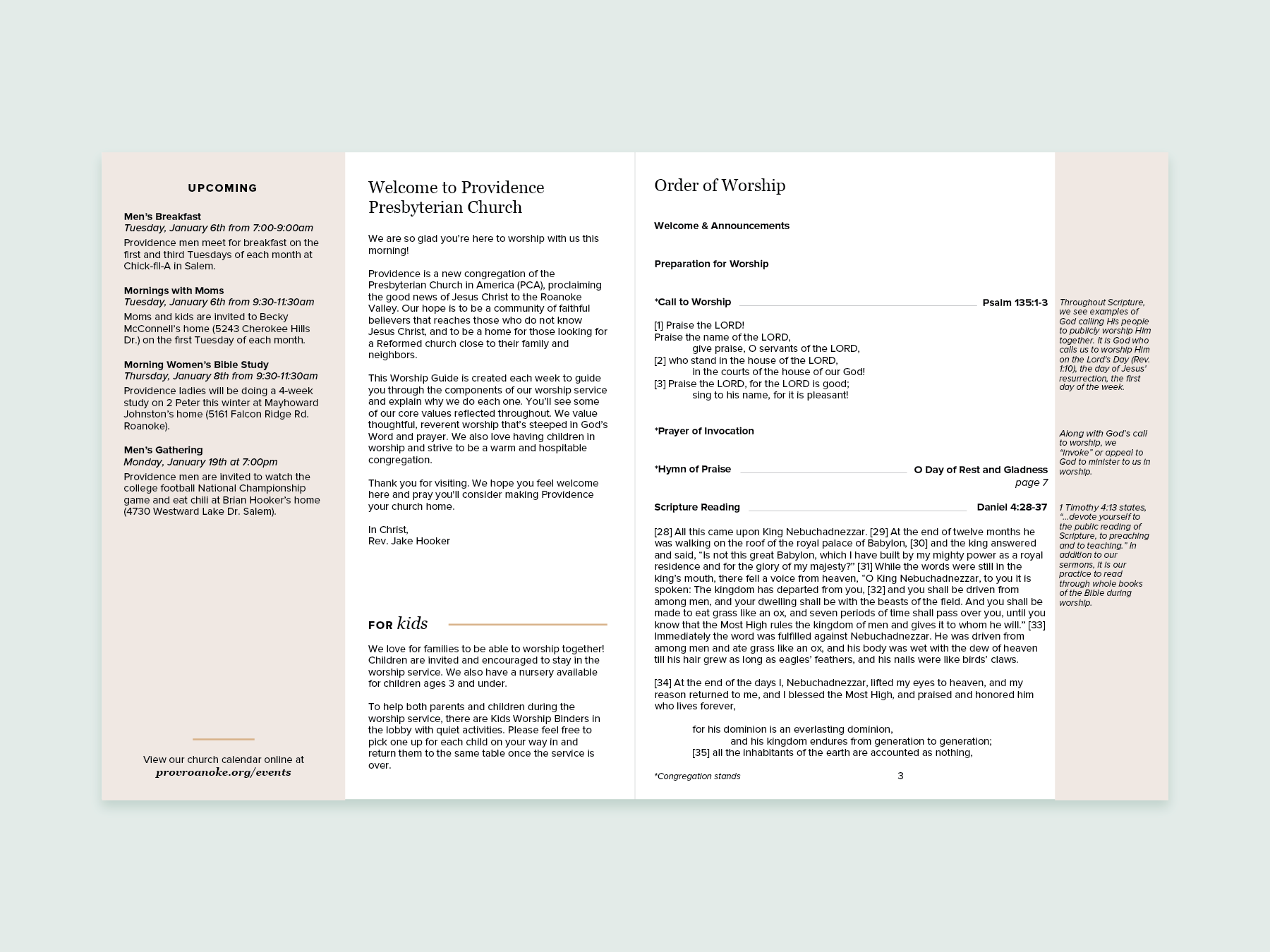
Hopefully some of this sounds familiar. Our worship service begins each week with a call to worship, which is usually some portion of Scripture (often a Psalm), that invites God’s people into worship. Because God decides when his people gather to worship. That’s every bit as true today as it was for David. It’s not like a I woke up this morning and said to myself, “we should have church this Sunday!” God decided that.
And in case you’re wondering, we worship on Sunday because Jesus rose from the grave on the first day of the week.
Westminster Larger Catechism 119 speaks specifically about this. It asks, “Which is the day of the Sabbath?”
“From the beginning of the world to the resurrection of Christ, God appointed the seventh day of the week to be the weekly Sabbath; and the first day of the week ever since, to continue to the end of the world, which is the Christian Sabbath.”
I’m chasing a bit of a rabbit trail here, but there’s a reason for it: worship isn’t about you and me. We don’t dictate the day on which we worship. We don’t decide we’ll worship this Sunday and then take the next few Sundays off. We don’t gather to worship because it’s convenient, we gather for worship at the direction or decree of the living God. He tells us when to do it.
A man I once knew from South Carolina helped plant a church. Growing up, his family was deeply involved in church life—they set up chairs, served in the nursery, and did all the ordinary, behind-the-scenes work that church planting requires. Church was simply part of the rhythm of his life.
Then COVID hit. Days turned into weeks, weeks into months, and before he realized it, years had passed without regularly gathering for worship. Over time, he began to question whether corporate worship was really necessary at all. He told me that he made up for it with personal quiet times and occasional meetings with his small group.
What became clear, though, was a subtle shift in how he understood worship. Without meaning to, he had begun to see worship primarily in terms of what he got out of it—how it made him feel, whether it fit his schedule, whether it seemed personally beneficial—rather than as a commanded, joyful act of honoring the living God alongside His people.
COVID didn’t create that mindset, but it exposed it. And it reminds us how easily we can drift into treating worship as optional or consumer-driven, rather than as a holy privilege and a necessary means by which God shapes and sustains His people.
If we’re not careful we begin to run everything through several questions like: does this make me happy? Or does this make me feel good? Or what do I get out of this? Basically in everything that we do we’re asking ourselves, “what’s in it for me?” And before we know it, we’re asking ourselves, “what am I getting out of worship? What’s in it for me?”
That’s what happened to my friend in South Carolina. Everything had gotten so construed, so messed up in his thinking that he had made the worship of the living God about himself.
Which is frankly the exact opposite of why we worship. We don’t gather for an hour or so every Sunday because it’s convenient. We gather to turn our attention away from ourselves and to the author and perfector of our faith.
Not only that, but he is fundamentally worthy of our worship. It’s about bowing down and kneeling before the Lord, our Maker. We rob God of his glory and downplay the significance of Christ’s sacrifice on the cross whenever we begin to make worship about us. It’s not about us. It’s about the Lord and giving Him the glory that He alone rightfully deserves.
Peace in Worship (vv. 6-9)
There’s an insidious lie that is deeply connected to all of this. And that lie is that I’ll find peace, happiness, and joy when everything perfectly caters to me. When everything is tailored to my convenience, my schedule, my timeline, then everything in my life will improve. There’s a real temptation to turn everything inward. To focus more and more on ourselves and the more we’re able to get what we want the happier we’ll become.
But the reality is that this kind of self-centered pursuit is a mirage. The more we chase after our own desires, the more emptiness we often encounter. True joy, lasting peace, and deep satisfaction are never found when our focus is inward, David teaches us here that it’s when we shift our focus outward is when we find that peace, happiness, and joy that is so elusive in this world.
David says that one of the keys to experiencing real peace is by turning your attention away from yourself and focusing on the Lord. Look at verses 6-9 with me.
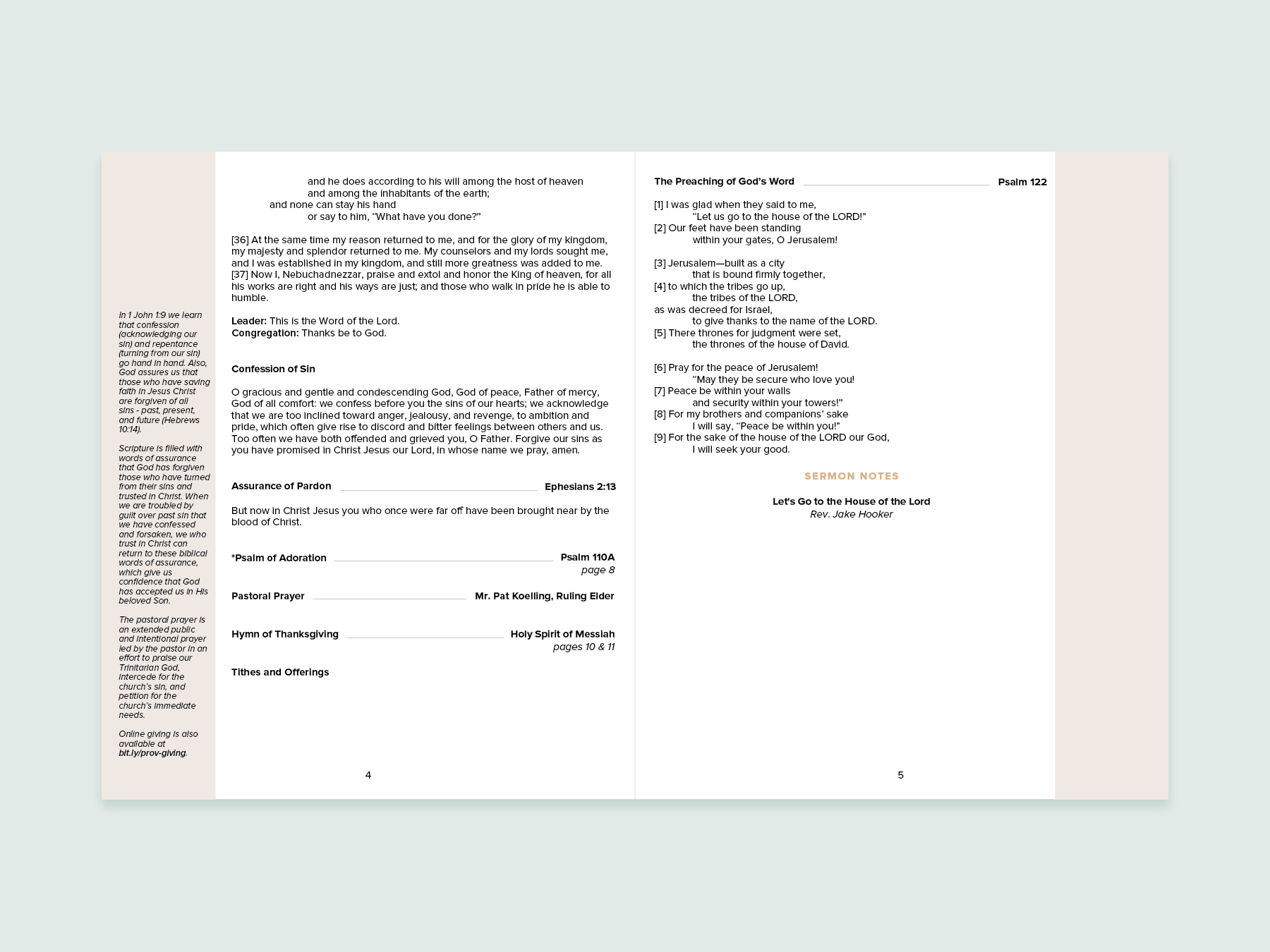
“Pray for the peace of Jerusalem!
“May they be secure who love you!
7 Peace be within your walls
and security within your towers!”
8 For my brothers and companions' sake
I will say, “Peace be within you!”
9 For the sake of the house of the Lord our God,
I will seek your good.”
David encourages everyone to pray for the peace and well-being of Jerusalem—not merely as a city, but as the dwelling place of God among His people.
Three times David mentions peace. And of course, the Hebrew word that David uses is shalom. Shalom means, completeness, soundness, welfare, peace. It’s an all-encompassing complete peace. It’s peace in every way.
Because here’s what I think is important for all of us to see this morning: the peace and the security that we all long for, that David longs for even among his people, doesn't come from catering to his own wants, and desires. It’s not by chasing the things that will make him happy.
According to David the peace and security that we all long for is found in its fullest form when we forget about ourselves and give glory to God.
And I think this is a challenge for all of us, especially at the start of the new year. January is the season of resolutions, goal-setting, and self-improvement. We ask questions like: What do I want to accomplish? What habits do I want to build? How can I become a better version of myself? None of those questions are wrong, but David forces us to ask a deeper, more foundational question: Where does worship fit into all of this? Is worship central, or is it optional? Is it the sun that all the planets of our life orbits, or is it something we squeeze in when life allows?
According to David, the peace and security we all long for is not found by perfecting our plans or optimizing our schedules, but by rightly ordering our loves. True peace flows from a life centered on the worship of God. Again, that’s why David prays for the peace of Jerusalem—not merely as a city, but as the dwelling place of God’s presence. The house of the Lord is where God meets His people, and therefore it is where life, stability, and blessing are found.
And yet, if we’re honest, worship often becomes one of the first things we marginalize when life gets busy. We tell ourselves we’ll return when things slow down, when the kids are older, when work is less demanding, when we feel more motivated. But David reminds us that worship is not the reward of a settled life—it is the anchor in the midst of an unsettled one. Worship re-centers us. It lifts our eyes off ourselves and fixes them on the living God.
Ultimately, this Psalm presses us toward the gospel. Because the peace David longs for—true peace, lasting peace—cannot be produced by us. It must be given. And that peace comes to us fully and finally in Jesus Christ. He is the greater Jerusalem, the true dwelling place of God with man. He is the one who brings peace within our walls and security within our hearts. Through His life, death, and resurrection, He reconciles us to God and to one another.
That means worship is no longer about earning God’s favor or proving our worth. We don’t come to worship because we’ve had a good week, but because Christ has secured our peace forever. We gather because we need to be reminded—again and again—that our ultimate hope does not rest in our resolutions, our discipline, or our success, but in the finished work of Jesus.
So as we step into a new year, let David’s words challenge us. Let worship be central. Let it shape our priorities, our calendars, and our hearts. Seek the good of the house of the Lord, not because it benefits God, but because God uses it to bless His people.
And as we do, we will find what David found: peace—not the fragile peace of self-focus, but the deep, enduring peace that comes from losing ourselves in the worship of our Savior. May we all be glad when they said, “Let us go to the house of the Lord!”
Amen. Let’s pray together.
