
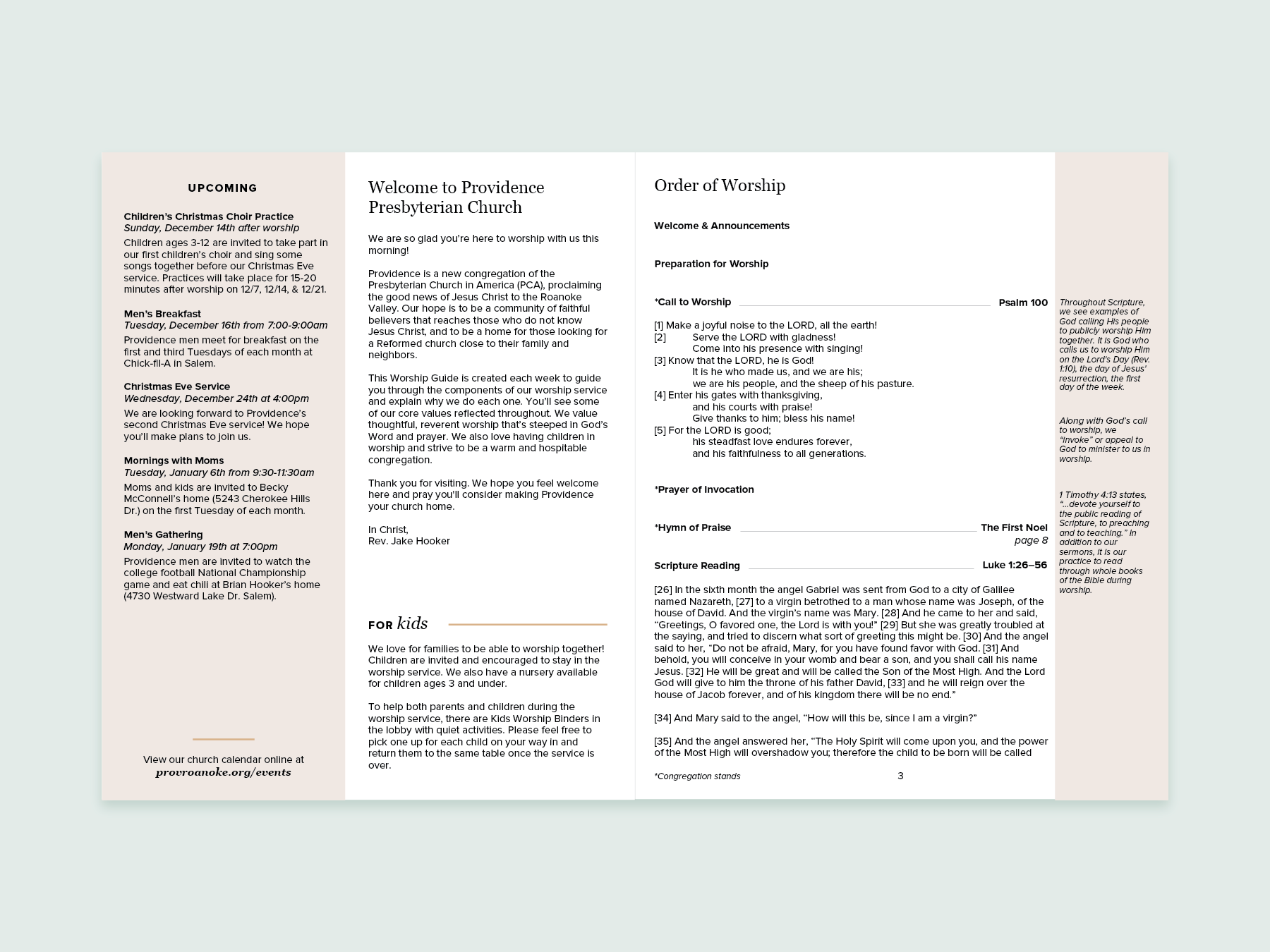
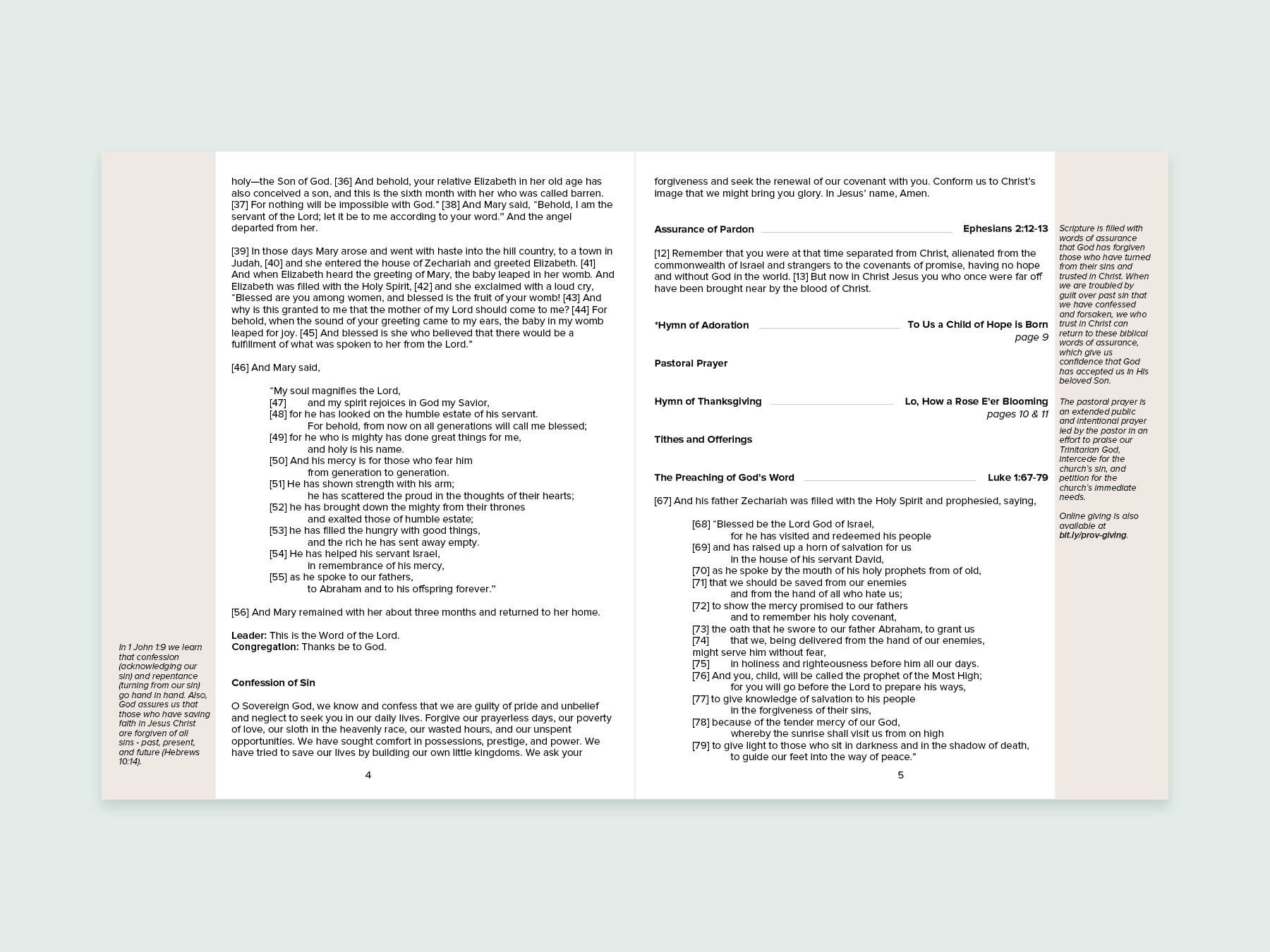
God’s Light in a Dark World - Luke 1:67-79
We live in a world that loves distractions. Our days are filled with noise—notifications buzzing, endless scrolling, constant stimulation competing for our attention. Even the Christmas season, which should invite reflection and wonder, can quickly become just another season of busyness and distraction. We rush from event to event, fill every quiet moment with activity, and mistake movement for meaning.



And the danger of all this distraction is that we stop noticing the darkness. When everything is loud and fast, we rarely slow down long enough to see what’s really going on in our own hearts. We can become so entertained, so preoccupied, and so numb that we no longer recognize moral, spiritual, and ethical darkness—both around us and within us. Sin no longer shocks us. Compromise feels normal. Repentance feels unnecessary.
Distraction dulls our sense of need. It convinces us that everything is fine when it isn’t, that we are well when we are actually sick. And that’s precisely why reflecting on the advent of Jesus Christ is so significant. Christmas is not merely about comfort or nostalgia; it is about light breaking into darkness.
It is about Jesus shining His light into our distracted, shadowed hearts—calling us to repentance and leading us into true and lasting peace. And that’s really what I want us to focus on this morning: Christ scattering the darkness, calling us to repentance, and leading us into true lasting peace. And we see this in four ways: first, God shines light that exposes darkness (vv. 68–72), second, God frees us to serve him (vv.73-75), third, God prepares us and calls us to repentance (v. 76), and lastly, Jesus leads repentant sinners out of darkness and into peace (vv. 77-79)
By way of reminder, this is our second week in our advent series, The Songs of Christmas. There are four songs in Luke’s gospel: Last week, we looked at Mary’s Song, this morning we’re looking at Zechariah’s song, next week, we’ll look at the Angels Song, and then on Christmas Eve we’ll look at Simeon’s song.
Now many of you probably remember that Zechariah was the father of John the Baptist. Zechariah was a priest and one day he went into the temple and saw an angel who told him that he was going to have a son. And it was after seeing the angel that Zechariah became mute. He was unable to speak. And this passage that we just read were the first words of Zechariah since seeing the angel, and his first words were a prophetic song. But interestingly enough, the majority of Zechariah’s song is really focused on John the Baptist. Of course, it’s related to Jesus Christ, but Zechariah’s song is geared towards John the Baptist’s role.
God shines light that exposes darkness (vv. 68–72)
Zechariah’s prophetic song is also interesting when you consider the fact that there had been 400 years of silence. God had not spoken to the people of Israel in any meaningful way for centuries.
Which of course would lead one to believe that God had abandoned his people and his promises. God had withdrawn himself from them and simply left them to their own devices—that’s what would appear to be going on, but of course, that’s not what’s been going on at all.
God was actually about to draw near to his people in an incredible way. And Zechariah, actually understood this. He understood that his son was paving the way for Jesus Christ, the promised Messianic deliverer.
And so, Zechariah began his song by proclaiming the goodness and glory of God saying “Blessed be the Lord God of Israel, for he has visited and redeemed his people…”
Isn’t that amazing? Zechariah looks at his little baby, John the Baptist, not Jesus Christ, and recognizes that the Lord has not abandoned His people. In fact, he has visited them and redeemed them. Some translate that part of verse 68 as, “brought about redemption for them.” How many times had God literally saved or delivered his people throughout the history of Israel? Countless times!
And he expects the same thing once again from the Lord, which is why he says in verse 69 that God has, “raised up a horn of salvation for us in the house of his servant David.”
Zechariah understood where the Messiah was going to come from. The Messiah wasn’t going to come from his tribe, which would have been the tribe of Levi. Remember the Levites served as the priests in Israel. No, the Messiah was going to come from the royal tribe, David’s tribe, the tribe of Judah.
All of this genealogy and tribal stuff is important because it means that Zechariah knew that if John was here, then the Savior of the world was right around the corner. And the Messiah would do incredible things.
He would raise the horn of salvation and “...save [them] from [their] enemies and from the hand of all who hate [them].” In other words, Jesus was going to save his people from a much greater enemy. He was going to merely save them from the Philistines, or Amalekites, or the Romans—Jesus was going to save his people from the greatest enemy of all, Satan along with all of his allies: sin, death, the grave, hell, and all the hosts of evil.
And so Jesus was going to do something far greater than usher in some sort of political revolution. He was going to be the very embodiment that God was “show[ing] the mercy promised to our fathers and to remember his holy covenant.” John the Baptist was proof in a small way, that God was going to make good on his much greater promises. That Jesus Christ would bring spiritual freedom to His people, which is what Zechariah says in verse 77.
Zechariah’s song strikes such a hopeful, glorious, expectant note, doesn’t it? Which is unfortunately not the way we often think about God. If there’s a criticism to be made, it’s that we expect too little from Him. We settle for spiritual beans and rice when God has invited us into His feast.
Too often, we limit our prayers and our expectations, convincing ourselves that nothing will ever change. We assume that the angry person will always be angry, the fearful person will always be fearful, the marriage will always be strained, and the addict will always struggle. Many of you probably aren’t even sure if God can change you. But Zechariah’s song confronts that unbelief head-on. He doesn’t allow us to settle for a small, powerless view of God.
Zechariah looks at John and anticipates the Messiah who is about to usher in salvation, mercy, deliverance, holiness, restoration, and a light so bright it will scatter the darkness. He doesn’t see stagnation or despair; he sees promise and hope. Zechariah looks at John the Baptist and knows—without a doubt—that the best is yet to come. That’s what Jesus is for all of us, light in the darkness.
God frees us to serve him (vv.73-75)
You see, as long as the Lord is with us, we have hope. We have hope for the world, but more than that we have hope that he’s at work in us.
In verse 73 Zechariah says that the Lord will, “show the mercy promised to our fathers and to remember his holy covenant, the oath that he swore to our father Abraham.” Again, Zechariah understood exactly what was happening. He knew that this moment was not random or accidental—God was making good on His covenant promises. This was the fulfillment of words spoken generations earlier, promises that may have seemed distant or forgotten, but were never abandoned by the Lord.
And what did that covenant promise entail? That the covenant God made with Abraham—the covenant of grace—was a promise that God Himself would act to save His people. It was a promise of blessing, redemption, and restoration, not earned by human faithfulness but secured by God’s faithfulness. Through Abraham’s offspring, God would bring salvation to the world, forgive sins, defeat enemies, and draw His people into a restored relationship with Himself.
Zechariah knew that because John was here, Jesus the Messiah would arrive soon to “deliver [them] out of the hand of their enemies…” Which, again, was precisely what the covenant of grace promised. But it wasn’t their political enemies that Zechariah had in mind. The greater enemies were satan, sin, and death—enemies no army could defeat and no law could restrain. Zechariah understood that the Messiah would bring a deeper, truer deliverance: freedom not merely from oppression, but freedom from guilt, fear, and condemnation before a holy God.
Whenever we think about salvation, we almost always think of it exclusively as forgiveness of sins, being made right with God and of course that’s all true. Salvation certainly entails being forgiven and being made right with the living God. But salvation isn’t just deliverance from the wrath of God, you’re also delivered over to something.
According to Zechariah, the deliverance Jesus brings allows one to “serve him without fear, in holiness and righteousness before him all our days.” Salvation isn’t merely an escape from judgment—it is an entrance into a whole new way of living.
When Jesus saves you, it’s not as though He wipes away your sins and then steps aside so you can chart your own course. No, He brings you into a life you never could have lived on your own. You’ve been granted a beautiful freedom: freedom from fear of condemnation, freedom from the old patterns that once enslaved you, freedom to actually pursue holiness from the heart.
In Christ, righteousness isn’t a burden—it’s a gift. Holiness isn’t a ladder—it’s a life. You are now free to love what is good, free to obey with joy, free to live entirely for Him. Salvation doesn’t excuse you from godliness; it empowers you into it.
God prepares us and calls us to repentance (v. 76)
And Zechariah saw this as glorious news, and this good news must be proclaimed! Maybe you noticed a shift in verse 76. Because in verse 76, Zechariah shifts his thoughts to his son, John the Baptist.
Look at what he says: “And you, child, will be called the prophet of the Most High; for you will go before the Lord to prepare his ways, 77 to give knowledge of salvation to his people in the forgiveness of their sins, 78 because of the tender mercy of our God…”
God had given Zechariah prophetic words regarding his son. John the Baptist was going to be “prophet of the Most High.” Which is absolutely incredible when you realize that it had been centuries since the last prophet in Israel, but Zechariah understood that John was going to fill that void.
And what exactly was John’s message? Zechariah tells us that he “will go before the Lord to prepare his ways,” and then adds the heart of it: “to give knowledge of salvation to his people in the forgiveness of their sins, because of the tender mercy of our God.” John’s task was to ready people to receive salvation through the forgiveness of sins. He would prepare the way for Jesus by tilling the soil of people’s hearts so they were ready to receive and understand the message of Christ—that a person is made right with God through Jesus alone. Salvation comes by faith in Christ, and faith in Christ brings the forgiveness of sins.
But that meant something crucial for John’s ministry. In order to prepare the way for Jesus, he was going to have to preach a very specific message—he was going to have to preach a message of repentance. We get a glimpse of his message in Matthew 3:1: “Repent, for the kingdom of heaven is at hand.” Interestingly enough, repentance was at the heart of pretty much every Old Testament prophet. Jeremiah said, “Return, O faithless Israel;” Ezekiel said, “Repent and turn from all your transgressions;” Joel reminded the people to “Return to [the Lord] with all your heart.”
Jesus even explicitly compared John the Baptist’s ministry to the prophet Elijah and what did Elijah do? He told Israel on Mount Carmel to turn from Baal and return to the Lord. He confronted King Ahab time and time again. My point is, even Elijah’s core message was one of repentance.
John the Baptist was eventually executed because he told King Herod that it was not right for him to have Herodias as his wife… he was executed because he preached a message of repentance.
John wasn’t calling people to clean themselves up or make superficial moral improvements; he was calling them to turn—to turn away from sin and to turn toward God with sincere, humble faith in Christ. That’s where one receives forgiveness of sins and the tender mercies of God.
Here’s the thing about preaching repentance: it’s almost never received well. No one likes being confronted with their sin and told that they need to turn from it. As long as we’re all talking about someone else’s need to repent, we’re great with that. In fact, we love it when the people all around us are told they need to repent.
But something changes when that message of repentance is pointed directly at you. No one wants to hear that they need to repent and most preachers don’t like telling people they need to repent.
Because in order to call people to repentance, you have to talk about sin. And who wants to do that? I recently read a quote from the late John Macarthur, that I found to be quite powerful. He said, “Strong preaching makes soft hearts, but soft preaching makes hard hearts.”
What he meant by that is, strong preaching, preaching that doesn’t gloss over things like sin and calls people to repentance is the sort of preaching that softens and humbles people before God. While the exact opposite is true for soft preaching. Soft preaching that is oftentimes emotionally manipulative and avoids topics that might challenge or offend someone. Soft, easy, inoffensive preaching is the sort of preaching that hardens hearts because it doesn’t call anyone to repentance.
Repentance is a necessary component to being saved. You have to recognize that God’s way is better than your way.
Jesus leads repentant sinners out of darkness and into peace (vv. 77-79)
You see, John the Baptist was preparing the way for Jesus Christ who is, “the sunrise… from on high 79 [who gives] light to those who sit in darkness and in the shadow of death, to guide our feet into the way of peace.”
Zechariah tells us that the light of Christ shines on those who sit in darkness and in the shadow of death. Christ breaks in upon people who are living in spiritual danger—those trapped in ignorance, guilt, and sin and leads them to peace.
One of the great things about living in the Roanoke Valley is that you get this on a different level, because when the sunrise comes over the mountains it’s often incredibly brilliant. It’s almost like the mountains hold back the sunrise for as long as they can until they simply can’t do it anymore.
But the reason I think it’s so vivid that he describes Jesus as the sunrise is because the sunrise completely casts the darkness out. Jesus isn’t a little candle or flashlight in a dark room. He’s the sunrise cresting the horizon scattering the darkness and shadows out.
Which I think is such a great way to describe life in Christ. You suddenly can see everything clearly. For so many who live apart from Jesus Christ the world is confusing. It doesn’t make sense spiritually, morally, or even personally. Living in darkness makes it more difficult to distinguish between right and wrong, purpose and meaning, truth and lies.
But when Christ shines His light into a person’s heart, everything changes. Suddenly the world comes into focus. You begin to see God as He truly is—holy, sovereign, merciful, near. You begin to see yourself as you really are—sinful, needy, desperate for grace. And you begin to see the world around you as it truly is—broken, fleeting, filled with temporary promises that never deliver. Christ’s light doesn’t just illuminate—it reorients. It gives clarity. It gives direction. It gives hope.
I had a friend once describe his conversion as turning on the lights in a dark room. Which I thought was a wonderful way to describe it. Think back to times when you’ve walked in a dark room trying to avoid obstacles; hoping you don’t step on a lego or something. You’re extremely cautious, unsure, and tense, but there’s tremendous relief the moment someone finally turns the lights on.
Suddenly you can see where you’re going and where you need to go. You have direction. That’s what Jesus does – he turns on the lights. He shows you which path leads to life and which leads to destruction. He exposes the lies of sin, the emptiness of idols, the futility of self-reliance. And He reveals the beauty of God’s mercy, the strength of His promises, and the peace that is found in walking with Him.
Christ doesn’t just help you see—He helps you live. His light guides, protects, comforts, and leads you into the path of peace.
Conclusion:
And yet, so much of Zechariah’s song is focused on his son, John the Baptist—how John would serve as the forerunner for Jesus Christ by “go[ing] before the Lord to prepare his ways, to give knowledge of salvation to his people in the forgiveness of their sins.” John’s entire ministry would be wrapped up in preparing hearts to receive the Messiah. And he would do that through a simple, and yet, profound message: “Repent, for the kingdom of heaven is at hand.”
The Christmas season is not just about cozy lights, familiar songs, and warm nostalgia—it’s about something more. You don’t typically think of the Christmas season as a time of preparation and repentance, but that’s exactly what Zechariah calls us to. It’s about asking ourselves if we’ve let Christ’s light shine in every corner of our hearts? Or are we trying to keep any rooms dark? Repentance isn’t about pretending everything is fine, but by honestly confronting our sin and turning from it.
One day you’ll stand before Christ in all of His moral perfection, holiness, and glory—and on that day, there will be no hiding, no excuses, no shadows left untouched. His holiness will reveal where you’ve grown comfortable with compromise, but his grace invites us not to hide our sin, but to bring it into the open.
And here’s the wonderful news: any and all who repent will experience the tender mercy of our God. Amen. Let’s pray together.
