
Good News for All People - Luke 2:10-14
Well this morning we’re looking at part three of our study in the Songs of Christmas, and what we just read, I would expect to be familiar to many of you. There are so many Christmas hymns that make specific reference to the angels singing to the shepherds: “Angels We Have Heard on High,” “The First Noel,” “Hark! The Herald Angels Sing,” among others.



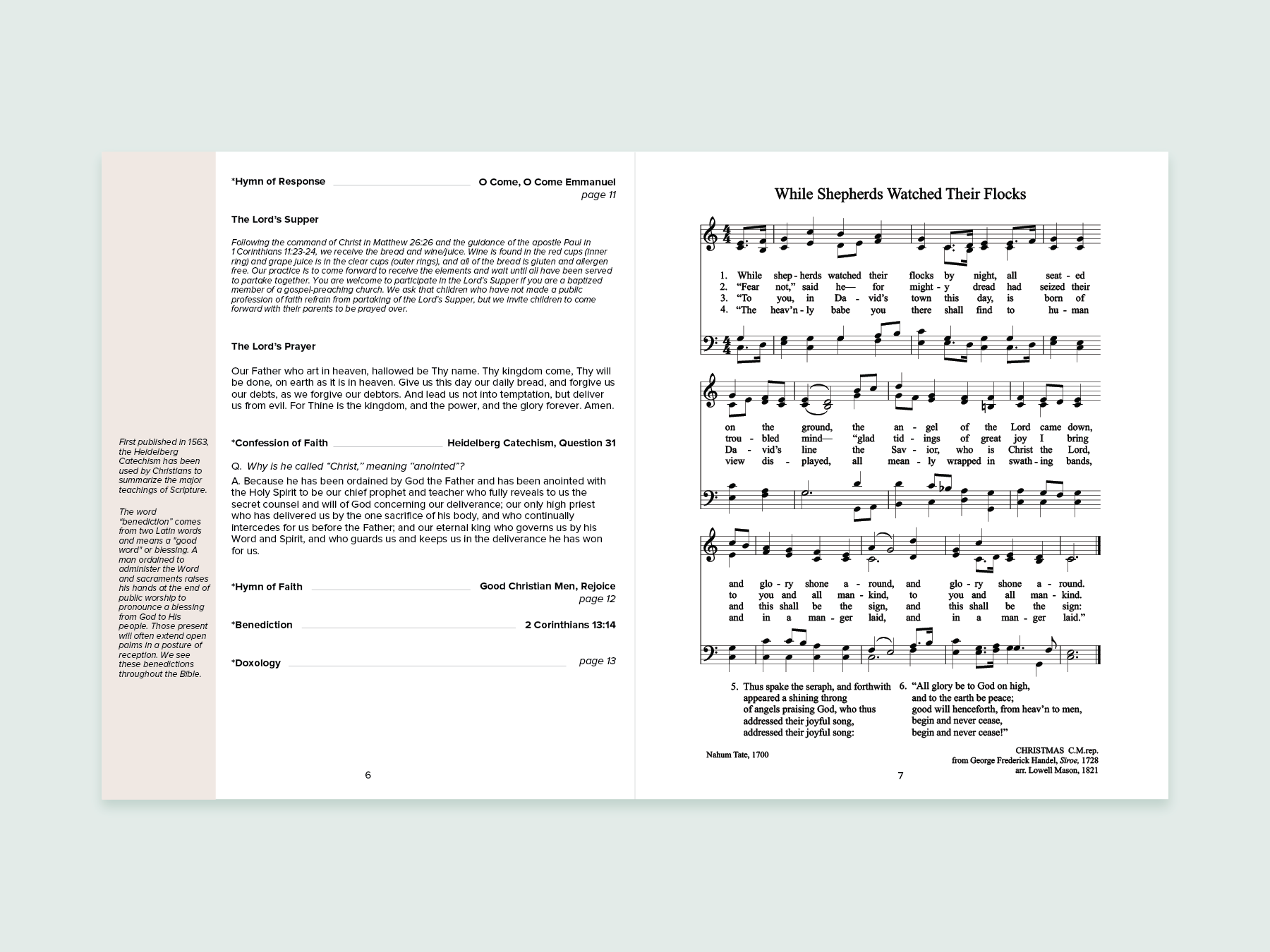



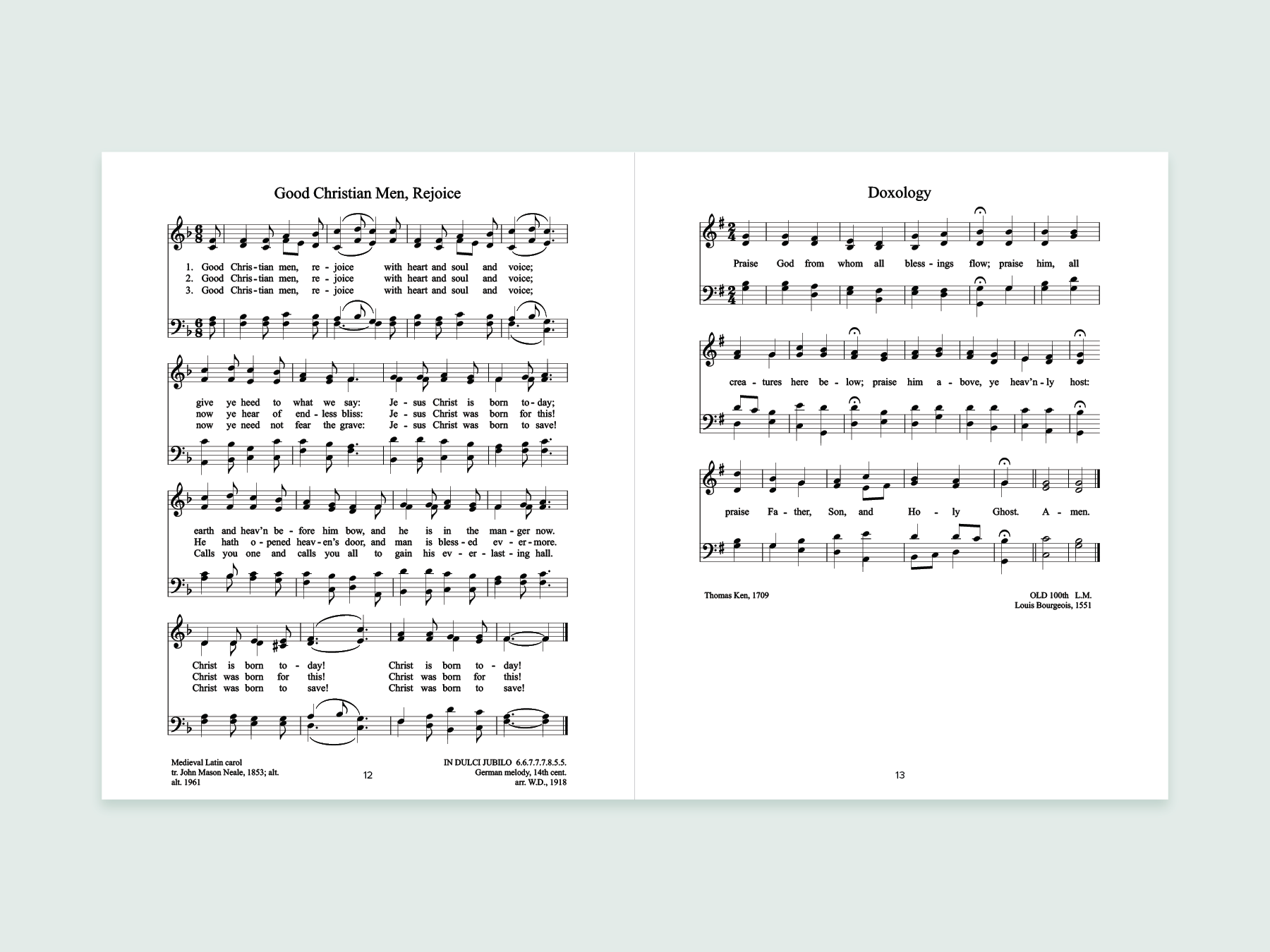
Angels singing, glorifying, rejoicing, over the birth of Jesus Christ. After all, who else would have been qualified to make the announcement? It only makes sense that majestic, heavenly beings would make the declaration.
This was the greatest birth announcement in human history—which makes the typical postcard birth announcement seem almost laughably small by comparison.
And the truth is, birth announcements are only sent to people who are expected to care. You send them to family and close friends, but beyond that, no one really pays attention.
After all, millions of babies are born every year—so why should the whole world stop and care about one more child?
But the birth of Jesus was different, because his birth wasn’t great news for just some people. His birth wasn’t just exciting for Mary and Joseph’s family. It was great news for all people. The entire world was going to change because of the birth of Jesus Christ. And so, when we think about this particular passage we have to ask ourselves several questions: first, why was it great news? Second, who would the great news affect? And lastly, how should we respond to this great news?
Now I referred to this angelic moment as Christ’s birth announcement, because that’s exactly what it was. If you look in Luke chapter 2, immediately after Christ is born, Luke takes us to the pasture where the angels sing of this great news to shepherds in a field.
Why was it great news? (vv. 10-11)
The angel was revealing something absolutely magnificent to these shepherds: the Messianic Christ who had been promised centuries earlier had finally come to earth. Notice what the angel says there in verse 10: “Fear not, for behold, I bring you good news of great joy that will be for all the people. 11 For unto you is born this day in the city of David a Savior, who is Christ the Lord.”
There’s no reason to be afraid because he’s bringing good news of great joy… and what is that news of great joy? “For unto you is born this day in the city of David a Savior, who is Christ the Lord.”
Notice the three words the angel used to describe Jesus: Savior, Christ, and Lord.
Those words are pretty central to the person of Jesus, but more broadly speaking they’re important to Christianity aren’t they? In fact, there probably aren’t many words that are more important than those three words.
Each of those words is packed with meaning.
But as Paul put it, the whole world had been “groaning” in anticipation of a messianic deliverer who would deliver them from a state of corruption and suffering brought on by sin. And of course the Old Testament was clear on a few details about this Messianic Deliverer: He would be a direct descendant of King David and he would be born in his city—Bethlehem.
Even King Davd himself looked forward with great anticipation to God’s promised Messianic Deliverer. He gives voice to that hope in Psalm 110:1: “The LORD says to my Lord: ‘Sit at my right hand, until I make your enemies your footstool.’”
Psalm 110:1 is, in fact, the most frequently quoted Old Testament verse in the New Testament—and that is no accident. The apostles and Jesus Himself return to this verse again and again because it so clearly captures the identity and authority of the Messiah.
Some of the force of the passage is hidden in our English translations. When David writes “The LORD,” he is using the divine name Yahweh—the covenant God of Israel. But when he says “my Lord,” he uses a different word, Adonai, a title of authority and rule. In other words, David is describing Yahweh speaking to someone David himself calls his Lord.
David was expecting that Yahweh would send His Anointed One—the Christ—who would be greater than David, who would reign with divine authority, and who would sit at God’s right hand until every enemy was finally and fully defeated.
The reason Psalm 110 is relevant is because it’s precisely what the angel was getting at when he told the shepherds that, “For unto you is born this day in the city of David a Savior, who is Christ the Lord.” The angel is pointing to Psalm 110 and essentially saying, “Listen up shepherds, the Messianic figure who King David prophesied of - he was just born!”
What glorious, exciting, joyous news! But I wonder what people would say if you asked them, “why is the Christmas season a time of joy?
I’m sure a lot of people would say something about the birth of Jesus Christ. But I’m not sure they would be able to tell why it’s so significant. Why is it so joyous?
Hopefully you would be able to answer that question, because Jesus came to earth in order to save you and me from our sins. And that whole concept is buried in that one little word used by the angel in verse 11: “Savior.” Savior is derived from the Greek word, sótér (σωτήρ), which literally means, “deliverer” or “preserver.”
The Apostle Paul tells us in 1 Timothy 1:15, “The saying is trustworthy and deserving of full acceptance, that Christ Jesus came into the world to save sinners…” Jesus is the Savior because he saves his people from their sins, which is the most glorious news of all time.
But one of the greatest challenges in ministry and as a Christian in general is convincing people that they need to be saved. Especially if they have everything they want. The key to all of that of course, is convincing people that they’re a sinner. Which in many cases is a tough sell as well. Who likes to think of himself or herself as a sinner? No one, right?
We all want to believe that people are born inherently good, but due to experiences and challenges in life, they do bad things. And so, it’s not that there is anything inherently wrong with you, but rather, outside conditions and forces have pushed you to make bad decisions. If that’s where you’re coming from then it’s easy to see how you could convince yourself that you’re a good person who occasionally makes mistakes.
But as the late R.C. Sproul used to say, there are no good people. Jesus said the same thing to the rich young ruler. Remember how the rich young ruler said, “Good Teacher, what good thing shall I do that I may have eternal life?”
17 So He said to him, “Why do you call Me good? No one is good but God.”
The Bible clearly teaches that everyone is inherently sinful, which flies in the face of what we all want to believe. Everyone wants to believe that they’re a good person.
I had a friend who worked in the jail and he told me that even in the jail there is a moral hierarchy among prisoners. Even prisoners who have committed all sorts of heinous crimes are able to convince themselves that they’re really not that bad. And of course, as long as we’re comparing ourselves to other people, we can always convince ourselves that we’re not that bad.
But that’s not the comparison that the Bible makes. The comparison that the Bible makes is with God’s perfect, holy, standard. And when that’s our measuring stick, suddenly none of us are adequate. No one is good, no not one.
People are not basically good. We’re sinners who are separated from God and our only hope for salvation and redemption is for God to do something. And by his great immeasurable grace, he did do something. He sent Jesus into the earth, to take on flesh, and stand in our place and take the punishment for our sin on the cross.
When that’s your understanding suddenly it makes sense why the birth of Jesus would be “good news of great joy!” Salvation, redemption, and hope are finally here! And it didn’t come in the form of some sort of philosophical ideas, or some sort of code of conduct, no, salvation, redemption, and hope were wrapped in swaddling cloths in a manger.
That’s great, glorious, news isn’t it?
Who would the great news affect? (vv. 10-11)
The 17th century painter, Rembrandt, has a painting called The Angel Appearing to the Shepherds, which is his artistic take on the passage that we’re looking at from Luke 2.
And what he does in the painting is really interesting because he contrasts the beauty, the brightness, the glory and majesty of the angels with the dark, gloomy, ugly, gross looking shepherds.
Which would have been entirely accurate, right? Even though the Scriptures speak of the Lord as a shepherd in Psalm 23, or Jesus as the good shepherd in John 10, the reality was, being a shepherd was not a particularly prestigious job.
Oftentimes, shepherds, due to the nature of their job, would be considered ceremonially unclean, by Jewish law. Shepherds were considered lower class, blue collar types.
One of the frustrations of the world that we live in is that good news is hard to come by. In fact, we’re constantly inundated with bad, evil, and frustrating news. Whenever you turn on the TV, it always seems like we have a two tier justice system where ordinary people, like you and me, are held accountable, while powerful, well-connected elites get away with the most obvious crimes.
If you’re a certain type of person who has the right connections, no matter what you’ve done, there’s always hope. But for the rest of us, it looks pretty bleak out there. But really, that’s nothing new. It’s been like that for most of human history.
Which is why it’s so shocking that the angels appeared and sang to shepherds. It’s not shocking that angels would announce the birth of Christ, right? But the audience of an angelic birth announcement is shocking.
You’d expect the angels to appear to important, influential, powerful people, like a king or a priest, but not a bunch of shepherd lowlifes. They were low men on the societal totem pole. No one cared about the shepherds.
Were these particular shepherds special in some way? Did they has significant names, or were they from a certain region, did they have a special family history? We don’t know. And that’s exactly the point. The point seems to be that these shepherds were ordinary, no name, blue collar, people, and the Messiah coming into the world was good news not just for the powerful, politically connected, elites. It was good news for people like them.
As the angel says in verse 10, it is “good news of great joy that will be for all the people. 11 For unto you is born this day in the city of David a Savior, who is Christ the Lord.”
The good news of Jesus Christ is for everyone. It’s for all the nameless, faceless people who were never written about into history books who lived ordinary lives throughout the centuries—the gospel of Jesus Christ is for them.
The blood of Christ doesn’t atone for the sins of certain people. It atones for the sins of anyone. There is no social hierarchy in the kingdom of God, because there is no type of individual who is so sinful, so down and out that they’re beyond the saving grace of our Lord.
The gospel of Jesus Christ doesn’t care about your background or where you were born. In God’s kingdom there are no distinctions. There are no ethnic priorities. The gospel of Jesus Christ is an open invitation to all people to taste and see that the Lord is good.
Romans 10 tells us that “...everyone who calls on the name of the Lord will be saved.”
And God was illustrating this fact by appearing to shepherds first. The gospel is truly an indiscriminate message of good news for all people.
It doesn’t matter who your parents are, or what you’ve done, the gospel is good news for you.
How should we respond to this great news? (vv. 12-14)
And so there is only one appropriate response to this glorious news: worship. Worship that praises God. Which is exactly what the angles do.
Out of nowhere, a multitude of angels, which is a military term, appear and begin to praise God. An army of angels begin to sing to the Lord: “Glory to God in the highest, and on earth peace among those with whom he is pleased!”
It was an angelic chorus! They were singing out to the Lord! They were singing “Glory to God in the highest, and on earth peace among those with whom he is pleased!”
As I said earlier, basically every Christmas hymn mentions something about angels singing.
It Came Upon a Midnight Clear ends each stanza with “to hear the angels sing.”
What Child is This says, “This, this is Christ the King, whom shepherds guard and angels sing…”
Or how about the title of Charles Wesley’s famous hymn, Hark the Herald Angels Sing!
I recently had a conversation where I was reminded that all music is communication - every song has a message. And undoubtedly, the angelic chorus was communicating a message to those shepherds on that dark night.
And that message was, “Glory to God in the highest,” because “...on earth [there is] peace among those with whom [God] is pleased!”
Jesus came to earth not to establish peace between man and God.
The Greek word for “peace” the angels use is eirēnē, a word that speaks of reconciliation and restored relationship. It closely echoes the Hebrew idea of shalom—not merely the absence of conflict, but wholeness, harmony, and flourishing before God.
This is precisely what Jesus accomplished through His sin-atoning death on the cross. By taking the punishment for our sins upon Himself, He reconciled us to God, restoring what was broken and granting us true peace—shalom—with Him.
The famous lyrics from Hark the Herald Angels Sing capture this point well: “Hark! the herald angels sing, "Glory to the newborn King: peace on earth, and mercy mild, God and sinners reconciled!””
Matthew Henry wrote, “God’s good-will in sending the Messiah introduced peace into this lower world, slew the enmity that sin had raised between God and man, and restored a peaceable correspondence.” In other words, peace with God is not something we achieve; it is something God establishes.
You and I have peace with God only when we trust that Jesus took our sins upon Himself and fully paid for them at the cross.
Think of it this way. Imagine two nations that are at war. One side may stop firing, lower its weapons, and even begin doing good deeds for the other—but unless a formal peace treaty is signed, the war is still technically on. Kind gestures cannot end hostility; peace must be established by authority.
Many of us know people who are not Christians but are genuinely kind, generous, and admirable. We’re grateful for people like that. But moral decency, no matter how sincere, is not a peace treaty with God. Being nice cannot erase guilt, and good deeds cannot undo sin. Scripture is clear that peace with God does not come through our character, our effort, or our intentions.
That’s why the angels’ song is so important. They proclaim peace because God Himself has acted to create it. Jesus Christ did what we could never do. He absorbed the judgment our sins deserved and reconciled us to God through His death and resurrection.
Peace with God is not earned; it is received. What we could not accomplish on our own, God accomplished for us through His Son. And that is why the angels sang. That is why the shepherds rejoiced. And that is why, even now, we lift our voices in praise to God—because true peace has come, and His name is Jesus Christ. This good news of great joy was and still is why we praise God.
This passage carries with it a glorious and deeply comforting reminder: no one is beyond the saving arm of God. It does not matter where you are from, what you have done, or what kind of family you were born into—God’s grace is not restricted by background, biography, or reputation. The gospel shatters every human-made boundary that says, “This person is too far gone,” or “That kind of past can’t be redeemed.”
Throughout Scripture, God delights in saving people who seem unlikely, overlooked, or disqualified in the eyes of the world. Shepherds, tax collectors, adulterers, persecutors of the church—these are not footnotes in the biblical story; they are central characters. The message is unmistakable: salvation is not earned by pedigree or performance, but given freely by grace. God does not wait for people to clean themselves up before He moves toward them. He meets them in their darkness, their guilt, and their brokenness, and brings light where there was none.
That truth cuts two ways. On the one hand, it offers immense comfort. If you carry shame over past sin, regret over wasted years, or fear that you’ve disqualified yourself from God’s love, this passage speaks directly to you. The saving work of God is stronger than your failures. His mercy reaches deeper than your guilt. No sin is so great, no heart so hardened, that Christ cannot redeem it.
On the other hand, this truth confronts our tendency to quietly write people off. We may never say it out loud, but we sometimes assume certain people will never change—because of their lifestyle, their politics, their addictions, or their hostility to the faith. But the gospel leaves no room for despairing conclusions about anyone. If God can save us, He can save them.
This passage reminds us that salvation is God’s work from beginning to end. He is the one who reaches, rescues, and restores. And that means our hope is never anchored in human potential, but in divine grace. No one is too broken, too sinful, or too far away. The arm of the Lord is not too short to save—and that is truly good news for all people.
Amen. Let’s pray together.
